
In high-voltage transmission, performance often comes down to how well different parts connect. One of the most sensitive points in the entire system is where the power cable meets the switchgear. At 230kV Cable GIS Termination, this interface must handle high electrical stress, temperature variation, and long-term operation without failure. That is exactly the role of a GIS Termination.
As substations move into urban areas and space becomes limited, utilities increasingly choose gas-insulated switchgear (نظم المعلومات الجغرافية). Because GIS equipment is compact and sealed, it offers clear advantages over traditional air-insulated systems. لكن, this also means that the cable connection must be more precise and reliable. لهذا السبب, the quality of a 230kV cable GIS termination directly affects the safety and stability of the entire network.
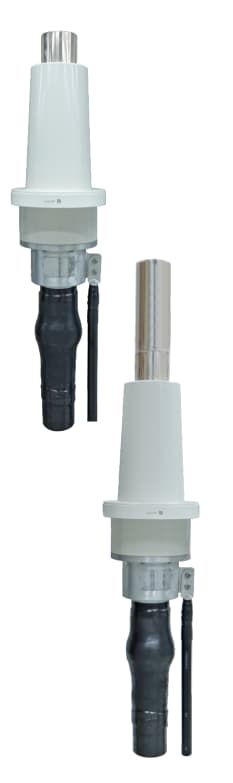
What Is a 230kV Cable GIS Termination?
أ GIS Termination connects a high-voltage cable, usually XLPE insulated, to gas-insulated switchgear filled with SF₆ gas. It forms the transition between two different insulation systems—solid insulation in the cable and gas insulation in the GIS.
This transition requires careful design. The electric field at the interface does not behave the same way as it does inside the cable. If the field is not properly controlled, it can lead to partial discharge or insulation breakdown over time.
في الممارسة العملية, a GIS termination ensures that current flows smoothly from the cable into the switchgear, while maintaining insulation integrity under high voltage conditions.
Why 230kV Cable GIS Termination Matters
عند 230 كيلو فولت, there is little margin for error. A weak point at the termination can lead to outages, تلف المعدات, or even safety risks.
One clear advantage of GIS systems is their compact design. Since the equipment is enclosed, it takes up far less space than conventional substations. This makes it suitable for cities, industrial zones, and underground installations.
في نفس الوقت, the sealed environment protects the system from dust, رطوبة, and pollution. نتيجة ل, maintenance requirements are lower, and reliability improves.
لكن, these benefits depend heavily on the quality of the cable interface. A well-designed 230kV GIS termination keeps electrical stress under control and supports long-term operation without degradation.
Main Components of a 230kV Cable GIS Termination
A GIS termination is not a single part but a combination of several elements working together.
نظام التحكم في الإجهاد
The stress control system shapes the electric field at the end of the cable insulation. Without it, the field would concentrate at certain points and increase the risk of failure. By using stress cones or grading materials, the field becomes more uniform and stable.
Insulating Body
The insulating body separates the live conductor from the grounded enclosure. Materials such as silicone rubber or epoxy resin are commonly used because they provide strong dielectric performance and can withstand thermal stress.
اتصال الموصل
A solid electrical connection is essential. The conductor must connect securely to the GIS terminal to avoid resistance and heat buildup. في معظم الحالات, installers use compression fittings or bolted connectors to achieve a reliable joint.
Sealing System
The GIS environment depends on stable SF₆ gas pressure. لذلك, the sealing system must prevent leakage while also blocking moisture from entering the cable. Even small sealing issues can affect long-term performance.
Flange and Housing
The flange fixes the termination to the GIS enclosure and ensures proper alignment. في أثناء, the outer housing protects internal components from mechanical damage during installation and operation.
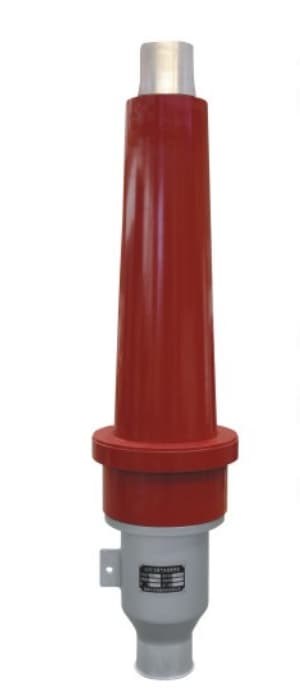
Types of 230kV GIS Termination
Different projects call for different solutions. The choice usually depends on installation conditions and maintenance preferences.
Dry Type Termination
Dry type designs rely on solid insulation instead of oil. They are easier to handle and require less maintenance. Because of this, they are now widely used in new substations.
Oil-Filled Termination
Oil-filled terminations offer strong insulation performance. لكن, they require careful sealing and periodic inspection. For that reason, they are less common in modern projects.
Plug-In Termination
Plug-in designs simplify installation. They allow faster assembly and replacement, which can reduce downtime during maintenance or upgrades.
Cable Conductor Size Table (25 ملم² إلى 3000 مم²)
Cable size plays an important role in selecting a GIS termination. It affects current capacity, heat generation, and mechanical design.
Below is a reference table covering common conductor sizes used in high-voltage systems.
| حجم الموصل (مم²) | تقريبا. الفريق العامل المخصص/مليون متر مكعب | قطر الموصل (مم) | مقاومة العاصمة (Ω/km @20°C) | Typical Current Capacity (أ) | Application Level |
|---|---|---|---|---|---|
| 25 | 4 الفريق العامل المخصص | 5.6 | 0.727 | 150–180 | يتحكم / small load |
| 35 | 2 الفريق العامل المخصص | 6.7 | 0.524 | 180–220 | Light distribution |
| 50 | 1/0 الفريق العامل المخصص | 8.0 | 0.387 | 220–270 | Distribution |
| 70 | 2/0 الفريق العامل المخصص | 9.6 | 0.268 | 260–320 | Medium load |
| 95 | 3/0 الفريق العامل المخصص | 11.0 | 0.193 | 300–370 | Substation feeder |
| 120 | 4/0 الفريق العامل المخصص | 12.4 | 0.153 | 340–420 | Medium HV |
| 150 | 300 مليون متر مكعب | 13.9 | 0.124 | 380–470 | Transmission |
| 185 | 350 مليون متر مكعب | 15.5 | 0.099 | 420–520 | Transmission |
| 240 | 500 مليون متر مكعب | 17.5 | 0.075 | 480–600 | 132kV standard |
| 300 | 600 مليون متر مكعب | 19.5 | 0.060 | 550–680 | Main feeder |
| 400 | 800 مليون متر مكعب | 22.6 | 0.047 | 650–800 | Heavy load |
| 500 | 1000 مليون متر مكعب | 25.2 | 0.036 | 750–920 | HV transmission |
| 630 | 1250 مليون متر مكعب | 28.3 | 0.028 | 850–1050 | Common 230kV |
| 800 | 1600 مليون متر مكعب | 31.9 | 0.022 | 1000–1200 | Bulk power |
| 1000 | 2000 مليون متر مكعب | 35.7 | 0.017 | 1150–1400 | Large substations |
| 1200 | 2500 مليون متر مكعب | 39.1 | 0.015 | 1300–1550 | Grid backbone |
| 1400 | — | 42.2 | 0.013 | 1400–1700 | Extra heavy load |
| 1600 | — | 45.2 | 0.011 | 1550–1850 | Large transmission |
| 2000 | — | 50.5 | 0.009 | 1750–2100 | Major grid |
| 2500 | — | 56.4 | 0.007 | 2000–2400 | Ultra high demand |
| 3000 | — | 61.8 | 0.006 | 2200–2600 | Extreme capacity |
How Cable Size Influences Termination Design
Larger cables bring higher current, but they also introduce new challenges. A thicker conductor means more weight, so the termination must provide stronger mechanical support.
في نفس الوقت, electrical stress behaves differently with larger cross-sections. Designers must adjust the stress control system to maintain a uniform field.
Heat also becomes a factor. Higher current leads to more heat generation, which affects insulation performance. Proper thermal design helps avoid overheating.
Installation is another consideration. Large cables require careful handling, larger bending radius, and more precise alignment during assembly.
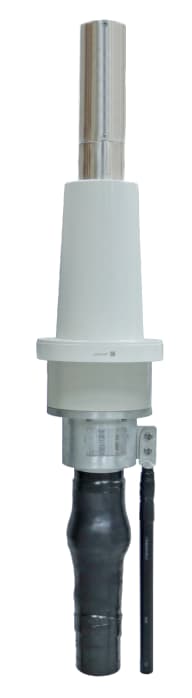
Installation in Practice
Installation quality has a direct impact on performance. Even a well-designed termination can fail if installation is not done correctly.
The process starts with careful cable preparation. Installers remove the outer layers without damaging the insulation. Clean working conditions are essential at this stage.
Next comes the installation of stress control and insulation components. بعد ذلك, the conductor is connected, and the termination body is assembled.
Once the termination is fixed to the GIS flange, sealing is completed. أخيراً, testing confirms that the system meets electrical requirements.
Choosing the Right Cable Accessories Manufacturer
The performance of a GIS termination depends not only on design but also on manufacturing quality.
A reliable manufacturer should have experience in high-voltage cable accessories and a solid understanding of GIS systems. Compliance with international standards such as IEC is also important.
فضلاً عن ذلك, the ability to customize products based on project requirements can make a significant difference. Technical support during installation and operation is equally valuable.
Working with an experienced supplier reduces risk and helps ensure stable long-term operation.
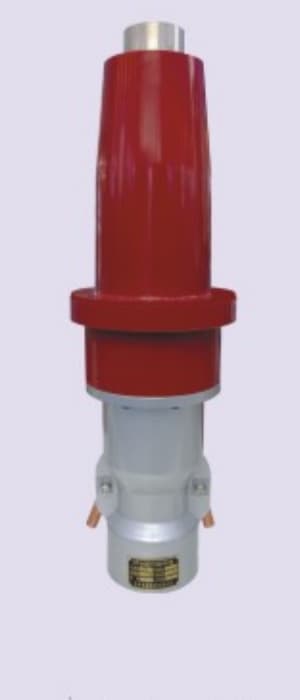
230kV Cable GIS Termination manufacturer
أ 230kV Cable GIS Termination is a key component in modern power transmission systems. It connects cables to gas-insulated switchgear and ensures safe, stable operation under high voltage conditions.
Every detail matters—from stress control to sealing, from conductor size to installation practice. When these elements are handled correctly, the system can operate reliably for decades.
في نفس الوقت, choosing the right cable accessories manufacturer plays a crucial role. مع التصميم المناسب, quality materials, and experienced support, a GIS termination becomes a dependable part of the power network.