
A 115kV-Kabel-Außenabschluss is an essential high-voltage cable accessory used to connect 115kV XLPE power cables with transformers, Freileitungen, Schaltanlage für den Außenbereich, Umspannwerke, Sammelschienen, und andere elektrische Hochspannungsgeräte. Da die unterirdische Energieübertragung in städtischen Gebieten immer wichtiger wird, Industrieanlagen, Projekte für erneuerbare Energien, und Versorgungsnetze, reliable cable termination technology plays an important role in maintaining the safety and stability of the entire power system.
A 115kV outdoor cable termination must provide reliable insulation, effective electric-field control, mechanische Unterstützung, and protection against outdoor environmental conditions. Unlike indoor cable accessories, outdoor terminations are directly exposed to rain, Luftfeuchtigkeit, sunlight, Verschmutzung, salt fog, wind, and temperature changes. daher, the design of a 115kV-Kabel-Außenabschluss must consider both electrical performance and long-term environmental durability.
What Is a 115kV Cable Outdoor Termination?
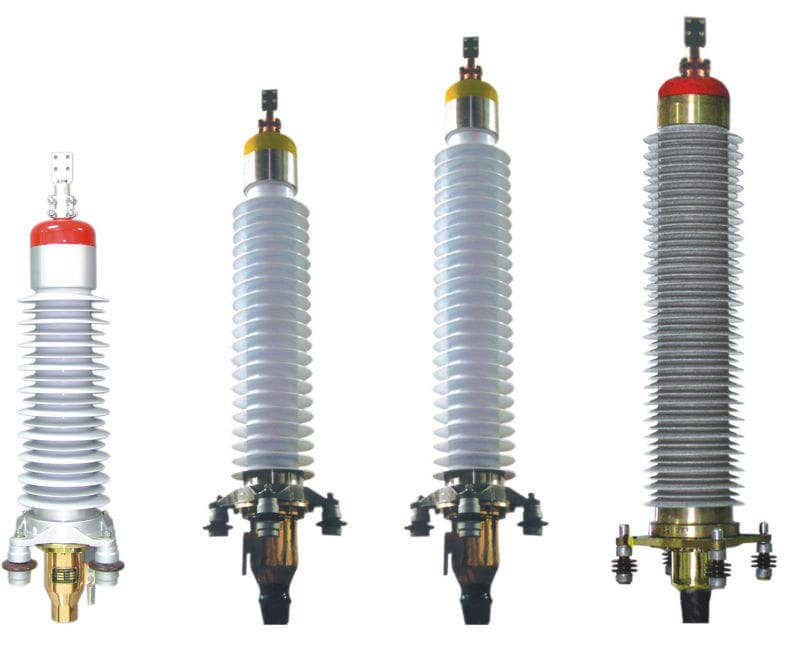
A 115kV-Kabel-Außenabschluss is installed at the end of a high-voltage power cable to create a reliable electrical and mechanical transition between the cable and external equipment.
A typical 115kV XLPE cable consists of several layers, including the conductor, Leiterschirm, XLPE-Isolierung, Isolierschirm, metallic screen or sheath, and outer protective sheath. Am Kabelende, these layers must be carefully prepared so that the conductor can be connected to the external electrical system while maintaining the required insulation level.
The main functions of a 115kV-Außenkabelabschluss enthalten:
- Connecting the cable conductor to electrical equipment
- Controlling electrical stress at the end of the cable insulation
- Providing sufficient insulation distance
- Protecting the cable end from moisture and contamination
- Providing mechanical support
- Maintaining reliable outdoor insulation
- Connecting the cable metallic screen to the grounding or bonding system
The termination is therefore an important part of the complete high-voltage cable system.
Electric Field Control in 115kV Cable Terminations
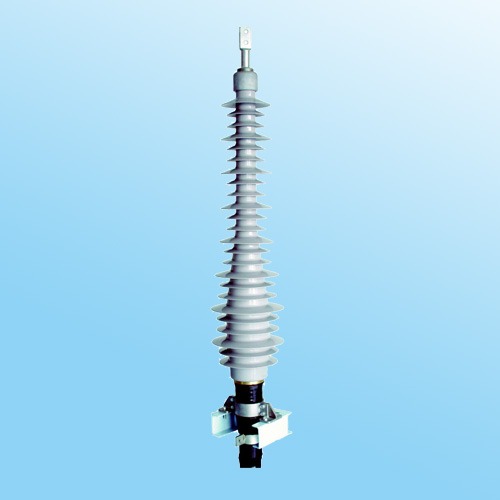
Electric-field control is one of the most important technologies used in a 115kV-Kabel-Außenabschluss.
Inside an XLPE cable, the electric field is relatively uniform because the conductor and insulation screens form a controlled structure. When the insulation screen is removed at the cable end, this uniform field is interrupted. Without proper stress control, electrical stress can become concentrated around the end of the insulation screen.
Excessive electric stress can lead to partial discharge, electrical treeing, insulation deterioration, and premature failure.
Ein moderner 115kV XLPE Cable Outdoor Termination therefore uses a dedicated stress-control system to distribute the electrical field smoothly. Je nach Ausführung, the stress-control system may use prefabricated stress cones, high-permittivity materials, resistive stress-control layers, or other engineered components.
Accurate positioning of these components is extremely important during installation. Even a small installation error in the stress-control area can affect the electrical performance of the termination.
Main Types of 115kV Outdoor Cable Terminations
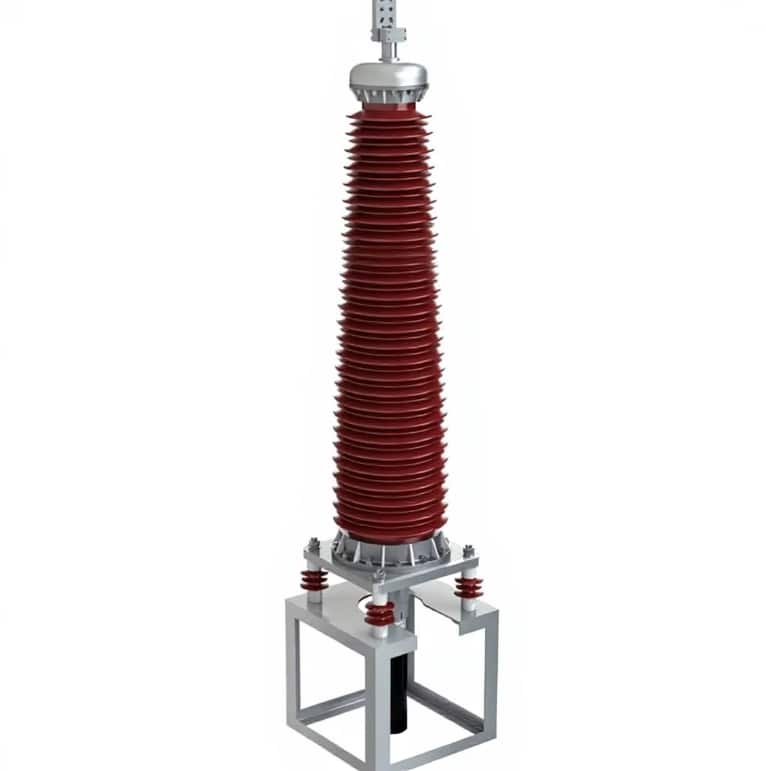
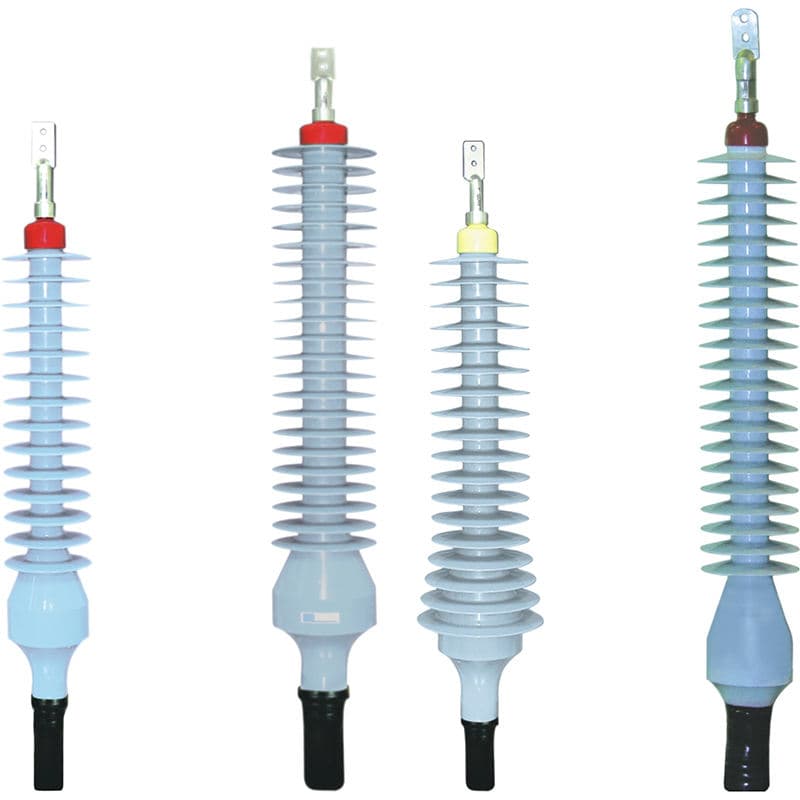
115kV outdoor terminations can be designed using different external insulation technologies. The three common configurations are porcelain, composite, and dry-type outdoor terminations.
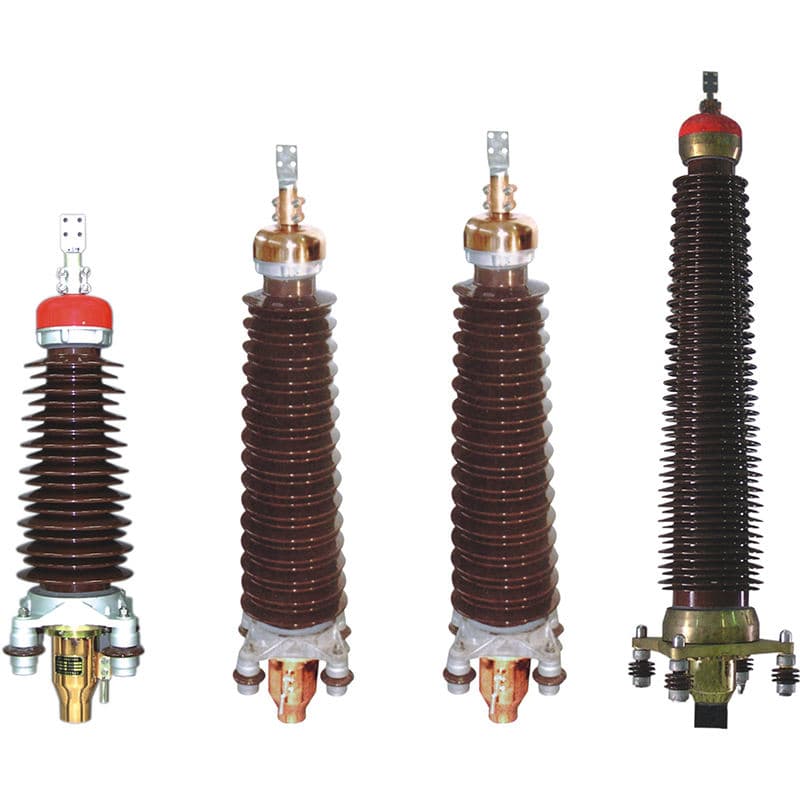
Porcelain Outdoor Termination
A porcelain outdoor termination uses a porcelain insulating housing as its external insulation.
Porcelain has been widely used in high-voltage electrical equipment for many decades. It provides excellent insulation properties and mechanical strength and has established long-term outdoor operating experience.
Ein typisches 115kV porcelain cable termination includes:
- Porcelain insulator
- Internes Stresskontrollsystem
- Leiteranschluss
- Dichtungskomponenten
- Metallischer Flansch
- Grounding connection
- Wetterschutzhütten im Freien
The main advantages of porcelain include good mechanical strength, proven outdoor performance, and resistance to many environmental conditions.
Jedoch, porcelain is relatively heavy and can be vulnerable to mechanical impact. Transport, Heben, and installation therefore require appropriate handling.

Composite Outdoor Termination
A 115kV composite outdoor termination normally combines a fiberglass-reinforced insulating core with a silicone rubber external housing.
Im Vergleich zu Porzellan, composite insulation is considerably lighter and offers good resistance to mechanical impact. Silicone rubber also has excellent hydrophobic properties, which can be beneficial in polluted or humid outdoor environments.
The main advantages include:
- Lightweight construction
- Good mechanical performance
- Hohe Schlagfestigkeit
- Excellent weather resistance
- Good hydrophobicity
- Easier transportation and installation
For modern substations and underground transmission projects, composite outdoor terminations are increasingly attractive because they combine reliable insulation with reduced weight.
Trockener Außenabschluss
A 115kV dry-type outdoor termination uses solid or elastomeric insulation rather than liquid insulation as part of its termination system.
The absence of liquid insulation can simplify handling and maintenance and eliminates concerns related to liquid leakage.
Dry-type technology can incorporate prefabricated insulation bodies, silicone rubber components, stress-control elements, Dichtungssysteme, and outdoor weather sheds.
For projects that require a clean, kompakt, and low-maintenance termination solution, a dry-type design can provide an attractive alternative.

Umweltleistung im Freien
A 115kV-Kabel-Außenabschluss must operate reliably under changing environmental conditions.
Important environmental factors include:
- Regen
- Luftfeuchtigkeit
- UV-Strahlung
- Salt fog
- Industrielle Umweltverschmutzung
- Staub
- Snow
- Wind
- Temperature variation
Creepage distance is particularly important for outdoor high-voltage insulation. The required creepage distance depends on the installation environment and pollution level.
For coastal areas or heavily polluted industrial locations, a suitable termination design may require increased creepage distance and appropriate weather-shed geometry.
Silicone rubber is often selected for composite and dry-type outdoor terminations because its hydrophobic surface can help maintain good insulation performance under wet and contaminated conditions.
115kV Cable Termination for Substations
One of the major applications of a 115kV-Kabel-Außenabschluss is in substations.
Underground 115kV cables may need to connect to:
- Leistungstransformatoren
- Outdoor switchgear
- Busbars
- Disconnectors
- Overhead lines
- Überspannungsableiter
- GIS-Ausrüstung
At these connection points, the termination must be compatible with the cable dimensions and the equipment interface.
The cable termination should therefore be selected according to the actual cable construction rather than only the nominal system voltage.
Zum Beispiel, conductor cross-sectional area, Kabeldurchmesser, Isolationsdicke, metallic screen design, and cable manufacturer can all influence the required termination dimensions.
115kV Cable Termination for Renewable Energy Projects
Renewable energy development is creating new demand for high-voltage underground cable systems.
Large solar farms, Windparks, battery energy storage projects, and grid interconnection facilities may use 115kV-class systems to transfer electricity to utility substations.
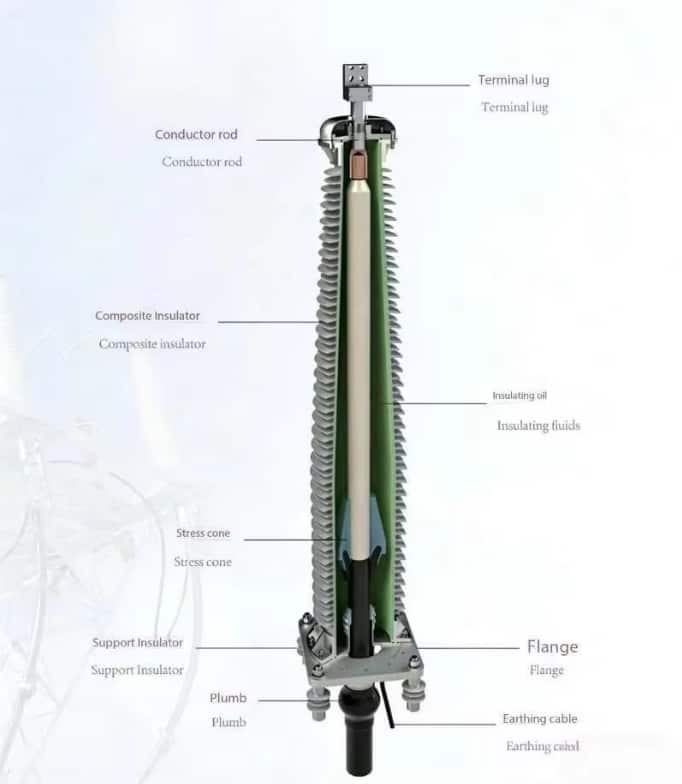
A 115kV-Außenkabelabschluss can be installed where underground cables connect to transformers, Oberleitungen, or outdoor substation equipment.
Renewable energy projects are often located in areas with strong sunlight, high wind, Staub, or large temperature variations. daher, the outdoor termination should be designed according to the actual environmental conditions at the project site.
Installation of a 115kV Outdoor Termination
The installation of a 115kV-Kabel-Außenabschluss should be performed by trained high-voltage cable technicians.
The general installation procedure may include:
- Inspecting the cable and termination components
- Measuring and marking the cable
- Entfernen des Außenmantels
- Preparing the metallic screen
- Removing the semiconductor screen
- Preparing the XLPE insulation
- Installing the stress-control components
- Installing the insulating body
- Installing the conductor connector
- Completing the sealing system
- Installing the outdoor weather sheds
- Connecting the grounding system
- Performing final inspection and electrical testing
The exact installation procedure depends on the specific termination design.
The cable dimensions must be measured accurately before installation. The length of insulation and semiconductor screen removal should follow the manufacturer’s installation drawing.
Clean working conditions are also essential. Staub, Feuchtigkeit, foreign particles, or damage to the XLPE insulation can negatively affect the long-term performance of the termination.
Testing of 115kV Cable Outdoor Termination
Testing is an important part of any high-voltage cable accessory project.
Depending on the applicable standard and project requirements, Tests können Folgendes umfassen::
- Teilentladungsprüfung
- AC-Spannungsprüfung
- Blitzimpulsprüfung
- Temperaturbezogene Tests
- Dichtungstests
- Mechanische Tests
- Umwelttests
- Maßprüfung
Partial discharge testing is particularly important for high-voltage cable accessories because it can help identify insulation defects, voids, Kontamination, or problems in the stress-control system.
The exact test voltage and test procedure should be determined according to the cable system specification, Nennspannung, Isolationsniveau, applicable IEC requirements, and customer requirements.
How to Choose a 115kV Cable Outdoor Termination
Vor der Auswahl eines 115kV-Außenkabelabschluss, customers should provide detailed cable information.
Wichtige Parameter sind u.a:
- Nennspannung
- Leitermaterial
- Leiterquerschnittsfläche
- Anzahl der Kerne
- Kabelaußendurchmesser
- Dicke der XLPE-Isolierung
- Conductor screen dimensions
- Insulation screen dimensions
- Metallic screen or sheath type
- Outer sheath diameter
- Cable bonding arrangement
- Installationsumgebung
- Verschmutzungsgrad
- Erforderliche Kriechstrecke
- Equipment connection dimensions
The actual cable drawing is especially useful because different manufacturers may use different cable constructions even when the nominal voltage and conductor size are identical.
115Hersteller von kV-Kabel-Außenendverschlüssen
Selecting an experienced 115Hersteller von kV-Kabel-Außenendverschlüssen is important for high-voltage cable projects.
A professional manufacturer should be able to provide technical drawings, product specifications, Installationsanweisungen, testing documents, and cable compatibility information.
Dosense Cable provides high-voltage cable accessories and cable termination solutions for power transmission and distribution applications.
For customers requiring a 115kV-Kabel-Außenabschluss, Dosense Cable can develop suitable solutions according to the cable construction, Leitergröße, Isolationsdicke, Kabeldurchmesser, Installationsumgebung, and connection equipment.
The company can provide different outdoor termination solutions, einschließlich 115kV porcelain outdoor termination, 115kV composite outdoor termination, and 115kV dry-type outdoor termination.
Reliable 115kV Cable Outdoor Termination Solutions
Eine zuverlässige 115kV-Kabel-Außenabschluss is more than a simple connection component. It is an important part of the insulation system that must operate reliably throughout the service life of the cable.
The termination must provide effective electric-field control, sufficient insulation, zuverlässige Abdichtung, mechanical stability, and resistance to outdoor environmental conditions.
For substations, underground transmission systems, Projekte für erneuerbare Energien, Industrieanlagen, und Versorgungsnetze, selecting the correct termination technology is essential for the safe operation of the high-voltage cable system.
By considering the cable construction, elektrische Anforderungen, Installationsumgebung, termination type, and applicable testing standards, project engineers can select a suitable 115kV outdoor termination for long-term and reliable service.