
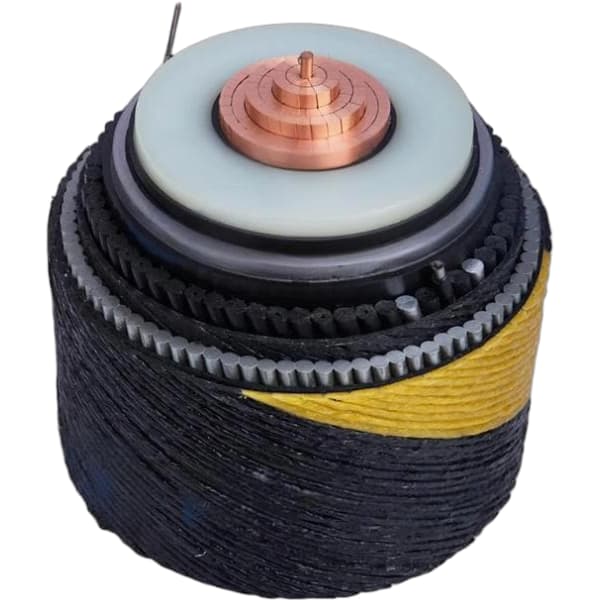
Introduction au câble XLPE 115 kV
Une infrastructure électrique moderne nécessite une infrastructure fiable, efficace, et des systèmes de transmission de puissance durables. Alors que les villes continuent de s’étendre et que les projets d’énergies renouvelables se multiplient dans le monde entier, les systèmes de câbles souterrains à haute tension sont devenus plus importants que jamais. Parmi ces solutions, le câble XLPE 115 kV est largement reconnu pour ses excellentes performances électriques et sa stabilité opérationnelle.
Contrairement aux câbles traditionnels isolés en papier ou remplis d'huile, Les câbles isolés XLPE offrent une meilleure résistance thermique, exigences d'entretien réduites, et une meilleure protection de l’environnement. Par conséquent, entreprises de services publics, Entrepreneurs EPC, développeurs d'énergies renouvelables, et les installations industrielles choisissent de plus en plus les câbles XLPE 115 kV pour les réseaux de transmission de moyenne et haute capacité.
Dans de nombreux pays, les projets de transport souterrain remplacent les lignes aériennes en milieu urbain. Par conséquent, la demande de systèmes de câbles XLPE 115 kV de haute qualité continue de croître rapidement.
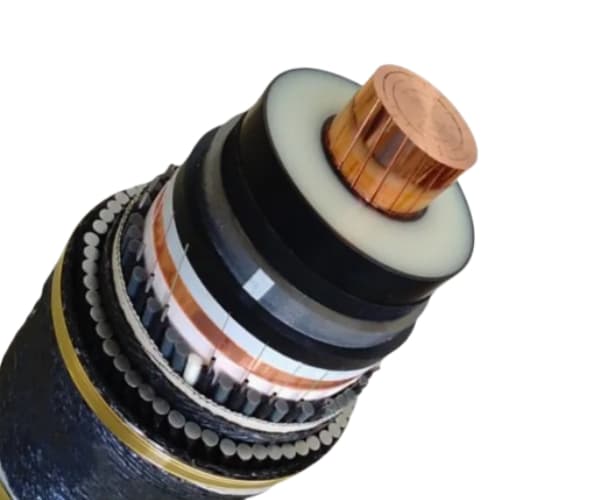
Qu'est-ce qu'un câble XLPE 115 kV?
Un câble XLPE 115 kV est un câble d'alimentation haute tension isolé avec un matériau en polyéthylène réticulé.. Le câble est conçu pour les systèmes de transmission électrique fonctionnant dans des classes de tension de 69/115 kV ou 64/110 kV..
Parce que l'isolation XLPE possède d'excellentes caractéristiques diélectriques, il fonctionne efficacement dans des conditions de contraintes électriques élevées. En outre, le matériau offre une résistance supérieure à l’humidité, vieillissement thermique, et corrosion chimique.
Aujourd'hui, 115Les câbles kV XLPE sont couramment installés dans:
- Systèmes de transport souterrains urbains
- Projets d'énergie renouvelable
- Sous-stations industrielles
- Systèmes d'électrification ferroviaire
- Infrastructures aéroportuaires
- Opérations minières
- Installations pétrolières et gazières
Structure principale du câble XLPE 115 kV
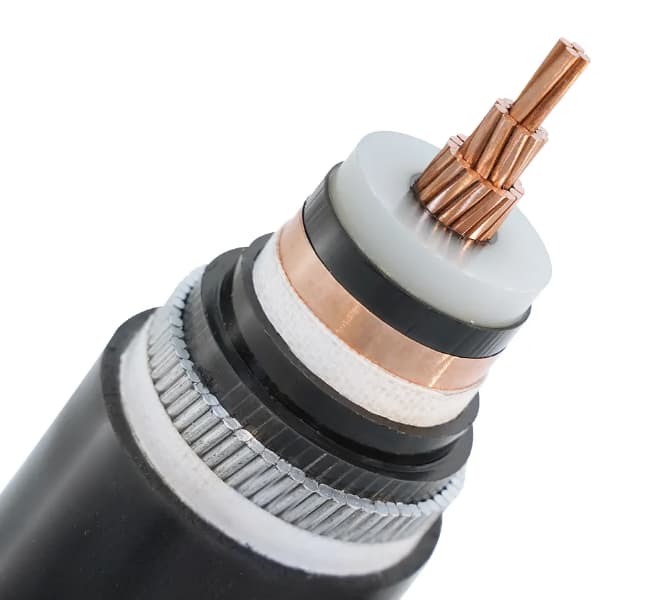
Un câble haute tension moderne se compose de plusieurs couches soigneusement conçues. Chaque couche remplit une fonction électrique ou mécanique spécifique.
Construction de câble typique
| Composant | Fonction principale |
|---|---|
| Conducteur | Transporte le courant électrique |
| Écran conducteur | Contrôle le stress électrique |
| Isolation XLPE | Isolation diélectrique principale |
| Écran d'isolation | Répartition uniforme du champ électrique |
| Écran métallique | Chemin de retour du courant de défaut |
| Couche de blocage de l'eau | Empêche la pénétration de l'eau |
| Couche de literie | Amortissement mécanique |
| Blindage | Protection mécanique |
| Gaine extérieure | Protection de l'environnement |
En outre, les fabricants peuvent personnaliser la structure en fonction des conditions d'installation et des exigences du client.
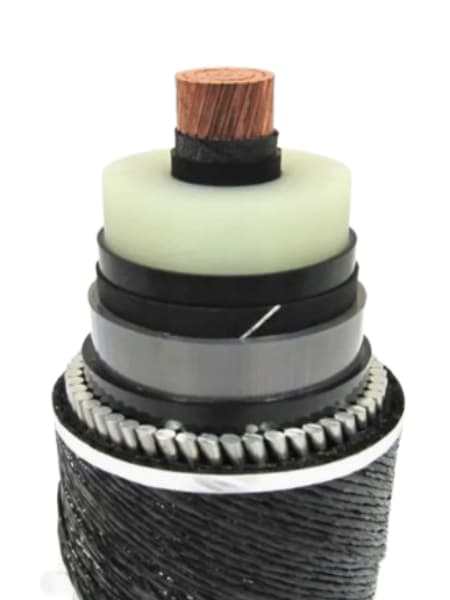
Avantages du câble XLPE 115 kV
Excellentes performances thermiques
L'isolation XLPE permet au câble de fonctionner à des températures élevées en toute sécurité.
Les températures nominales typiques incluent:
| État de fonctionnement | Température |
|---|---|
| Fonctionnement normal | 90°C |
| Surcharge d'urgence | 130°C |
| Court-circuit | 250°C |
Donc, Les câbles XLPE peuvent transmettre plus de courant que de nombreux systèmes de câbles conventionnels.
Pertes électriques réduites
Les pertes diélectriques de l'isolation XLPE sont relativement faibles. Par conséquent, l’efficacité du transport s’améliore considérablement dans les réseaux électriques longue distance.
Durée de vie plus longue
Lorsqu’il est correctement installé et entretenu, un système de câble XLPE 115 kV peut fonctionner pendant plus de 30 à 40 années. De plus, la structure d'isolation reste stable même dans des conditions de charge fluctuantes.
Besoins de maintenance réduits
Les systèmes de câbles remplis d'huile nécessitent souvent un équipement de surveillance de pression complexe. Cependant, Les câbles XLPE éliminent le besoin de systèmes de maintenance des fluides, ce qui réduit considérablement les coûts opérationnels.
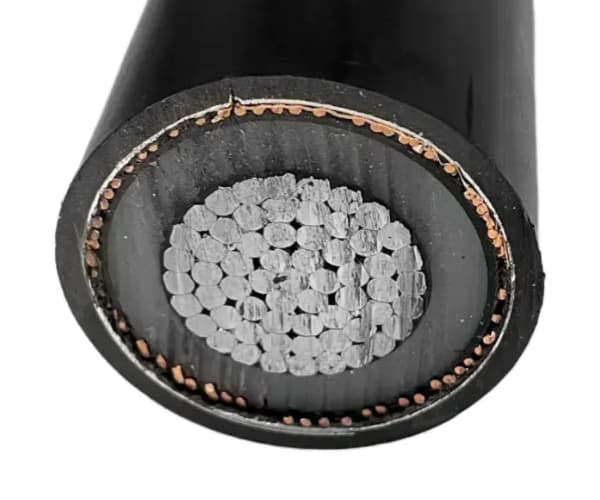
Normes internationales pour le câble XLPE 115 kV
Les câbles haute tension doivent être conformes à des normes internationales strictes pour garantir un fonctionnement sûr et stable.
Normes CEI
| Standard | Description |
|---|---|
| CEI 60840 | Câbles d'alimentation au-dessus de 30kV jusqu'à 150kV |
| CEI 62067 | Systèmes de câbles à très haute tension |
| CEI 60228 | Conducteurs de câbles isolés |
| CEI 60502 | Exigences d'isolation des câbles d'alimentation |
| CEI 60229 | Test de gaine |
Normes américaines
| Standard | Description |
|---|---|
| ICEA S-108-720 | Câble d'alimentation blindé standard |
| AEIC CS9 | Spécification du câble diélectrique extrudé |
| IEEE 48 | Terminaisons de câbles |
| IEEE 404 | Joints de câbles |
| Normes ASTM | Normes relatives aux matériaux conducteurs |
Parce que de nombreux projets internationaux nécessitent plusieurs certifications, les fabricants produisent souvent des câbles selon les spécifications CEI et IEEE.
Conducteurs en cuivre et en aluminium
La sélection du matériau conducteur approprié est une partie importante de la conception du système de câbles.
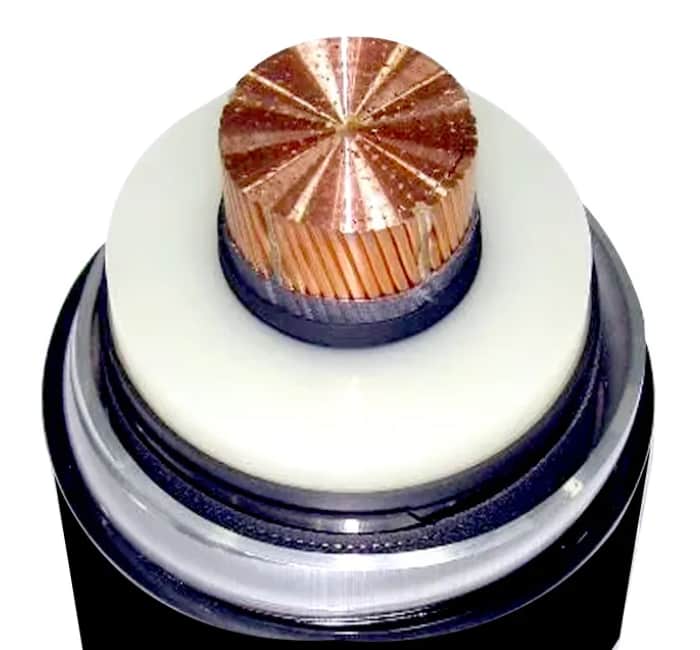
Conducteurs en cuivre
Les conducteurs en cuivre fournissent:
- Conductivité plus élevée
- Réduction des pertes de transmission
- Meilleure résistance mécanique
- Diamètre de conducteur plus petit
Par conséquent, le cuivre est largement utilisé dans les systèmes souterrains compacts et les sous-stations métropolitaines.
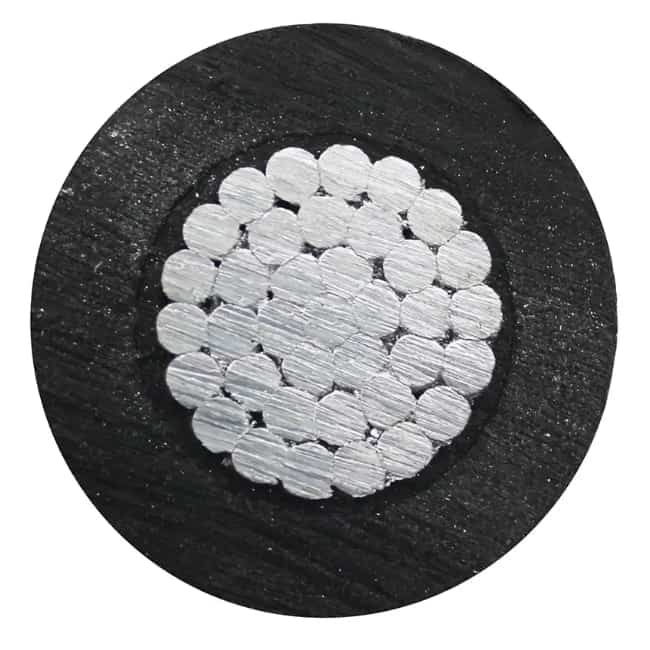
Conducteurs en aluminium
Les conducteurs en aluminium offrent plusieurs avantages économiques.
Ces avantages comprennent:
- Coût matériel inférieur
- Poids du câble réduit
- Transport plus facile
- Tension d'installation réduite
Donc, les projets de transport à grande échelle choisissent fréquemment des conducteurs en aluminium pour les réseaux longue distance.
Tailles standard américaines de 12AWG à 1000MCM
Le marché nord-américain utilise couramment les systèmes de dimensionnement des conducteurs AWG et MCM..
Tableau des tailles AWG et MCM
| Taille AWG/MCM | Section mm² |
|---|---|
| 12 AWG | 3.31 |
| 10 AWG | 5.26 |
| 8 AWG | 8.37 |
| 6 AWG | 13.3 |
| 4 AWG | 21.1 |
| 2 AWG | 33.6 |
| 1 AWG | 42.4 |
| 1/0 AWG | 53.5 |
| 2/0 AWG | 67.4 |
| 3/0 AWG | 85 |
| 4/0 AWG | 107.2 |
| 250 MCM | 126.7 |
| 300 MCM | 152 |
| 350 MCM | 177.3 |
| 400 MCM | 202.7 |
| 500 MCM | 253.4 |
| 600 MCM | 304 |
| 750 MCM | 380.1 |
| 800 MCM | 405.4 |
| 1000 MCM | 506.7 |
Tailles de conducteurs CEI de 50 mm² à 3 000 mm²
De nombreux projets de transmission internationaux suivent les normes de conducteurs métriques CEI.
Tableau des tailles métriques CEI
| Taille CEI | Application typique |
|---|---|
| 50 mm² | Systèmes de distribution de lumière |
| 70 mm² | Réseaux industriels |
| 95 mm² | Alimentation commerciale |
| 120 mm² | Répartition urbaine |
| 150 mm² | Transmission à charge moyenne |
| 185 mm² | Systèmes utilitaires |
| 240 mm² | Connexions des sous-stations |
| 300 mm² | Transmission souterraine |
| 400 mm² | Infrastructures industrielles |
| 500 mm² | Projets de production d'électricité |
| 630 mm² | Systèmes d'énergie renouvelable |
| 800 mm² | Transmission haute capacité |
| 1000 mm² | Réseaux électriques publics |
| 1200 mm² | Grandes sous-stations |
| 1400 mm² | Systèmes à forte charge |
| 1600 mm² | Projets industriels lourds |
| 2000 mm² | Principaux circuits de transmission |
| 2500 mm² | Systèmes à très haute capacité |
| 3000 mm² | Grande infrastructure de services publics |
Caractéristiques électriques du câble 115 kV
Paramètres techniques typiques
| Paramètre | Valeur |
|---|---|
| Tension nominale | 69/115kV |
| Tension maximale du système | 123kV |
| Fréquence | 50Hz / 60Hz |
| Température maximale du conducteur | 90°C |
| Température de court-circuit | 250°C |
| Tension d'impulsion de foudre | 550kV |
| Tension d'essai CA | 230kV |
En plus, les fabricants peuvent personnaliser les paramètres des câbles en fonction des exigences du réseau local.
Méthodes d'installation pour le câble XLPE 115 kV
Installation d'enterrement direct
L'enfouissement direct est l'une des méthodes d'installation les plus économiques. Typiquement, le câble est placé à l'intérieur d'une tranchée avec une couche de sable et un ruban d'avertissement de protection.
Installation de conduits
Les projets d'infrastructures urbaines utilisent souvent des systèmes de conduits car l'accès pour la maintenance deviendra plus facile à l'avenir..
De plus, les installations de conduits offrent une protection mécanique supplémentaire.
Installation de tunnels
Les grandes villes et les entreprises de services publics utilisent fréquemment des tunnels câblés pour les systèmes de transmission critiques.
Cette méthode propose:
- Inspection plus facile
- Meilleure dissipation de la chaleur
- Entretien simplifié
- Espace pour plusieurs circuits
Applications courantes du câble XLPE 115 kV
Projets d'énergie renouvelable
Les parcs solaires et les centrales éoliennes nécessitent des systèmes de transmission stables pour connecter l'énergie produite au réseau électrique principal..
Par conséquent, Les câbles haute tension XLPE sont largement utilisés dans les infrastructures d'énergies renouvelables.
Installations industrielles
Les industries lourdes nécessitent une alimentation électrique continue de haute capacité. Donc, de nombreuses usines installent des systèmes de transmission souterrains de 115 kV pour améliorer la fiabilité.
Infrastructures de transport
Les systèmes de transport modernes dépendent également des réseaux de câbles à haute tension.
Les applications courantes incluent:
- Aéroports
- Systèmes de métro
- Électrification ferroviaire
- Terminaux portuaires
Accessoires de câbles utilisés dans les systèmes 115 kV
Un système complet de câbles haute tension nécessite des accessoires spécialisés.
Principaux accessoires
| Accessoire | Fonction |
|---|---|
| Terminaison extérieure | Connexion de la sous-station |
| Résiliation du SIG | Connexion aux équipements SIG |
| Joint droit | Connexion par câble |
| Joint isolé | Isolation électrique |
| Boîte de liens | Gestion de la mise à la terre |
Sans accessoires appropriés, le système de câble ne peut pas fonctionner de manière sûre ou efficace.
Procédures de test pour le câble 115 kV
Les fabricants effectuent plusieurs tests avant de livrer des câbles haute tension aux clients.
Tests de routine
Les inspections de routine comprennent généralement:
- Test de résistance des conducteurs
- Test de décharge partielle
- Test de tenue en tension
- Vérification dimensionnelle
Essais de types
Les tests de type confirment la fiabilité des câbles à long terme.
Ces tests peuvent inclure:
- Tests de choc de foudre
- Test de cycle de chauffage
- Essais de flexion
- Essais de court-circuit
En outre, certains projets de services publics nécessitent des tests de préqualification supplémentaires avant l'installation commerciale.
Facteurs importants lors du choix d'un câble XLPE 115 kV
Plusieurs facteurs techniques doivent être évalués avant de sélectionner un système de câble.
Capacité de charge actuelle
La taille du conducteur doit supporter la charge électrique requise en toute sécurité.
Conditions environnementales
Les ingénieurs devraient évaluer:
- Résistivité thermique du sol
- Température ambiante
- Humidité
- Risques mécaniques
Environnement d'installation
Les performances du câble peuvent varier en fonction:
- Enterrement souterrain
- Installation de conduits
- Systèmes de tunnels
- Environnements humides
Normes applicables
Enfin, le câble sélectionné doit être conforme aux normes internationales requises et aux spécifications des services publics.
Tendances futures de la technologie des câbles XLPE haute tension
Le marché mondial des câbles haute tension continue de croître en raison de l’augmentation des investissements dans les infrastructures. En même temps, les fabricants développent des technologies de câbles avancées pour améliorer l’efficacité et la durabilité.
Les innovations modernes comprennent:
- Conducteurs à intensité admissible plus élevée
- Matériaux de gaine respectueux de l'environnement
- Barrières contre l'humidité améliorées
- Systèmes de surveillance intelligents
- Pertes de transmission réduites
À mesure que les réseaux électriques deviennent plus complexes, des systèmes de câbles souterrains fiables deviendront encore plus importants.
115Câble XLPE kV
Le câble XLPE 115 kV est l'un des composants les plus importants de l'infrastructure souterraine moderne de transport d'électricité.. Grâce à ses performances d’isolation supérieures, haute résistance thermique, longue durée de vie, et faibles besoins d'entretien, La technologie des câbles XLPE est devenue le choix préféré des entreprises de services publics et des projets industriels du monde entier.
Qu'il s'agisse d'utiliser des tailles de conducteurs standard américaines de 12 AWG à 1 000 MCM ou des tailles métriques CEI de 50 mm² à 3 000 mm², une bonne sélection de câbles reste essentielle pour une transmission électrique fiable et efficace.
À l'avenir, la demande de systèmes de câbles XLPE 115 kV de haute qualité continuera d'augmenter à mesure que les villes se développent, les projets d’énergies renouvelables se développent, et l'infrastructure électrique mondiale se modernise.