
Les réseaux électriques moyenne tension modernes nécessitent des systèmes de terminaison de câbles capables de fournir une isolation électrique fiable., distribution contrôlée du champ électrique, protection mécanique et stabilité opérationnelle à long terme. Alors que les systèmes souterrains de distribution d’énergie continuent de se développer, la connexion entre les câbles moyenne tension et les appareils de commutation à isolation gazeuse est devenue de plus en plus importante. UN 20Terminaison SIG du câble kV 22 kV 24 kV est spécialement conçu pour connecter des câbles XLPE moyenne tension à des appareillages à isolation gazeuse (SIG), transformateurs, disjoncteurs et autres équipements électriques. Ces terminaisons doivent s'adapter à différentes constructions de câbles, tailles de conducteur, les systèmes d'isolation et les interfaces des équipements tout en maintenant des performances électriques stables tout au long de la durée de vie de l'installation.
Pour les services publics, Entrepreneurs EPC, fabricants d'appareillages de commutation et entrepreneurs en électricité, en sélectionnant le bon Terminaison de câble SIG est essentiel pour la fiabilité du système. Une terminaison correctement conçue peut minimiser le stress électrique, empêcher les décharges partielles et fournir une interface fiable entre le système d'isolation des câbles et l'équipement GIS.
Le câble DOS fournit un support- et accessoires de câbles haute tension et solutions de terminaison de câbles personnalisées pour les projets internationaux de transport et de distribution d'énergie.. Son approche d'ingénierie couvre les paramètres des câbles, Exigences relatives à l'interface SIG, conditions d’installation et normes internationales applicables.
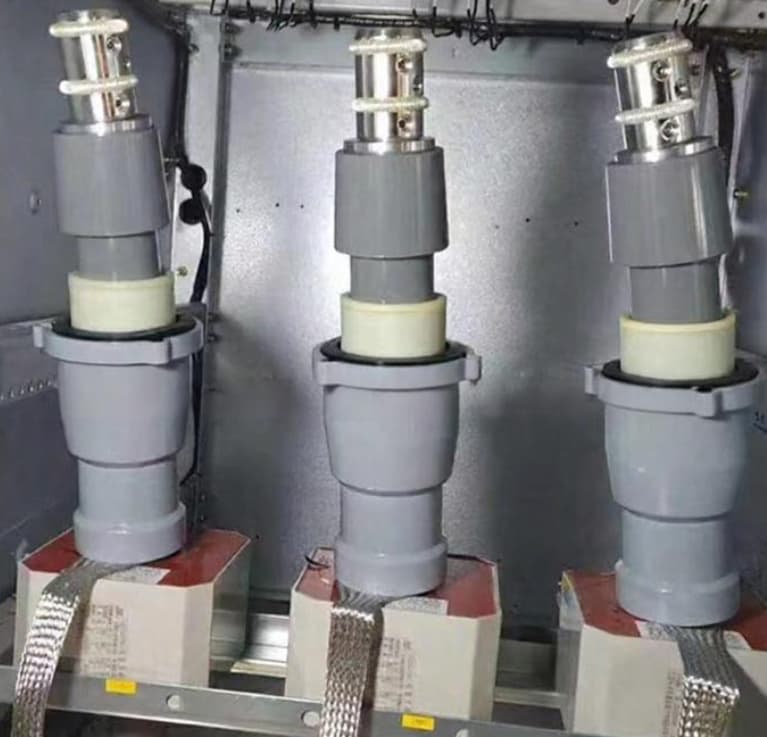
Qu'est-ce qu'une terminaison SIG de câble 20 kV 22 kV 24 kV?
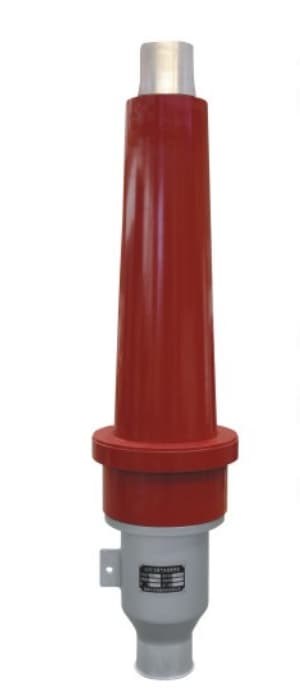
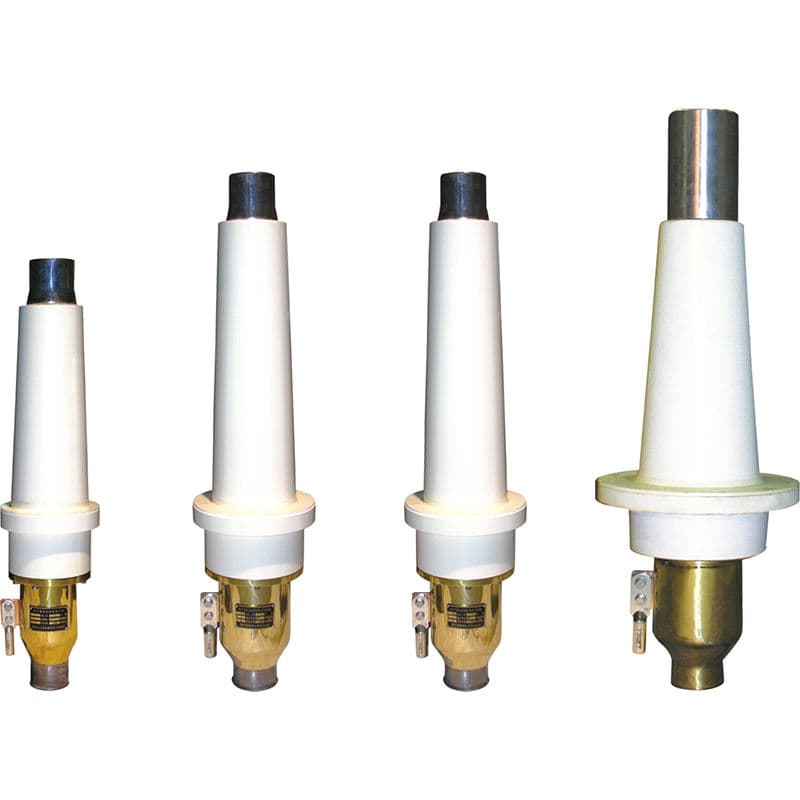
UN 20Terminaison SIG du câble kV 22 kV 24 kV est un accessoire de câble utilisé pour connecter un câble d'alimentation moyenne tension à un appareillage de commutation isolé au gaz ou à un autre équipement électrique. La terminaison crée une transition contrôlée entre le câble’s le système d'isolation et le compartiment de traversée ou de raccordement des câbles GIS.
Contrairement à une terminaison extérieure conventionnelle, une terminaison GIS est normalement installée à l'intérieur ou directement connectée à une enceinte isolée au gaz. L'interface nécessite donc une grande précision dimensionnelle et une répartition du champ électrique soigneusement contrôlée..
Les applications typiques incluent:
- Appareillage SIG moyenne tension
- Sous-stations isolées au gaz
- Sous-stations de distribution
- Transformateurs de puissance
- Sous-stations industrielles
- Systèmes de capteurs d'énergie renouvelable
- Centres de données
- Installations minières et industrielles lourdes
- Réseaux de distribution souterrains
- Systèmes de distribution d'énergie utilitaire
- Projets commerciaux et d'infrastructures
Selon les exigences du projet, un 20Terminaison de câble kV, 22Terminaison de câble kV ou 24Terminaison de câble kV peut être conçu pour les câbles à isolation XLPE unipolaire ou tripolaire.
Pourquoi la terminaison du câble SIG est-elle importante?
Un câble d'alimentation a une structure d'isolation cylindrique relativement uniforme. Lorsque le câble entre dans une enceinte SIG, la géométrie change considérablement autour de la connexion du conducteur, écran isolant, écran métallique et système de mise à la terre.
Ce changement de géométrie peut produire une contrainte électrique concentrée.
Si le champ électrique n’est pas correctement contrôlé, plusieurs problèmes peuvent survenir:
- Décharge partielle
- Arborescence électrique
- Dégradation de l'isolation
- Décharge superficielle
- Surchauffe locale
- Défaillance prématurée de l’isolation
- Flashover
- Durée de vie réduite
Une haute qualité terminaison GIS moyenne tension doit donc contrôler le champ électrique autour de l'isolation du câble et assurer une transition en douceur entre le câble et l'équipement SIG.
La terminaison n'est pas simplement un connecteur mécanique. Il s'agit d'un composant électrique technique qui fait partie du système d'isolation global..
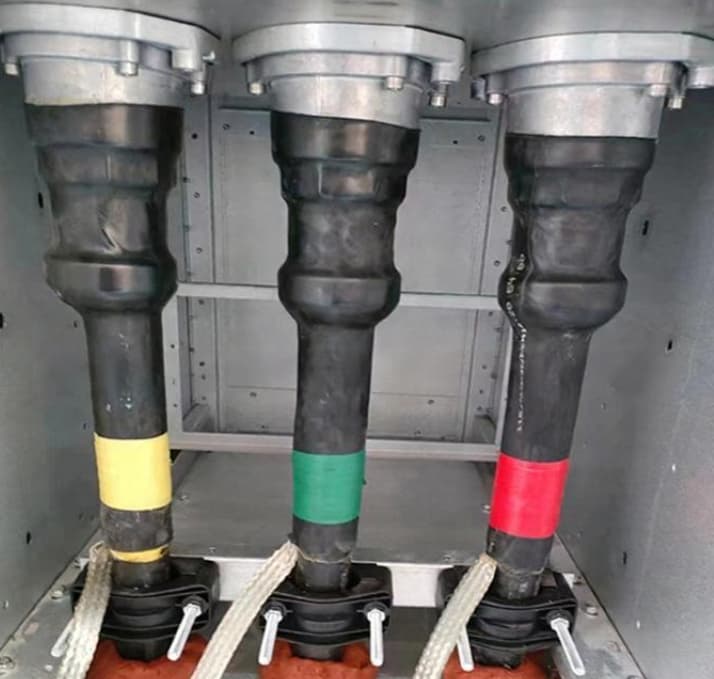
20Terminaison SIG du câble kV
UN 20Terminaison SIG du câble kV est couramment utilisé dans les systèmes de distribution moyenne tension où la tension nominale du réseau est d'environ 20 kV.
20Les réseaux kV sont largement utilisés dans les systèmes de distribution de services publics, installations industrielles, installations d’énergies renouvelables et infrastructures urbaines. La désignation réelle de la tension du câble peut varier en fonction de la norme électrique locale et de la configuration du réseau..
Un câble XLPE 20 kV typique peut inclure:
- Conducteur en cuivre ou en aluminium
- Écran conducteur
- Isolation XLPE
- Écran d'isolation
- Écran métallique
- Composants bloquant l'eau si nécessaire
- PE ou autre gaine extérieure
Le correspondant 12/20Terminaison de câble kV GIS doit être adapté à la construction réelle du câble.
Les paramètres importants incluent:
| Paramètre | Exigence typique |
|---|---|
| Application | SIG moyenne tension |
| Tension nominale | 12/20kV |
| Isolation des câbles | XLPE |
| Conducteur | Cuivre ou aluminium |
| Type de câble | Monocœur ou tricœur |
| Installation | Intérieur / Boîtier SIG |
| Interface | Bague SIG / compartiment à câbles |
| Contrôle du champ électrique | Cône de contrainte ou système équivalent |
| Écran métallique | Connexion à la terre requise |
| Installation | Spécifique au projet |
La conception exacte doit toujours être sélectionnée en fonction du fabricant du câble’s dimensions et le fabricant du SIG’Exigences d'interface.
22Terminaison SIG du câble kV
UN 22Terminaison SIG du câble kV est conçu pour les réseaux moyenne tension fonctionnant à environ 22 kV. Ce niveau de tension est particulièrement pertinent dans plusieurs systèmes de distribution et réseaux de services publics internationaux.
L'utilisation croissante de câbles de distribution souterrains a créé une demande accrue d'accessoires de câbles 22 kV fiables..
Un typique 22Terminaison de câble kV doit fournir:
- Isolation électrique
- Contrôle du champ électrique
- Connexion fiable des conducteurs
- Continuité des écrans métalliques
- Stabilité mécanique
- Étanchéité contre la contamination environnementale
- Compatibilité avec l'interface SIG
- Performance thermique à long terme
Pour câbles isolés XLPE, le composant de contrôle des contraintes est particulièrement important car la terminaison crée une transition entre le câble’Écran d'isolation semi-conducteur à la structure GIS mise à la terre ou isolée.
Lors de la conception d'un 22Terminaison SIG du câble kV, les dimensions du câble doivent être vérifiées avant la production. Les dimensions les plus importantes incluent normalement le diamètre du conducteur, diamètre d'isolation, diamètre de l'écran isolant, diamètre extérieur du câble et construction à écran métallique.
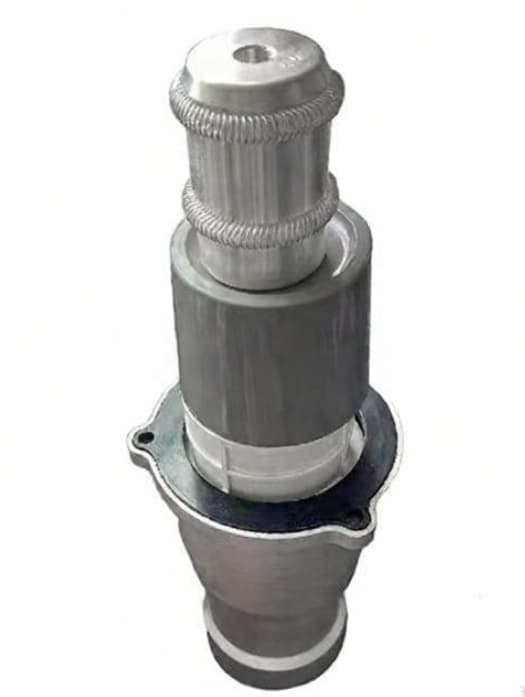
24Terminaison SIG du câble kV
UN 24Terminaison SIG du câble kV est utilisé pour les systèmes moyenne tension avec des caractéristiques d'équipement ou de réseau autour de 24 kV.
24Les équipements de classe kV sont fréquemment associés aux réseaux de distribution moyenne tension où le niveau d'isolation des équipements est supérieur à la tension nominale de fonctionnement.. Pour cette raison, les ingénieurs doivent faire la distinction entre la tension de fonctionnement du réseau, tension maximale du système et tension nominale de l'équipement.
UN 24Terminaison kV SIG doit être coordonné avec le niveau d’isolation de l’équipement GIS et les exigences de test applicables.
Les applications typiques incluent:
- Sous-stations de services publics
- Systèmes électriques industriels
- Sous-stations d'énergie renouvelable
- Systèmes de collecte d'énergie éolienne
- Réseaux de collecte d'énergie solaire
- Distribution urbaine souterraine
- Infrastructures ferroviaires et de transport
- Systèmes électriques commerciaux
Pour des projets exigeants, la terminaison peut également être personnalisée en fonction de la section du câble, matériau conducteur, conception d'écran, Fabricant SIG et configuration de l'installation.
Principaux composants d'une terminaison de câble SIG
Bien que la construction exacte varie selon le fabricant et la classe de tension, une terminaison de câble GIS moyenne tension contient généralement plusieurs composants critiques.
1. Composante de contrôle du stress
Le système de contrôle du stress est l'une des parties les plus importantes du licenciement.
Il gère la concentration du champ électrique à l'extrémité de l'écran d'isolation du câble. Sans contrôle approprié du stress, le champ électrique peut devenir excessivement concentré au niveau de la coupure de l'écran.
La technologie de contrôle des contraintes peut utiliser le contrôle des contraintes géométriques, contrôle des contraintes résistives, gradation de champ capacitif ou combinaison de matériaux et de géométries techniques.
2. Corps isolant
Le corps isolant fournit l'isolation diélectrique requise entre les composants sous tension et les structures mises à la terre..
Caoutchouc de silicone, L'EPDM et d'autres matériaux isolants techniques peuvent être utilisés en fonction de la conception des terminaisons..
Le matériau doit conserver des propriétés électriques et mécaniques stables sur la plage de températures de fonctionnement prévue..
3. Connexion du conducteur
La connexion du conducteur transfère le courant électrique du conducteur du câble vers l'équipement SIG..
En fonction de la conception du système, le conducteur peut être connecté à l'aide d'un connecteur mécanique, connecteur à compression ou autre système de connexion approuvé.
Le connecteur doit être compatible avec le matériau conducteur et la section transversale.
4. Interface d'isolation des câbles
La terminaison doit s'adapter précisément autour de l'isolation XLPE.
L'interface entre la terminaison et l'isolation du câble est particulièrement importante car les espaces d'air microscopiques ou la contamination peuvent augmenter le risque de décharge partielle..
Une préparation et une installation appropriées sont donc essentielles.
5. Connexion d'écran métallique
L'écran métallique du câble doit être connecté conformément à la disposition de mise à la terre et de liaison du système..
En fonction de la conception du câble, l'écran peut être constitué de:
- Fils de cuivre
- Ruban de cuivre
- Feuille d'aluminium
- Gaine de plomb
- Gaine en aluminium
- Autres couches métalliques
La terminaison doit fournir une connexion fiable entre le blindage du câble et le système de mise à la terre.
6. Système d'étanchéité
Une structure d'étanchéité fiable aide à empêcher l'humidité et les contaminants de pénétrer dans les interfaces sensibles.
Ceci est particulièrement important pour les installations où la terminaison du câble est exposée à des environnements humides., condensation ou cycle de température à long terme.
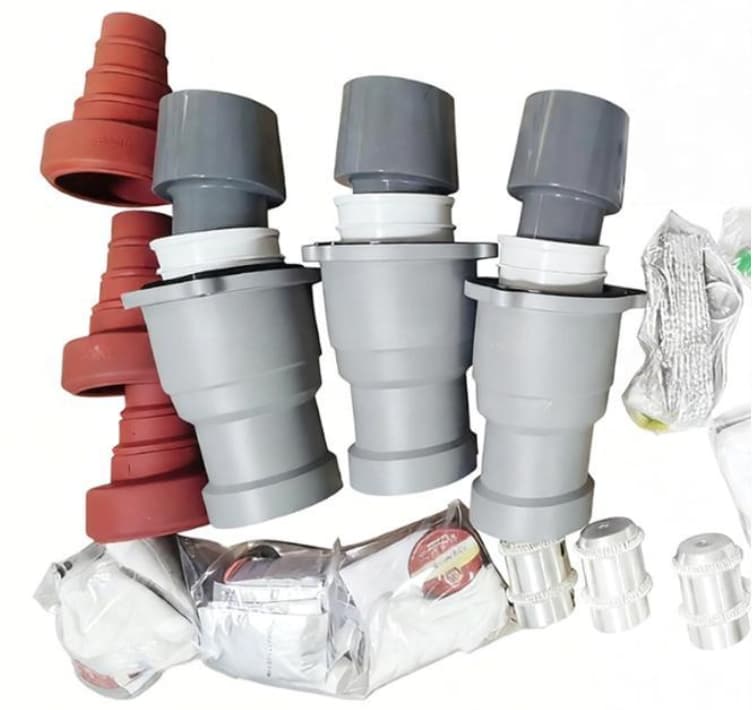
Terminaison SIG de câble XLPE pour 20 kV, 22Systèmes kV et 24kV
Le XLPE est l'un des matériaux isolants les plus utilisés pour les câbles électriques moyenne tension..
Un câble XLPE typique a une structure multicouche composée du conducteur, écran conducteur, Isolation XLPE, écran isolant et écran métallique.
Le Terminaison SIG pour câble XLPE doit préserver les caractéristiques électriques de ce système d'isolation tout en créant une interface contrôlée avec les équipements SIG.
Le processus de préparation du câble implique généralement de retirer soigneusement la gaine extérieure, écran métallique et écran d'isolation semi-conducteur aux dimensions spécifiées.
La surface de l'isolation XLPE doit rester lisse et exempte de rayures, contamination et enlèvement excessif de matière.
La réduction de l'écran isolant est particulièrement importante car le composant de contrôle des contraintes doit être positionné avec précision.
Une préparation incorrecte des câbles peut entraîner:
- Concentration élevée de champ électrique
- Décharge partielle
- Défauts d'interface
- Suivi
- Échec prématuré
Pour cette raison, les instructions d'installation doivent toujours être suivies à la lettre.
20Terminaison de câble SIG kV vs 22kV vs 24kV
Bien que ces trois classes de tension soient relativement proches, ils ne devraient pas automatiquement être considérés comme interchangeables.
| Article | 20kV | 22kV | 24kV |
|---|---|---|---|
| Application | Moyenne tension | Moyenne tension | Moyenne tension |
| Utilisation typique | Distribution | Distribution | Distribution |
| Isolation des câbles communs | XLPE | XLPE | XLPE |
| Application SIG | Oui | Oui | Oui |
| Contrôle du champ électrique | Requis | Requis | Requis |
| Dimensions du câble | Spécifique au projet | Spécifique au projet | Spécifique au projet |
| Interface SIG | Spécifique au projet | Spécifique au projet | Spécifique au projet |
| Essai | Selon la norme en vigueur | Selon la norme en vigueur | Selon la norme en vigueur |
Le point le plus important est que la désignation de la tension à elle seule ne suffit pas à sélectionner une terminaison..
Les ingénieurs doivent également vérifier:
- Tension maximale du système
- Tension de tenue nominale
- Niveau de tenue aux chocs de foudre
- Taille du conducteur du câble
- Épaisseur d'isolation du câble
- Diamètre d'isolation du câble
- Construction à écran métallique
- Interface de traversée SIG
- Dimensions de connexion des conducteurs
- Environnement d'installation
- Disposition de mise à la terre
Terminaison SIG et contrôle des champs électriques
Le contrôle du champ électrique est fondamental pour la performance d'un Terminaison de câble SIG.
Au bout du câble’s écran semi-conducteur, sinon le champ électrique se concentrerait. Le système de contrôle des contraintes redistribue ce champ et réduit les contraintes électriques locales.
Ceci est particulièrement important dans les systèmes moyenne tension, car une terminaison de câble peut fonctionner en continu pendant de nombreuses années sous des conditions thermiques., contraintes électriques et mécaniques.
La conception doit prendre en compte:
- Distribution de champ électrique
- Pression d'interface
- Géométrie de l'isolation
- Propriétés diélectriques du matériau
- Température
- Extension de câble
- Tolérances de fabrication
- Tolérances d'installation
L'analyse du champ électrique assistée par ordinateur peut être utilisée pendant le développement du produit pour optimiser la géométrie des terminaisons..
Compatibilité des interfaces câble et SIG
L'une des considérations les plus importantes lors de la sélection d'un 20Terminaison SIG du câble kV 22 kV 24 kV est la compatibilité avec l'équipement SIG.
Différents fabricants de SIG peuvent utiliser différentes dimensions d'interface et dispositions de connexion.
Donc, une terminaison ne doit pas être sélectionnée uniquement en fonction de la tension nominale.
Les informations suivantes sont normalement requises:
Informations sur le câble
- Fabricant
- Type de câble
- Tension nominale
- Matériau conducteur
- Section du conducteur
- Diamètre du conducteur
- Épaisseur d'isolation XLPE
- Diamètre d'isolation
- Diamètre de l'écran isolant
- Type d'écran métallique
- Diamètre extérieur du câble
Informations SIG
- Fabricant de SIG
- Modèles SIG
- Type de connexion par câble
- Dimensions de la bague/interface
- Disposition de connexion des conducteurs
- Disposition de mise à la terre
- Orientation d'installation
- Autorisations requises
Ces informations permettent au fabricant de terminaisons de confirmer la compatibilité avant la production..
Normes pour les terminaisons de câbles GIS moyenne tension
Les normes applicables dépendent du niveau de tension, pays, système de câble et équipement SIG.
Pour les systèmes de câbles moyenne tension, les normes CEI pertinentes peuvent inclure des normes couvrant les câbles d'alimentation, accessoires de câbles et appareillage haute tension.
Pour les équipements SIG et les connexions par câble, CEI 62271 les normes de série peuvent être particulièrement pertinentes, tandis que le système de câble spécifique devra peut-être se conformer à la norme de câble CEI applicable.
Le programme de test exact doit être établi conformément aux spécifications du projet et à la norme applicable..
Les qualifications typiques et les tests de routine peuvent inclure:
- Test de tension de tenue CA
- Test de décharge partielle
- Test de choc de foudre le cas échéant
- Essais d'isolation
- Contrôle dimensionnel
- Inspection mécanique
- Inspection des matériaux
- Inspection de fuite ou d’étanchéité le cas échéant
Un fabricant professionnel doit fournir une documentation de test correspondant aux exigences du produit fourni et du projet..
Performances de décharge partielle
La décharge partielle est l'une des préoccupations les plus importantes pour les accessoires de câbles de haute qualité.
Une décharge électrique localisée peut survenir en cas de défaut électrique, vide, problème d’interface ou concentration excessive de champ électrique.
Bien que les événements de sortie individuels puissent être mineurs, des décharges partielles répétées peuvent endommager progressivement l'isolation.
Pour cette raison, les performances de décharge partielle sont une considération importante lors de l'évaluation d'un 20Terminaison SIG du câble kV, 22Terminaison SIG du câble kV ou 24Terminaison SIG du câble kV.
Les bonnes pratiques de fabrication devraient inclure:
- Environnement d'assemblage propre
- Dimensions précises des composants
- Propriétés des matériaux contrôlées
- Pression d'interface appropriée
- Surfaces isolantes lisses
- Positionnement précis du contrôle du stress
- Contrôle de qualité strict
Installation d'une terminaison SIG de câble 20kV 22kV 24kV
La qualité de l'installation peut influencer de manière significative la durée de vie d'une terminaison SIG.
Un processus d'installation typique comprend plusieurs étapes.
Étape 1: Confirmer les paramètres du câble et du SIG
Avant l'installation, vérifier les dimensions du câble et l'interface SIG.
Ne commencez pas la préparation des câbles tant que toutes les dimensions critiques n'ont pas été confirmées.
Étape 2: Préparez le câble
Retirer la gaine extérieure et l'écran métallique selon le fabricant’dessin d'installation.
Le câble doit être manipulé avec précaution pour éviter d'endommager l'isolation XLPE.
Étape 3: Préparez l'écran d'isolation
L'écran d'isolation semi-conducteur est retiré à la dimension de réduction spécifiée.
La surface XLPE exposée doit être propre, lisse et exempt de rayures.
Étape 4: Installer le système de contrôle du stress
Le composant de contrôle des contraintes est positionné selon les dimensions spécifiées.
Un positionnement incorrect peut affecter négativement la distribution du champ électrique.
Étape 5: Installer le corps isolant
Le composant isolant est installé sur la zone d'isolation du câble et de contrôle des contraintes..
L'interface doit être exempte de contamination.
Étape 6: Connectez le conducteur
Le conducteur est connecté au terminal SIG à l'aide de la méthode de connexion spécifiée.
La connexion doit répondre aux exigences mécaniques et électriques requises.
Étape 7: Connectez l'écran métallique
Le blindage du câble est connecté au système de mise à la terre désigné.
L'accord de cautionnement doit suivre la conception du projet.
Étape 8: Terminez la connexion SIG
La terminaison est connectée au compartiment ou à la traversée du câble GIS.
Les dimensions mécaniques et le couple de connexion doivent être vérifiés.
Étape 9: Effectuer des tests électriques
Après l'installation, le système de câbles terminé doit subir l'inspection et les tests électriques requis conformément aux spécifications du projet.
Comment choisir un fabricant de terminaisons de câble SIG
Choisir le bon Fabricant de terminaisons SIG est essentiel pour les projets moyenne tension.
Le prix n'est qu'un facteur. Un fabricant de terminaisons doit également disposer de capacités d'ingénierie, contrôle de la production et expérience avec différentes constructions de câbles.
Lors de l'évaluation d'un fournisseur, considérer:
Compatibilité des câbles
Le fabricant doit être en mesure de s'adapter à différentes tailles de conducteurs et constructions de câbles..
Expérience d'interface SIG
L'expérience avec différents fabricants de SIG et interfaces de connexion peut réduire les risques d'ingénierie.
Conception électrique
Le fabricant doit avoir la capacité d'analyser la distribution du champ électrique et d'optimiser la géométrie de contrôle des contraintes..
Contrôle de qualité
La qualité de fabrication a une influence directe sur la fiabilité des terminaisons.
Capacité de test
Le fournisseur doit disposer d'un équipement de test approprié et de procédures qualité documentées..
Personnalisation
Les projets internationaux nécessitent souvent des dimensions personnalisées, systèmes de connexion ou dispositions d’installation.
Un fournisseur compétent doit être capable de fabriquer selon des dessins techniques approuvés plutôt que de proposer uniquement des produits standard sur catalogue..
Pourquoi choisir le câble Dosense?
Dosense Cable est un fabricant international de câbles et un fournisseur d'accessoires de câbles au service des clients du secteur de la distribution d'énergie., transmission de puissance, marchés industriels et d’infrastructures.
Pour les clients recherchant un 20Terminaison SIG du câble kV, 22Terminaison SIG du câble kV ou 24Terminaison SIG du câble kV, la compatibilité technique est souvent plus importante que la simple sélection d'une tension nominale.
Dosense Cable peut développer des solutions d'accessoires de câbles en fonction du client’s la construction réelle des câbles et les exigences d'interface SIG.
Le processus d'ingénierie peut prendre en compte:
- Tension du câble
- Matériau conducteur
- Section du conducteur
- Épaisseur d'isolation XLPE
- Diamètre du câble
- Dimensions de l'écran isolant
- Construction à écran métallique
- Interface SIG
- Conditions de pose
- Normes du projet
- Exigences de test
Cette approche permet d'adapter la terminaison au système de câble complet plutôt que de la traiter comme un composant indépendant..
Pour les entrepreneurs EPC et les fabricants d’équipements électriques, une assistance technique personnalisée peut également contribuer à simplifier l'approvisionnement et l'installation.
Applications de 20kV, 22Terminaisons GIS kV et 24 kV
Les terminaisons de câbles GIS moyenne tension sont utilisées dans une large gamme d'applications.
Réseaux de distribution de services publics
Les services publics d’électricité utilisent des équipements SIG là où l’espace est limité, les conditions environnementales ou les exigences de fiabilité rendent les appareillages à isolation gazeuse attractifs.
Énergie renouvelable
Les projets d’énergie solaire et éolienne utilisent couramment des réseaux de capteurs moyenne tension. Des terminaisons de câbles fiables sont nécessaires à l'interface entre les câbles collecteurs, transformateurs et appareillage de commutation.
Installations industrielles
Les grandes installations industrielles nécessitent souvent des sous-stations moyenne tension compactes et fiables.
Centres de données
Les centres de données nécessitent des systèmes de distribution d'énergie extrêmement fiables, et le SIG peut contribuer à fournir une infrastructure électrique compacte.
Sous-stations urbaines
Dans les zones densément peuplées, Le SIG permet aux sous-stations d'occuper moins d'espace que de nombreux systèmes conventionnels isolés par l'air.
Projets d'infrastructures
Chemins de fer, aéroports, tunnels, les hôpitaux et les grands développements commerciaux peuvent également utiliser des systèmes SIG moyenne tension.
Questions courantes sur la terminaison SIG du câble 20 kV 22 kV 24 kV
Une terminaison SIG 20 kV est-elle la même qu'une terminaison SIG 22 kV ??
Pas nécessairement. Bien que les niveaux de tension soient proches, le niveau d'isolation requis, L'interface SIG et les normes du projet peuvent être différentes. Les paramètres complets du système doivent être vérifiés avant de sélectionner la terminaison.
Une terminaison GIS peut-elle être utilisée pour différentes tailles de câbles?
Une terminaison peut être conçue pour une gamme spécifique de dimensions de câble, mais la compatibilité doit être confirmée. Diamètre d'isolation du câble, les dimensions des conducteurs et la construction de l'écran sont particulièrement importantes.
Les terminaisons GIS peuvent-elles être utilisées avec des câbles XLPE?
Oui. Les câbles moyenne tension isolés au XLPE sont couramment utilisés avec les systèmes de terminaison de câbles GIS.
Les conducteurs en cuivre et en aluminium peuvent-ils utiliser la même terminaison?
Le concept de résiliation peut être similaire, mais le connecteur du conducteur doit être compatible avec le matériau et la section du conducteur.
Quelles informations dois-je fournir lors d'une demande de devis?
Au minimum, fournir:
- Tension nominale
- Matériau du conducteur du câble
- Section du conducteur
- Construction de câbles
- Épaisseur d'isolation XLPE
- Diamètre extérieur du câble
- Type d'écran métallique
- Fabricant de SIG
- Modèles SIG
- Quantité requise
- Norme applicable
- Localisation du projet
Fournir une fiche technique du câble et un dessin de l'interface SIG, c'est encore mieux.
Conclusion
Un fiable 20Terminaison SIG du câble kV 22 kV 24 kV est un élément important d’un réseau électrique moyenne tension moderne. Il fournit l'électricité, connexion mécanique et d'interface entre les câbles d'alimentation XLPE et l'appareillage de commutation à isolation gazeuse tout en contrôlant la concentration du champ électrique autour de l'isolation du câble.
Si le projet nécessite un 20Terminaison SIG du câble kV, 22Terminaison SIG du câble kV ou 24Terminaison SIG du câble kV, la solution correcte doit être sélectionnée en fonction du système de câble complet et de l'interface SIG plutôt que de la seule tension nominale.
Dimensions du câble, structure d'isolation, matériau conducteur, écran métallique, Interface SIG, contrôle du stress électrique, les conditions d'installation et les normes applicables doivent toutes être prises en compte lors de l'ingénierie et de l'approvisionnement..
Pour les services publics, Entrepreneurs EPC, fabricants d'appareillages de commutation et distributeurs électriques, travailler avec un expérimenté Fabricant de terminaisons SIG peut réduire les risques de compatibilité et améliorer la fiabilité du projet.
DOS Cable fournit des solutions de câbles moyenne et haute tension personnalisées ainsi que des accessoires de câbles pour les projets internationaux. Pour un 20kV, 22Terminaison de câble GIS kV ou 24kV, les clients peuvent fournir la fiche technique du câble et les informations sur l'interface SIG pour l'évaluation technique et la sélection des produits.