
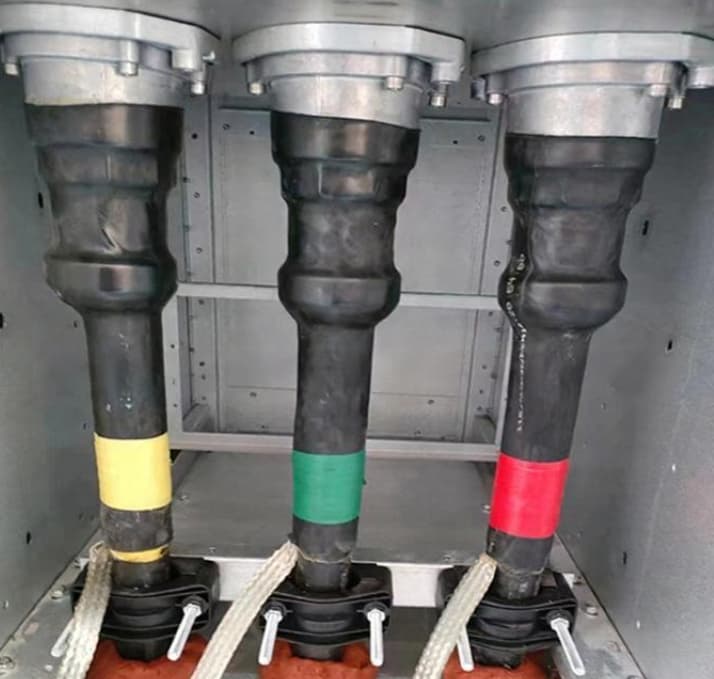
Un Fabricant de terminaisons enfichables à cône intérieur fournit des accessoires de câbles spécialisés pour connecter les câbles d'alimentation haute tension au SIG, transformateurs, appareillage de commutation, et autres équipements électriques. La technologie utilise une interface enfichable compacte et un cône de contrainte prémoulé pour contrôler le champ électrique autour de l'isolation du câble..
Par rapport aux terminaisons de câbles conventionnelles, la conception du cône intérieur offre une structure de connexion compacte. Donc, il fonctionne particulièrement bien dans les sous-stations où l'espace d'installation reste limité. En outre, de nombreuses conceptions modernes utilisent la technologie d'isolation sèche, ce qui simplifie l'installation et réduit le besoin de supports isolants liquides.
La technologie enfichable à cône interne peut servir à moyenne tension, haute tension, et applications très haute tension. En fonction du fabricant et de la conception du produit, les classes de tension disponibles peuvent varier d'environ 10 kV à 500 kV.
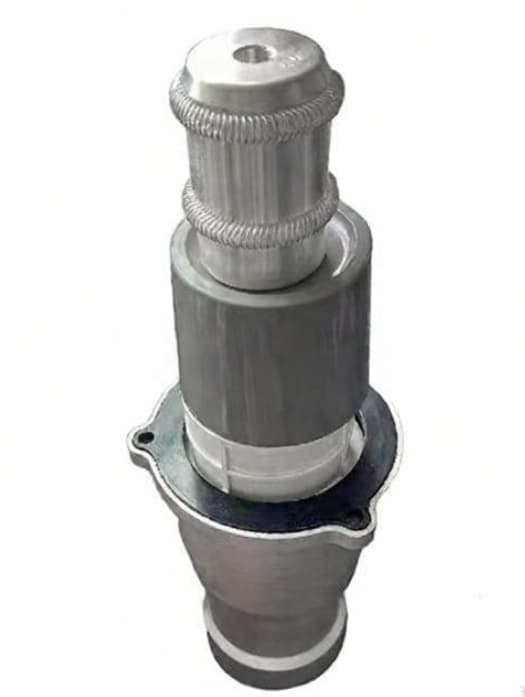
Qu'est-ce qu'une terminaison enfichable à cône interne?
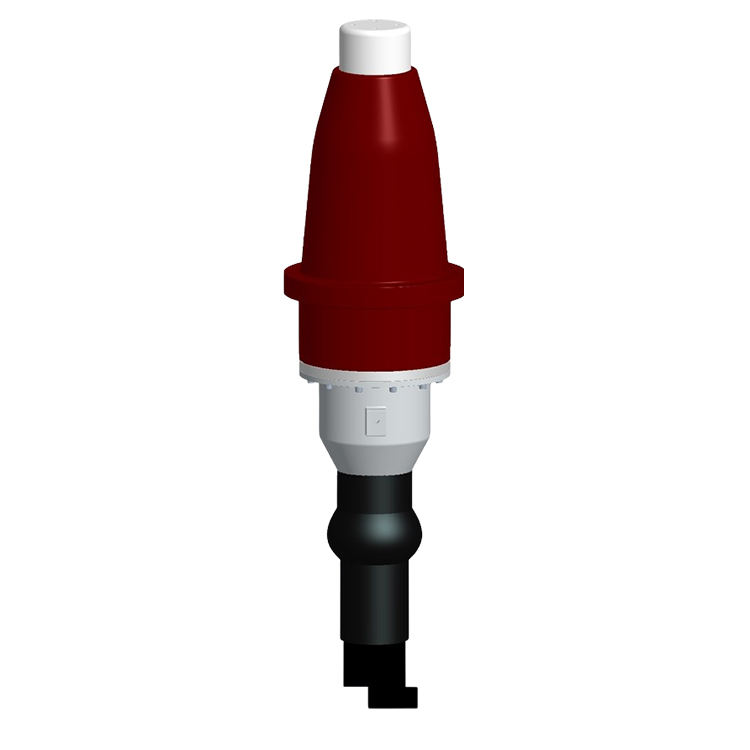
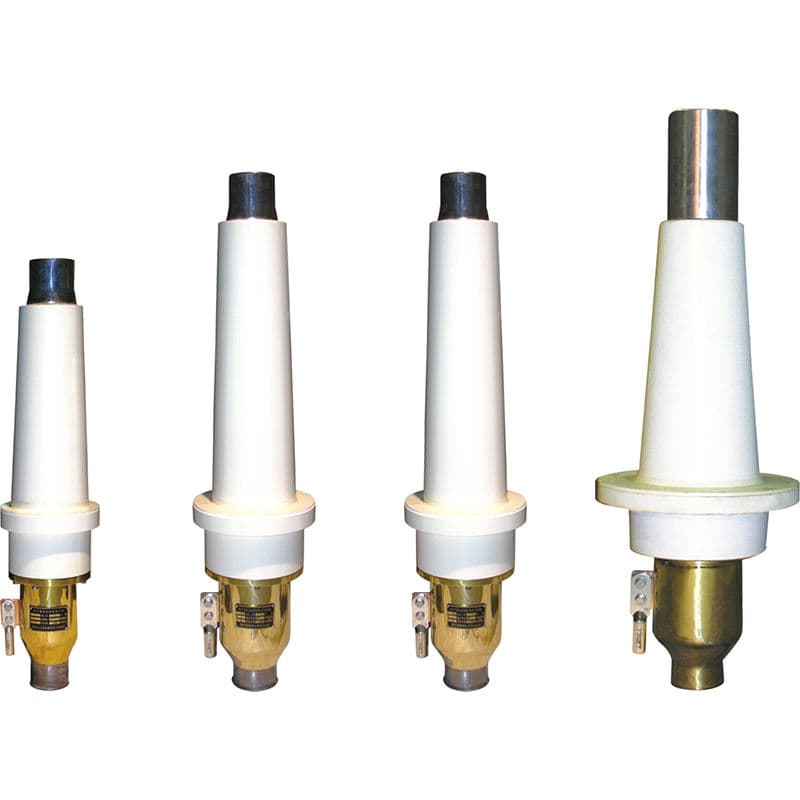
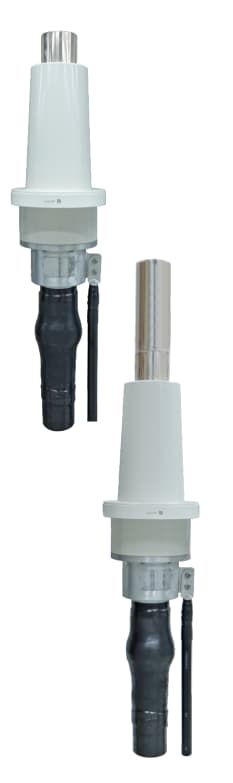
Un Terminaison enfichable à cône intérieur connecte un câble d'alimentation à un appareil électrique via une douille conique interne. Le système comprend normalement un cône de contrainte, contact conducteur, interface d'isolation, composants d'étanchéité, et composants de pression mécaniques.
Le cône de contrainte joue un rôle essentiel dans le contrôle du champ électrique. Il répartit les contraintes électriques autour de l'isolation du câble et réduit la concentration du champ électrique à l'extrémité de l'écran semi-conducteur..
Pendant l'installation, la terminaison du câble entre dans la traversée correspondante. L'interface crée alors une connexion électrique contrôlée entre le câble et l'équipement.
Par conséquent, la technologie du cône intérieur peut fournir une solution compacte pour:
- Appareillage SIG
- Appareillage C-GIS
- Transformateurs de puissance
- Sous-stations isolées au gaz
- Appareillage haute tension
- Sous-stations d'énergie renouvelable
- Systèmes éoliens offshore
- Systèmes de transport souterrains
- Systèmes électriques ferroviaires
L'interface de la traversée doit correspondre précisément à la terminaison. Par conséquent, les ingénieurs doivent confirmer les dimensions de l'interface avant de sélectionner un Fabricant de terminaisons enfichables à cône intérieur.
Niveaux de tension de terminaison enfichable du cône intérieur
La tension nominale représente l'un des critères de sélection les plus importants. Cependant, les clients doivent faire la distinction entre le câble’s la tension nominale et l'équipement’s tension maximale.
La liste suivante couvre les niveaux de tension courants ou potentiellement applicables de 10 kV à 500 kV.
| Nominal / Tension de l'équipement | Application typique |
|---|---|
| 10 kV | Distribution moyenne tension |
| 11 kV | Réseaux de distribution |
| 12 kV | Systèmes moyenne tension |
| 15 kV | Systèmes MT nord-américains |
| 17.5 kV | Classe d'équipement MT |
| 20 kV | Réseaux de distribution |
| 22 kV | Distribution moyenne tension |
| 24 kV | Appareillage MT |
| 26 kV | Systèmes de câbles spéciaux |
| 27.5 kV | Traction ferroviaire |
| 30 kV | Systèmes moyenne tension |
| 33 kV | Distribution et énergies renouvelables |
| 35 kV | Réseaux moyenne tension |
| 36 kV | Classe d'équipement MT |
| 38 kV | Systèmes utilitaires sélectionnés |
| 40.5 kV | Classe d'appareillage MT |
| 42 kV | Applications spéciales MT |
| 45 kV | Applications spéciales haute tension |
| 52 kV | Applications MT haut de gamme |
| 66 kV | Distribution haute tension |
| 69 kV | Transmission nord-américaine |
| 72.5 kV | Classe d'équipement haute tension CEI |
| 90 kV | Systèmes haute tension |
| 110 kV | Systèmes de transmission |
| 115 kV | Transmission nord-américaine |
| 126 kV | Classe d'équipement CEI |
| 132 kV | Systèmes de transmission |
| 138 kV | Transmission nord-américaine |
| 145 kV | Classe d'équipement CEI |
| 150 kV | Réseaux de transport sélectionnés |
| 170 kV | Classe d'équipement CEI |
| 220 kV | Systèmes de transmission |
| 230 kV | Transmission nord-américaine |
| 245 kV | Classe d'équipement CEI |
| 275 kV | Transmission haute tension |
| 300 kV | Applications de transmission spéciales |
| 330 kV | Transmission haute tension |
| 345 kV | Transmission nord-américaine |
| 362 kV | Classe d'équipement CEI |
| 400 kV | Transmission à très haute tension |
| 420 kV | Classe d'équipement CEI |
| 500 kV | Transmission à très haute tension |
Ce tableau comprend les tensions nominales et les classes d'équipement couramment utilisées. Néanmoins, tous les niveaux de tension ne représentent pas un produit à cône interne standard.
Par exemple, certains fabricants proposent des systèmes à cône intérieur jusqu'à 52 kV, tandis que d'autres familles de produits couvrent des classes de tension plus élevées telles que 72.5 kV, 145 kV, 245 kV, ou au-delà. Donc, les ingénieurs doivent évaluer chaque projet en fonction de l'interface réelle du câble et de la bague.
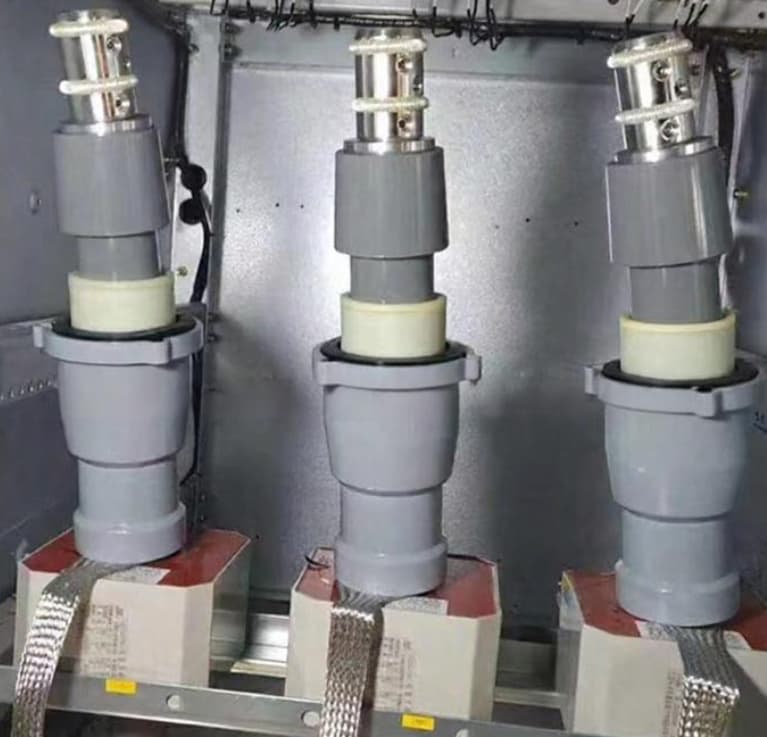
10Terminaison enfichable à cône interne kV à 52 kV
Le 10 kV à 52 La gamme kV représente un domaine d'application important pour les accessoires de câbles enfichables.
Les tensions nominales courantes des câbles incluent:
- 6/10 kV
- 8.7/15 kV
- 12/20 kV
- 18/30 kV
- 19/33 kV
- 26/35 kV
À ces niveaux de tension, les fabricants utilisent couramment des cônes de contrainte en caoutchouc de silicone prémoulés. Le silicone offre une bonne isolation électrique et maintient une pression d'interface appropriée sur une large plage de températures de fonctionnement..
En outre, la structure enfichable compacte permet aux ingénieurs d'installer des connexions de câbles à l'intérieur des compartiments d'appareillage de commutation ou de transformateur avec un espace limité.
Pour 10 kV, 20 kV, 24 kV, 30 kV, 33 kV, et 35 systèmes kV, le fabricant sélectionne normalement la terminaison en fonction du diamètre de l'isolation du câble et de la section du conducteur.
Donc, les clients doivent fournir les dimensions complètes du câble plutôt que seulement la tension nominale.
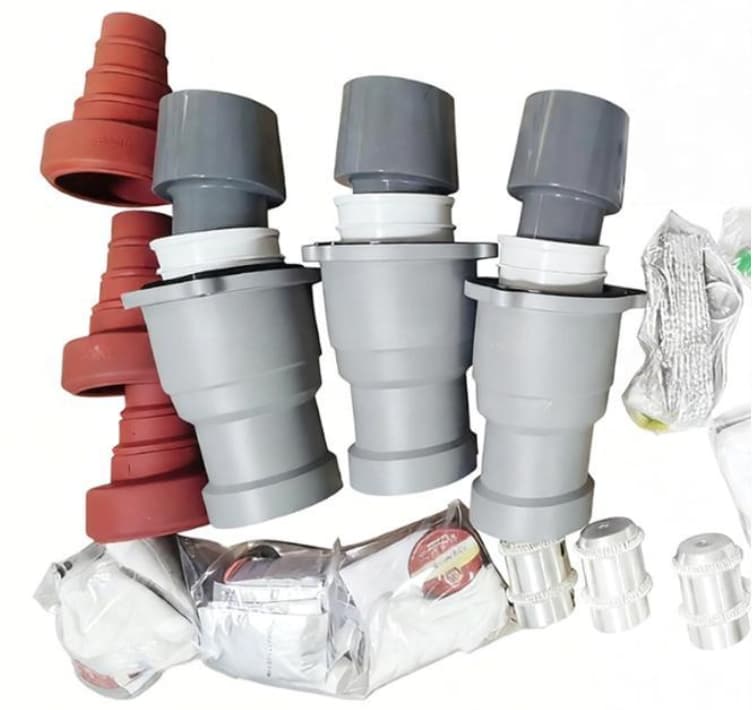
66Terminaison enfichable à cône interne kV à 145 kV
Le 66 kV à 145 La gamme kV entre sur le marché des accessoires pour câbles haute tension.
Les niveaux de tension typiques incluent 66 kV, 69 kV, 72.5 kV, 90 kV, 110 kV, 115 kV, 126 kV, 132 kV, 138 kV, et 145 kV.
À ces niveaux de tension, le contrôle du champ électrique devient de plus en plus important. Le fabricant doit soigneusement coordonner la géométrie du cône de contrainte avec l'isolation XLPE, écran semi-conducteur, et interface de bague.
Par exemple, un 110 kV ou 132 La terminaison d'un câble kV ne peut pas simplement utiliser la même structure qu'un 20 terminaison kV. Une tension de fonctionnement plus élevée nécessite une plus grande capacité d'isolation et une gradation de champ plus précise.
En outre, la terminaison doit correspondre mécaniquement et électriquement à la traversée du SIG ou du transformateur.
CEI 62271-209 fournit des exigences importantes pour les connexions de câbles entre l'appareillage haute tension et les câbles. Par conséquent, les clients doivent vérifier la norme d'interface applicable avant de passer une commande.
170Terminaison enfichable à cône interne kV à 245 kV
Le 170 kV à 245 La gamme kV couvre les principales applications de transmission.
Les classes de tension courantes incluent:
- 170 kV
- 220 kV
- 230 kV
- 245 kV
Parmi ces valeurs, 245 Le kV représente une classe de tension importante pour les équipements CEI.
Une terminaison à cône interne haute tension nécessite un contrôle minutieux de la pression d'interface. Le cône de contrainte doit également maintenir des performances électriques stables tout au long de la durée de vie du système de câbles..
De plus, le fabricant doit évaluer les performances de décharge partielle, Tension de tenue CA, tension de tenue aux chocs de foudre, et caractéristiques thermiques.
Pour un 220 kV ou 230 projet kV, le client doit donc fournir la construction du câble, taille du conducteur, épaisseur d'isolation, diamètre d'isolation, et informations sur les traversées SIG.
Ces informations permettent au Fabricant de terminaisons enfichables à cône intérieur pour sélectionner les bonnes dimensions d'interface et de terminaison.
275Terminaison enfichable à cône interne kV à 500 kV
Applications ci-dessus 245 Les kV appartiennent au domaine de la transmission à très haute tension.
Les niveaux de tension potentiels du projet incluent 275 kV, 300 kV, 330 kV, 345 kV, 362 kV, 400 kV, 420 kV, et 500 kV.
À ces niveaux de tension, la conception des terminaisons devient considérablement plus exigeante. Les ingénieurs doivent considérer l'ensemble du système électrique et mécanique plutôt que la terminaison seule..
Les paramètres de conception importants incluent:
- Diamètre du conducteur du câble
- Section du conducteur
- Épaisseur d'isolation XLPE
- Diamètre d'isolation du câble
- Écran semi-conducteur
- Géométrie du cône de contrainte
- Répartition du champ électrique
- Pression d'interface
- Performances de décharge partielle
- Tension de tenue CA
- Tension de tenue aux chocs de foudre
- Tension de tenue aux chocs de commutation
- Performances en court-circuit
- Performance thermique
- Dimensions de l'interface mécanique
UN 500 Le système de câbles kV nécessite une ingénierie particulièrement soignée. La terminaison doit fonctionner avec le câble, Traversée GIS ou transformateur, système de mise à la terre, et environnement d'installation.
Donc, un 500 La terminaison enfichable à cône intérieur kV doit normalement impliquer une ingénierie et des tests spécifiques au projet.. Les clients ne doivent pas sélectionner le produit uniquement en faisant correspondre la tension nominale.
Pourquoi choisir une terminaison enfichable à cône interne?
La conception compacte offre l’un des principaux avantages de la technologie à cône interne.
D'abord, la connexion enfichable peut économiser de l'espace d'installation. Cette fonctionnalité devient précieuse dans les sous-stations SIG et les installations de transformateurs compacts.
Deuxième, de nombreuses conceptions utilisent une isolation de type sec. Donc, le processus d'installation ne nécessite pas de systèmes de connexion de câbles remplis d'huile.
Troisième, le cône de contrainte prémoulé assure une distribution contrôlée du champ électrique. Cette conception permet de maintenir des performances d'isolation fiables autour de la zone de terminaison du câble..
En outre, une connexion enfichable peut simplifier la connexion de l'équipement et la maintenance future lorsque la conception de l'équipement permet le retrait de la terminaison du câble.
Cependant, l'équipe d'installation doit suivre le fabricant’s instructions attentivement. Préparation du câble, retrait des semi-conducteurs, positionnement du cône de contrainte, contacter l'installation, et le nettoyage de l'interface affectent tous les performances finales.
Comment sélectionner un fabricant de terminaisons enfichables à cône interne
Les clients doivent prendre en compte plusieurs facteurs techniques lors de la sélection d'un Fabricant de terminaisons enfichables à cône intérieur.
1. Tension nominale
Confirmer la tension nominale du câble et la tension maximale de l'équipement. Ces deux valeurs n'ont pas toujours la même valeur numérique.
2. Taille du conducteur du câble
La section du conducteur affecte directement le contact de terminaison et la conception mécanique.
Les tailles de conducteurs typiques peuvent aller des petits conducteurs moyenne tension aux grands conducteurs de câbles de transmission..
3. Diamètre d'isolation du câble
Le diamètre de l'isolation représente l'un des paramètres dimensionnels les plus importants. Une terminaison conçue pour un diamètre de câble peut ne pas s'adapter à un autre câble ayant la même tension nominale..
4. Interface de bague
La terminaison du cône intérieur doit correspondre à la traversée GIS ou transformateur correspondante..
Donc, les clients doivent fournir le type de bague, dimensions des interfaces, et des dessins techniques pertinents dans la mesure du possible.
5. Exigences de test
Un fabricant qualifié doit fournir une documentation de test pertinente. En fonction de la classe de tension, le projet peut nécessiter des tests de décharge partielle, Test de tenue CA, test d'impulsion, essai thermique, et autres vérifications.
6. Assistance à l'installation
Un fabricant fiable doit également fournir des instructions d'installation et une assistance technique.
Pour les grands projets de transmission, la formation à l'installation peut réduire davantage le risque de préparation incorrecte des câbles.
Fabricant de terminaisons enfichables à cône intérieur pour les marchés mondiaux
Différents pays utilisent différents systèmes de tension de transport et de distribution. Donc, un fabricant international doit comprendre plusieurs normes de tension.
Pour les applications moyenne tension, les clients peuvent demander 10 kV, 11 kV, 12 kV, 15 kV, 20 kV, 22 kV, 24 kV, 30 kV, 33 kV, 35 kV, ou 36 systèmes kV.
Les projets nord-américains peuvent utiliser 15 kV, 25 kV, 35 kV, 69 kV, 115 kV, 138 kV, 230 kV, ou 345 systèmes kV.
Entre-temps, Les réseaux de transmission basés sur la CEI utilisent généralement des classes d'équipement telles que 72.5 kV, 145 kV, 170 kV, 245 kV, 362 kV, et 420 kV.
Les projets à très haute tension peuvent nécessiter 400 kV, 500 kV, ou d'autres niveaux de tension spécifiques au projet.
Par conséquent, un expérimenté Fabricant de terminaisons enfichables à cône intérieur doit évaluer la spécification complète du projet avant de recommander un produit.
Câble Dosense en tant que fabricant de terminaisons enfichables à cône interne
Dosense Cable se concentre sur les systèmes de câbles d'alimentation et les accessoires de câbles pour moyenne tension, haute tension, et applications très haute tension.
En tant que Fabricant de terminaisons enfichables à cône intérieur, Dosense Cable peut développer des solutions de terminaison de câbles en fonction du niveau de tension, taille du conducteur, diamètre d'isolation, construction de câbles, Interface SIG, interface de transformateur, et les exigences du projet.
Pour un nouveau projet, les clients peuvent fournir les informations suivantes:
- Tension du câble
- Matériau conducteur
- Section du conducteur
- Type d'isolation du câble
- Diamètre d'isolation
- Épaisseur de l'isolation
- Structure du blindage du câble
- Type de traversée SIG ou transformateur
- Courant nominal
- Environnement d'installation
- Normes de test requises
Avec ces paramètres, le fabricant peut déterminer la conception appropriée du cône intérieur et fournir une proposition technique.
Un Terminaison enfichable à cône intérieur offre une connexion compacte et fiable entre les câbles haute tension et les équipements électriques. Depuis 10 systèmes moyenne tension kV pour 500 Projets de transmission à très haute tension kV, différentes classes de tension nécessitent différents systèmes d'isolation, interfaces, structures de contrôle du stress, et procédures de test.
Pour cette raison, sélectionner le bon Fabricant de terminaisons enfichables à cône intérieur nécessite plus que vérifier la tension nominale. Dimensions du câble, interfaces de bagues, exigences électriques, conditions mécaniques, et les normes applicables doivent toutes faire l’objet d’un examen attentif.
Dosense Cable peut travailler avec ses clients pour développer des solutions de terminaison de câble adaptées à des niveaux de tension et des interfaces d'équipement spécifiques..