
Low-voltage power distribution relies on reliable insulated cables. Among the many options available in the market, YJV cable is one of the most widely used types in industrial, commercial, et projets d'infrastructures. Engineers prefer it because it combines conducteurs en cuivre, Isolation XLPE, and PVC outer sheath, which together provide excellent electrical performance, durabilité, and thermal resistance.
In modern electrical systems, cable selection directly affects safety, efficacité, and long-term maintenance costs. Donc, comprendre le Caractéristiques, current capacity, structure, and price factors of YJV cables helps engineers and buyers choose the right cable for their projects.
We explains the complete specification of YJV 0.6/1kV cables, including structure, applications, facteurs de tarification, and detailed tables covering all conductor cross-sections from 0.5 mm² à 800 mm².
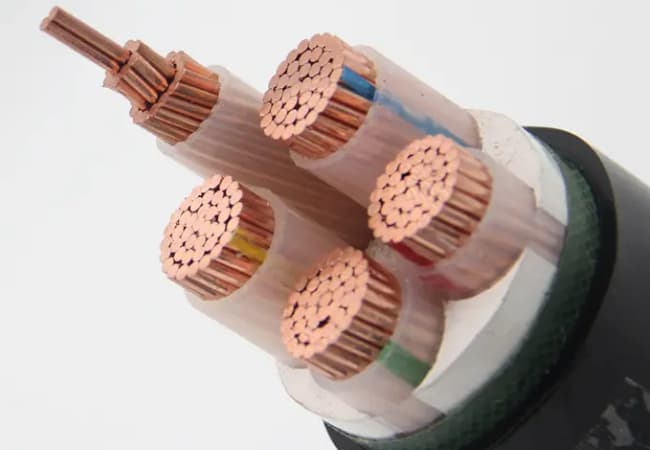
What is YJV Cable?
YJV is a standard Chinese cable model widely used for low-voltage power transmission and distribution.
The abbreviation means:
| Symbol | Meaning |
|---|---|
| Oui | Isolation XLPE |
| J | Conducteur en cuivre |
| V | PVC sheath |
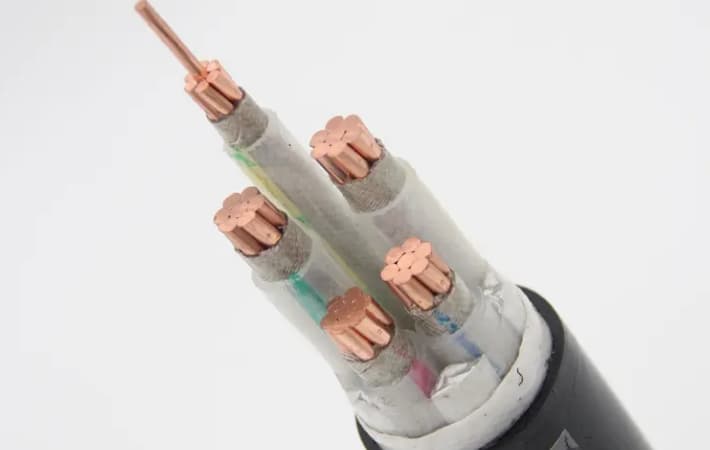
Donc, un YJV cable typically contains:
- Conducteur en cuivre
- Polyéthylène réticulé (XLPE) isolation
- Gaine extérieure en PVC
Unlike PVC insulated cables, XLPE insulation withstands higher temperatures and carries higher current loads. Par conséquent, engineers often select YJV cables for demanding environments such as power plants, installations industrielles, and commercial buildings.
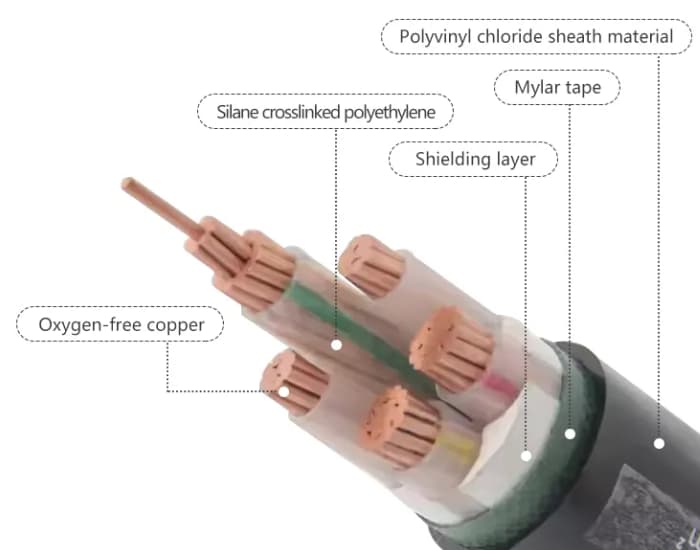
Structure of YJV 0.6/1kV Cable
A standard YJV cable contains several functional layers.
| Layer | Matériel | Fonction |
|---|---|---|
| Conducteur | Cuivre (Classe 1 or Class 2) | Conducts electrical current |
| Isolation | XLPE | Provides electrical insulation |
| Remplisseur | PVC / PP | Maintains cable shape |
| Gaine intérieure | PVC | Mechanical protection |
| Gaine extérieure | PVC | Environmental protection |
Because of this layered design, the cable performs well in both indoor installations and outdoor environments.
Key Advantages of YJV Cable
Many utilities and contractors choose YJV cables for several reasons.
1. Higher Temperature Rating
D'abord, XLPE insulation allows continuous operation at 90°C, which is much higher than traditional PVC insulated cables.
2. Higher Current Capacity
As a result of better thermal properties, YJV cables carry larger electrical loads.
3. Excellent Mechanical Strength
En outre, PVC sheaths protect the cable against moisture, abrasion, et produits chimiques.
4. Longue durée de vie
Because of stable insulation performance, YJV cables often operate plus que 30 années in normal conditions.
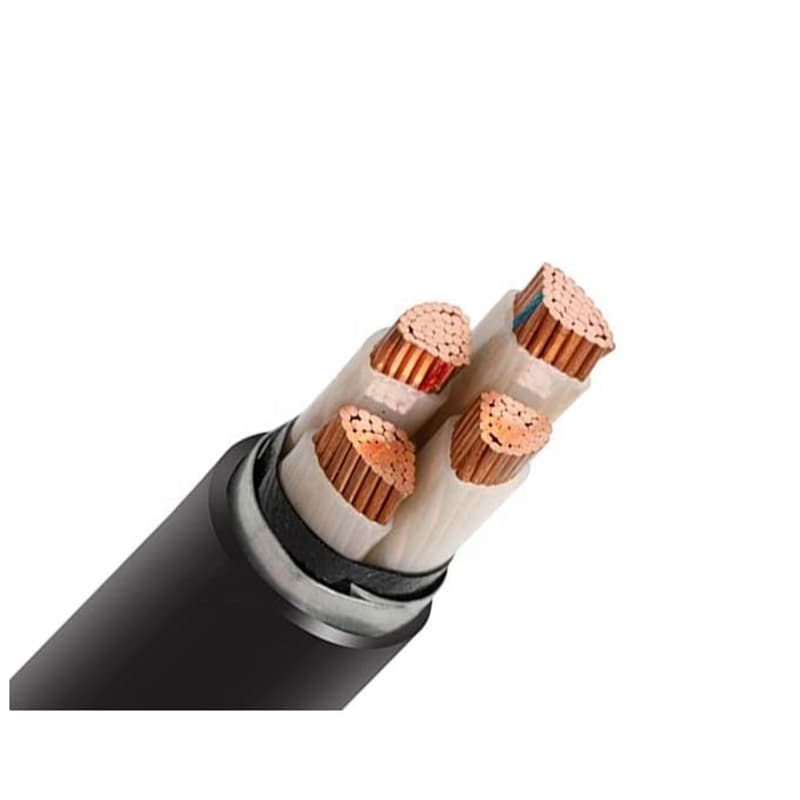
Applications of YJV Cable
YJV 0.6/1kV cables serve a wide variety of installations. Par exemple:
- Distribution d'énergie industrielle
- Centrales électriques
- Commercial buildings
- Residential electrical networks
- Underground power transmission
- Cable trays and ducts
- Substations
De plus, engineers often use these cables for large current feeders because copper conductors offer low electrical resistance.
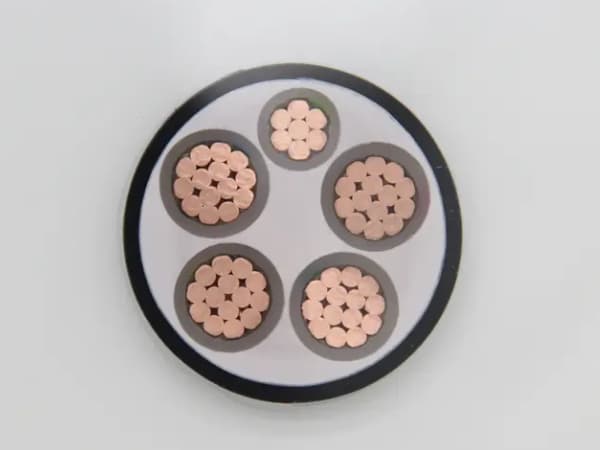
1 Core YJV Cable Specification Table
| Type de câble | Conducteur | Isolation XLPE (mm) | PVC Sheath (mm) | Capacité actuelle (UN) |
|---|---|---|---|---|
| 1×0.5 | Copper Class1 | 0.7 | 1.4 | 15 |
| 1×0.75 | Copper Class1 | 0.7 | 1.4 | 18 |
| 1×1 | Copper Class1 | 0.7 | 1.4 | 20 |
| 1×1,5 | Copper Class2 | 0.7 | 1.4 | 24 |
| 1×2,5 | Copper Class2 | 0.8 | 1.4 | 32 |
| 1×4 | Copper Class2 | 0.8 | 1.4 | 42 |
| 1×6 | Copper Class2 | 0.8 | 1.4 | 54 |
| 1×10 | Copper Class2 | 1.0 | 1.4 | 73 |
| 1×16 | Copper Class2 | 1.0 | 1.5 | 98 |
| 1×25 | Copper Class2 | 1.2 | 1.6 | 129 |
| 1×35 | Copper Class2 | 1.2 | 1.6 | 158 |
| 1×50 | Copper Class2 | 1.4 | 1.8 | 192 |
| 1×70 | Copper Class2 | 1.4 | 1.8 | 245 |
| 1×95 | Copper Class2 | 1.6 | 2.0 | 298 |
| 1×120 | Copper Class2 | 1.6 | 2.0 | 341 |
| 1×150 | Copper Class2 | 1.8 | 2.2 | 391 |
| 1×185 | Copper Class2 | 2.0 | 2.4 | 448 |
| 1×240 | Copper Class2 | 2.2 | 2.6 | 523 |
| 1×300 | Copper Class2 | 2.4 | 2.8 | 596 |
| 1×400 | Copper Class2 | 2.6 | 3.0 | 693 |
| 1×500 | Copper Class2 | 2.8 | 3.2 | 784 |
| 1×630 | Copper Class2 | 3.0 | 3.4 | 886 |
| 1×800 | Copper Class2 | 3.2 | 3.6 | 1002 |
2 Core YJV Cable Table (Up to 2×630)
| Type de câble | Conducteur | Isolation XLPE | PVC Sheath | Capacité actuelle |
|---|---|---|---|---|
| 2×1,5 | Copper Class2 | 0.7mm | 1.6mm | 20UN |
| 2×2,5 | Copper Class2 | 0.8mm | 1.6mm | 27UN |
| 2×4 | Copper Class2 | 0.8mm | 1.8mm | 36UN |
| 2×6 | Copper Class2 | 0.8mm | 1.8mm | 46UN |
| 2×10 | Copper Class2 | 1.0mm | 1.8mm | 63UN |
| 2×16 | Copper Class2 | 1.0mm | 2.0mm | 85UN |
| 2×25 | Copper Class2 | 1.2mm | 2.0mm | 112UN |
| 2×35 | Copper Class2 | 1.2mm | 2.2mm | 138UN |
| 2×50 | Copper Class2 | 1.4mm | 2.2mm | 168UN |
| 2×70 | Copper Class2 | 1.4mm | 2.4mm | 213UN |
| 2×95 | Copper Class2 | 1.6mm | 2.6mm | 258UN |
| 2×120 | Copper Class2 | 1.6mm | 2.8mm | 296UN |
| 2×150 | Copper Class2 | 1.8mm | 2.8mm | 338UN |
| 2×185 | Copper Class2 | 2.0mm | 3.0mm | 387UN |
| 2×240 | Copper Class2 | 2.2mm | 3.2mm | 452UN |
| 2×300 | Copper Class2 | 2.4mm | 3.2mm | 515UN |
| 2×400 | Copper Class2 | 2.6mm | 3.4mm | 600UN |
| 2×500 | Copper Class2 | 2.8mm | 3.6mm | 680UN |
| 2×630 | Copper Class2 | 3.0mm | 3.8mm | 770UN |
3 Core YJV Cable Table
| Type de câble | Conducteur | Isolation XLPE | PVC Sheath | Capacité actuelle |
|---|---|---|---|---|
| 3×1,5 | Copper Class2 | 0.7mm | 1.6mm | 18UN |
| 3×2,5 | Copper Class2 | 0.8mm | 1.6mm | 24UN |
| 3×4 | Copper Class2 | 0.8mm | 1.8mm | 32UN |
| 3×6 | Copper Class2 | 0.8mm | 1.8mm | 41UN |
| 3×10 | Copper Class2 | 1.0mm | 2.0mm | 57UN |
| 3×16 | Copper Class2 | 1.0mm | 2.2mm | 76UN |
| 3×25 | Copper Class2 | 1.2mm | 2.4mm | 101UN |
| 3×35 | Copper Class2 | 1.2mm | 2.6mm | 125UN |
| 3×50 | Copper Class2 | 1.4mm | 2.6mm | 150UN |
| 3×70 | Copper Class2 | 1.4mm | 2.8mm | 192UN |
| 3×95 | Copper Class2 | 1.6mm | 3.0mm | 232UN |
| 3×120 | Copper Class2 | 1.6mm | 3.2mm | 265UN |
| 3×150 | Copper Class2 | 1.8mm | 3.2mm | 302UN |
| 3×185 | Copper Class2 | 2.0mm | 3.4mm | 345UN |
| 3×240 | Copper Class2 | 2.2mm | 3.6mm | 403UN |
| 3×300 | Copper Class2 | 2.4mm | 3.8mm | 460UN |
3+1 Core YJV Cable Table
| Type de câble | Conducteur | Isolation XLPE | PVC Sheath | Capacité actuelle |
|---|---|---|---|---|
| 3×4+1×2.5 | Cuivre | 0.8mm | 1.8mm | 32UN |
| 3×6+1×4 | Cuivre | 0.8mm | 1.8mm | 41UN |
| 3×10+1×6 | Cuivre | 1.0mm | 2.0mm | 57UN |
| 3×16+1×10 | Cuivre | 1.0mm | 2.2mm | 76UN |
| 3×25+1×16 | Cuivre | 1.2mm | 2.4mm | 101UN |
| 3×35+1×16 | Cuivre | 1.2mm | 2.6mm | 125UN |
| 3×50+1×25 | Cuivre | 1.4mm | 2.6mm | 150UN |
| 3×70+1×35 | Cuivre | 1.4mm | 2.8mm | 192UN |
| 3×95+1×50 | Cuivre | 1.6mm | 3.0mm | 232UN |
| 3×120+1×70 | Cuivre | 1.6mm | 3.2mm | 265UN |
| 3×150+1×70 | Cuivre | 1.8mm | 3.2mm | 302UN |
| 3×185+1×95 | Cuivre | 2.0mm | 3.4mm | 345UN |
| 3×240+1×120 | Cuivre | 2.2mm | 3.6mm | 403UN |
| 3×300+1×150 | Cuivre | 2.4mm | 3.8mm | 460UN |
3+2 Core YJV Cable Table
| Type de câble | Conducteur | Isolation XLPE | PVC Sheath | Capacité actuelle |
|---|---|---|---|---|
| 3×10+2×6 | Cuivre | 1.0mm | 2.0mm | 57UN |
| 3×16+2×10 | Cuivre | 1.0mm | 2.2mm | 76UN |
| 3×25+2×16 | Cuivre | 1.2mm | 2.4mm | 101UN |
| 3×35+2×16 | Cuivre | 1.2mm | 2.6mm | 125UN |
| 3×50+2×25 | Cuivre | 1.4mm | 2.6mm | 150UN |
| 3×70+2×35 | Cuivre | 1.4mm | 2.8mm | 192UN |
| 3×95+2×50 | Cuivre | 1.6mm | 3.0mm | 232UN |
| 3×120+2×70 | Cuivre | 1.6mm | 3.2mm | 265UN |
| 3×150+2×70 | Cuivre | 1.8mm | 3.2mm | 302UN |
| 3×185+2×95 | Cuivre | 2.0mm | 3.4mm | 345UN |
| 3×240+2×120 | Cuivre | 2.2mm | 3.6mm | 403UN |
| 3×300+2×150 | Cuivre | 2.4mm | 3.8mm | 460UN |
4+1 Core YJV Cable Table
| Type de câble | Conducteur | Isolation XLPE | PVC Sheath | Capacité actuelle |
|---|---|---|---|---|
| 4×10+1×6 | Cuivre | 1.0mm | 2.0mm | 57UN |
| 4×16+1×10 | Cuivre | 1.0mm | 2.2mm | 76UN |
| 4×25+1×16 | Cuivre | 1.2mm | 2.4mm | 101UN |
| 4×35+1×16 | Cuivre | 1.2mm | 2.6mm | 125UN |
| 4×50+1×25 | Cuivre | 1.4mm | 2.6mm | 150UN |
| 4×70+1×35 | Cuivre | 1.4mm | 2.8mm | 192UN |
| 4×95+1×50 | Cuivre | 1.6mm | 3.0mm | 232UN |
| 4×120+1×70 | Cuivre | 1.6mm | 3.2mm | 265UN |
| 4×150+1×70 | Cuivre | 1.8mm | 3.2mm | 302UN |
| 4×185+1×95 | Cuivre | 2.0mm | 3.4mm | 345UN |
| 4×240+1×120 | Cuivre | 2.2mm | 3.6mm | 403UN |
| 4×300+1×150 | Cuivre | 2.4mm | 3.8mm | 460UN |
5 Core YJV Cable Table
| Type de câble | Conducteur | Isolation XLPE | PVC Sheath | Capacité actuelle |
|---|---|---|---|---|
| 5×10 | Cuivre | 1.0mm | 2.0mm | 50UN |
| 5×16 | Cuivre | 1.0mm | 2.2mm | 68UN |
| 5×25 | Cuivre | 1.2mm | 2.4mm | 90UN |
| 5×35 | Cuivre | 1.2mm | 2.6mm | 110UN |
| 5×50 | Cuivre | 1.4mm | 2.6mm | 135UN |
| 5×70 | Cuivre | 1.4mm | 2.8mm | 173UN |
| 5×95 | Cuivre | 1.6mm | 3.0mm | 210UN |
| 5×120 | Cuivre | 1.6mm | 3.2mm | 240UN |
| 5×150 | Cuivre | 1.8mm | 3.2mm | 273UN |
| 5×185 | Cuivre | 2.0mm | 3.4mm | 312UN |
| 5×240 | Cuivre | 2.2mm | 3.6mm | 365UN |
| 5×300 | Cuivre | 2.4mm | 3.8mm | 420UN |
YJV Cable Price
The price of YJV cable varies depending on several factors.
Copper Price
Tout d'abord, copper accounts for 70–85% of cable cost, so market fluctuations strongly affect pricing.
Taille du conducteur
Larger cross-sections obviously require more copper, which increases the price significantly.
Cable Structure
Multi-core cables require fillers and additional sheathing, so they cost more than single-core cables.
Quantité commandée
Large project orders usually receive lower factory prices.
Typical reference price range:
| Type de câble | Price Range |
|---|---|
| Small LV cable | $0.5 – $2 / meter |
| Medium size | $3 – $20 / meter |
| Large power cable | $20 – $120 / meter |
YJV – conducteurs en cuivre, Isolation XLPE, and PVC sheaths
YJV 0.6/1kV cables play a crucial role in modern electrical systems. Because they combine conducteurs en cuivre, Isolation XLPE, and PVC sheaths, they provide excellent electrical performance, protection mécanique, et une longue durée de vie.
En outre, engineers can select from many core configurations, y compris 1 cœur, 2 cœur, 3 cœur, 3+1 cœur, 3+2 cœur, 4+1 cœur, et 5 core cables. This flexibility allows YJV cables to meet the needs of industrial plants, buildings, and power distribution networks.
Enfin, when selecting a cable, engineers should carefully evaluate taille du conducteur, environnement d'installation, and required current capacity. By doing so, they ensure both electrical safety and long-term reliability.