
Che cos'è un terminale GIS via cavo da 33 kV 36 kV?
UN 33kV Cable GIS Terminal is a medium-voltage cable termination designed to connect 33kV XLPE power cables A Gas Insulated Switchgear (GIS). Fornisce isolamento elettrico, controllo del campo elettrico, supporto meccanico, e una connessione completamente sigillata tra il cavo e l'apparecchiatura GIS.
Allo stesso modo, UN 36kV Cable GIS Terminal is engineered for systems with a maximum operating voltage of 36kV, meeting IEC medium-voltage requirements while ensuring safe and reliable power transmission.
Compared with conventional air-insulated terminations, GIS terminals offer superior insulation performance, compact dimensions, excellent environmental resistance, and minimal maintenance requirements. They are widely used in urban substations, progetti di energia rinnovabile, impianti industriali, operazioni minerarie, and utility power distribution systems.
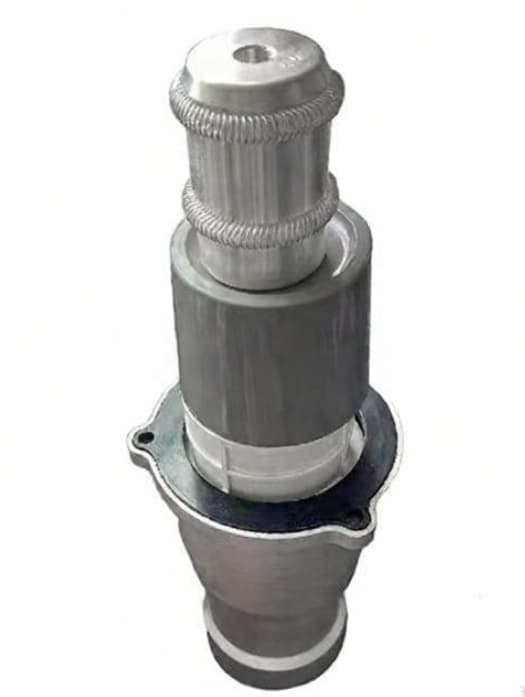
Why Choose a GIS Terminal?
As substations become more compact, utilities increasingly adopt GIS technology because of its high reliability and reduced installation space.
UN 33kV Cable GIS Terminal offre diversi vantaggi:
- Installazione compatta
- Excellent electrical insulation
- High resistance to pollution
- Moisture-proof sealing
- Lunga durata
- Low maintenance cost
- High operational reliability
- Safe indoor and outdoor applications
These benefits also apply to 36kV Cable GIS Terminal systems.
Construction of a 33kV Cable GIS Terminal
A GIS cable termination consists of several precision-engineered components working together to control the electric field and ensure safe operation.
Typical construction includes:
- Stress cone
- Silicone rubber insulation body
- Conductive layer
- Copper or aluminum conductor connector
- Compression lug
- GIS plug-in interface
- Metallic housing
- Sealing rings
- Earthing connection
- Mounting flange
Every component is manufactured with strict dimensional tolerances to guarantee electrical performance throughout the product’s lifetime.
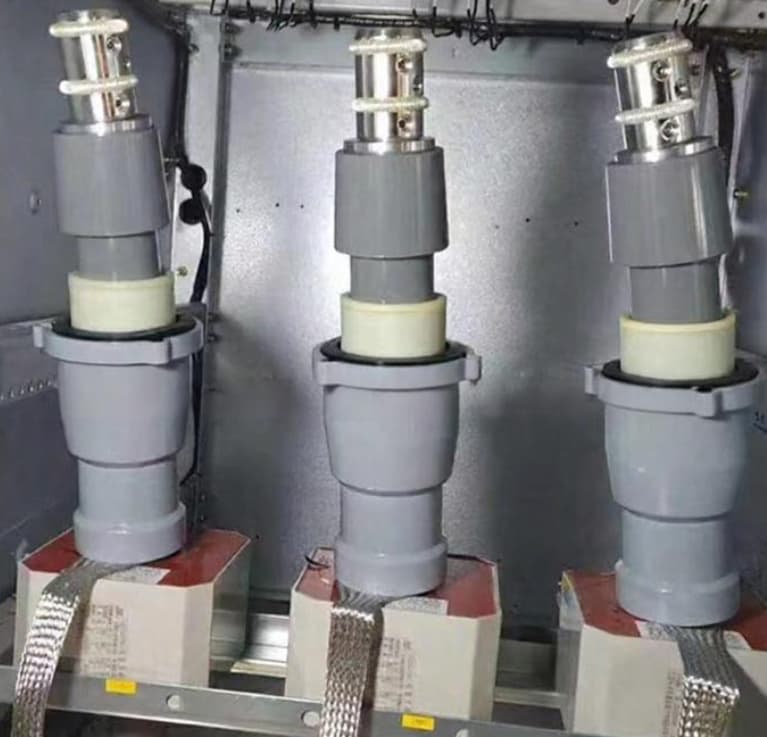
Main Components
Silicone Stress Cone
The stress cone is the heart of the GIS termination. It redistributes the electric field from the cable insulation to the GIS bushing, preventing localized electrical stress and partial discharge.
Corpo isolante
High-grade silicone rubber provides outstanding dielectric strength, excellent hydrophobic properties, and resistance to UV radiation, ozone, e invecchiamento.
Connector
The conductor connector establishes a low-resistance electrical connection between the cable conductor and the GIS equipment.
Metallic Housing
The housing protects internal insulation from mechanical damage while maintaining proper grounding.
Sistema di tenuta
Multiple sealing rings prevent moisture, dust, and contaminants from entering the GIS enclosure.
Principio di funzionamento
The cable conductor transfers electrical energy into the GIS through the conductor connector.
Nel frattempo:
- the stress cone smooths the electric field,
- the silicone insulation isolates high voltage,
- the conductive layer controls voltage distribution,
- the metallic enclosure provides shielding,
- the sealing system prevents moisture ingress.
The result is a highly reliable connection capable of operating continuously for decades.
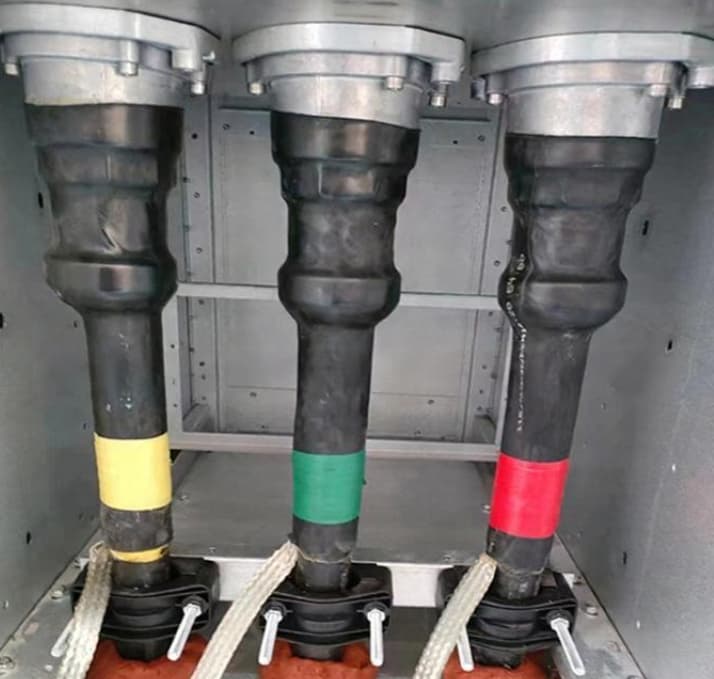
Typical Technical Specifications
Typical values include:
| Articolo | Specifica |
|---|---|
| Tensione nominale | 33kV / 36kV |
| Maximum System Voltage | 36kV / 40.5kV |
| Frequenza | 50Hz / 60Hz |
| Isolamento | Silicone Rubber |
| Tipo di cavo | XLPE |
| Materiale conduttore | Rame / Alluminio |
| Dimensione del conduttore | 50–1000 mm² |
| Installazione | Indoor GIS |
| Ambient Temperature | -40°C to +55°C |
| Protection | IP67 (depending on design) |
| Durata di servizio | More than 30 anni |
Applicazioni
UN 33kV Cable GIS Terminal is widely used in:
- Sottostazioni di servizio
- Wind farms
- Solar power plants
- Centrali idroelettriche
- Impianti industriali
- Impianti petrolchimici
- Centri dati
- Railway power systems
- Metro power distribution
- Operazioni minerarie
- Aeroporti
- Smart grid projects
IL 36kV Cable GIS Terminal serves the same industries where slightly higher system voltages are required.
Advantages Over AIS Cable Terminations
Compared with Air Insulated Switchgear (AIS), GIS cable terminations offer numerous advantages.
| Terminale GIS | AIS Termination |
|---|---|
| Design compatto | Larger installation space |
| Better insulation | Air insulation affected by pollution |
| Excellent sealing | Exposed to environment |
| Minimal maintenance | Higher maintenance |
| Alta affidabilità | More sensitive to weather |
| Suitable for indoor GIS | Mainly outdoor use |
Prestazioni elettriche
Modern GIS cable terminations are designed to achieve excellent electrical characteristics, compreso:
- Low partial discharge level
- Distribuzione uniforme del campo elettrico
- Elevata rigidità dielettrica
- Excellent impulse withstand capability
- Stable thermal performance
- Superior short-circuit resistance
- Long insulation life
These characteristics ensure stable operation under demanding conditions.
Mechanical Performance
Besides electrical performance, mechanical reliability is equally important.
Typical mechanical features include:
- Elevata resistenza alla trazione
- Excellent vibration resistance
- Installazione flessibile
- Strong sealing performance
- Resistenza alla corrosione
- Earthquake resistance
- Long-term dimensional stability
Installation Procedure
Proper installation is essential for reliable service.
Typical installation steps include:
- Prepare the cable end.
- Remove the outer sheath.
- Strip the insulation according to the manufacturer’s dimensions.
- Install the conductor connector.
- Mount the stress cone.
- Assemble the insulation body.
- Connect the termination to the GIS bushing.
- Tighten all bolts to the specified torque.
- Connect the grounding system.
- Perform electrical testing before energization.
Installation should always be carried out by trained technicians using specialized tools.
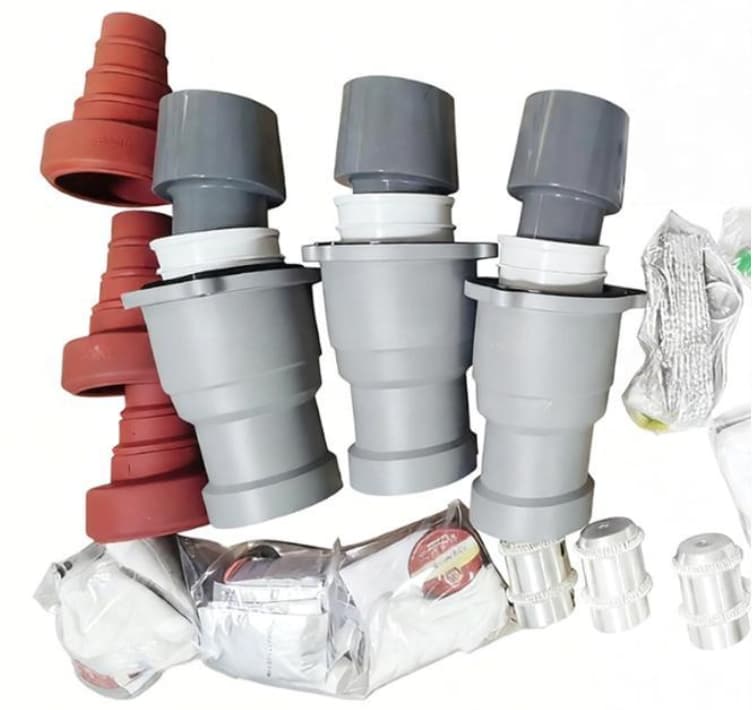
Testing Requirements
Before commissioning, every 33kV Cable GIS Terminal should undergo comprehensive testing.
Typical tests include:
- Visual inspection
- Controllo dimensionale
- Prova di tensione di tenuta CA
- Prova di scarica parziale
- Prova dell'impulso del fulmine
- Heating cycle test
- Mechanical verification
- Tightness test
- Prova di resistenza d'isolamento
- Conductor resistance measurement
Routine factory testing ensures every termination meets the required quality standards.
Applicable Standards
High-quality GIS cable terminations are generally manufactured according to international standards such as:
- CEI 60840
- CEI 62271
- CEI 60060
- CEI 60270
- CEI 60529
- CEI 60228
- IEEE standards (where applicable)
Compliance with these standards guarantees product safety and interoperability.
Selecting the Right GIS Cable Terminal
When choosing a 33kV Cable GIS Terminal O 36kV Cable GIS Terminal, consider the following factors:
- System voltage
- Cable insulation type
- Materiale conduttore
- Sezione del conduttore
- GIS equipment manufacturer
- Interface dimensions
- Ambiente di installazione
- Pollution level
- Altitudine
- Short-circuit rating
- Temperatura operativa
Selecting the correct model ensures optimal performance and long service life.
Maintenance Recommendations
Although GIS terminations require little maintenance, periodic inspections help maximize reliability.
Recommended maintenance includes:
- Visual inspection
- Ground connection verification
- Seal inspection
- Surface cleaning
- Infrared temperature monitoring
- Partial discharge monitoring
- Torque inspection
Preventive maintenance can significantly reduce unexpected outages.
Common Causes of Failure
Failures are uncommon but may result from:
- Incorrect installation
- Poor cable preparation
- Ingresso di umidità
- Excessive bending
- Loose conductor connections
- Danni meccanici
- Contamination
- Manufacturing defects
- Improper stress control
Following manufacturer instructions greatly reduces these risks.
Why Silicone Rubber Is Preferred
Modern GIS cable terminations primarily use silicone rubber because it offers:
- Elevata rigidità dielettrica
- Excellent elasticity
- Superior hydrophobicity
- Resistenza ai raggi UV
- Ozone resistance
- Aging resistance
- Wide operating temperature range
- Prestazioni stabili a lungo termine
These properties contribute to a service life exceeding 30 years under normal operating conditions.
Why Choose DOSENSE 33kV & 36kV Cable GIS Terminals?
DOSENSE provides high-performance GIS cable terminations designed for medium-voltage power systems worldwide.
Our advantages include:
- High-quality silicone insulation
- Precision electric field control
- IEC-compliant manufacturing
- Compatible with major GIS brands
- Factory routine and type testing
- Excellent sealing performance
- Consegna veloce
- Technical engineering support
- OEM and customized solutions
- Reliable global project experience
Whether for utility substations, progetti di energia rinnovabile, o impianti industriali, DOSENSE GIS cable terminations deliver safe, stable, and long-lasting performance.
Domande frequenti
What is the difference between a 33kV and a 36kV Cable GIS Terminal?
A 33kV terminal is designed for 33kV distribution systems, while a 36kV terminal is rated for systems with a maximum operating voltage of 36kV. Their construction is similar, but electrical ratings and interface requirements may differ.
Can GIS terminals be installed outdoors?
They are typically connected to indoor GIS equipment. Outdoor use depends on the enclosure design and environmental protection provided by the installation.
What cable types are compatible?
Most GIS terminals are suitable for XLPE-insulated copper or aluminum conductor power cables.
How long does a GIS cable termination last?
With proper installation and maintenance, a high-quality GIS termination can operate reliably for more than 30 anni.
Why is partial discharge testing important?
Partial discharge testing verifies insulation integrity and helps detect defects before the equipment is placed into service, improving long-term reliability.
Conclusione
IL 33kV Cable GIS Terminal E 36kV Cable GIS Terminal are essential components for connecting medium-voltage power cables to Gas Insulated Switchgear safely and efficiently. Their compact design, advanced silicone insulation, excellent electric field control, and long service life make them the preferred solution for modern substations, renewable energy installations, impianti industriali, and smart grid infrastructure. By selecting high-quality GIS terminations manufactured to international standards and ensuring correct installation and testing, utilities and contractors can achieve reliable, low-maintenance, e sistemi di trasmissione di potenza di lunga durata.