
In modern electrical power systems, selecting the correct cable type is essential for safety, efficiency, e affidabilità a lungo termine. Among the many power cables used in China and international markets, YJV, YJY, and YJV22 cables are three of the most common types. Although these cables share some structural similarities, they differ in outer sheath material, protezione meccanica, and installation environment.
Understanding these differences helps engineers, contractors, and procurement managers select the right cable for their projects. This article explains the struttura, characteristics, applicazioni, and key differences between YJV, YJY, and YJV22 cables in detail.
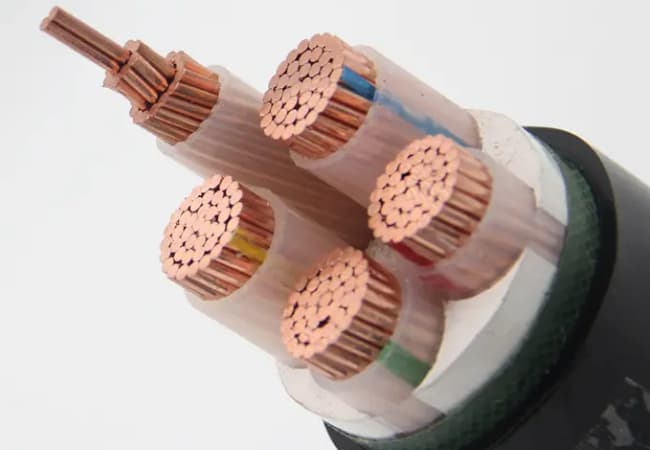
Overview of YJV, YJY, and YJV22 Cable
All three cables belong to the XLPE insulated power cable family. They use cross-linked polyethylene insulation, which provides excellent thermal and electrical performance.
Tuttavia, the outer sheath material and mechanical protection differ.
| Cable Type | Struttura | Main Feature |
|---|---|---|
| YJV | Rame + Isolamento XLPE + PVC sheath | Standard indoor power cable |
| YJY | Rame + Isolamento XLPE + PE sheath | Better moisture resistance |
| YJV22 | Rame + Isolamento XLPE + steel tape armor + PVC sheath | Forte protezione meccanica |
The major difference lies in outer sheath materials and armor layers.
Understanding Cable Model Codes
Chinese power cable models follow a clear naming system. Each letter represents a specific material or structure.
| Code | Meaning |
|---|---|
| Y | Isolamento XLPE |
| J | Conduttore in rame |
| V | PVC sheath |
| Y (second) | PE sheath |
| 22 | Steel tape armor |
Perciò:
- YJV = XLPE insulation + PVC sheath
- YJY = XLPE insulation + PE sheath
- YJV22 = XLPE insulation + steel tape armored + PVC sheath
These cables usually operate at voltages such as 0.6/1kV, 6kV, 10kV, 20kV, or 35kV.
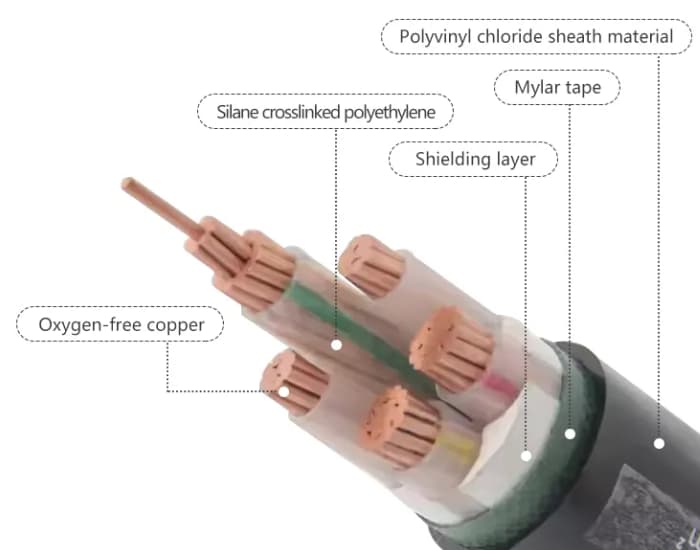
Structure of YJV Cable
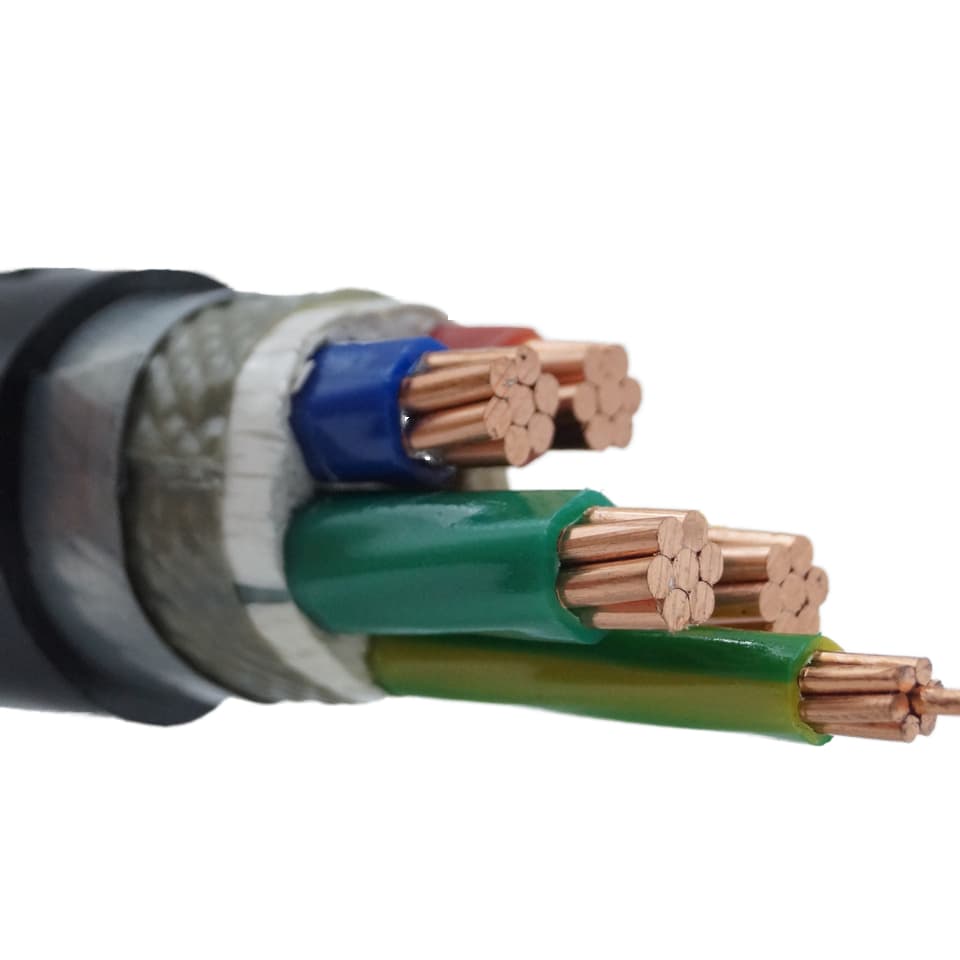
YJV cable is the most commonly used low-voltage power cable in buildings and industrial systems.
Typical structure
| Layer | Materiale | Function |
|---|---|---|
| Conduttore | Rame | Current transmission |
| Isolamento | XLPE | Electrical insulation |
| Filler | PVC/PP | Maintain cable shape |
| Guaina esterna | PVC | Mechanical protection |
Because of its simple structure, YJV cable is lightweight, flexible, and easy to install.
Key characteristics
- Temperatura operativa: 90°C
- Short circuit temperature: 250°C (5 seconds)
- High current carrying capacity
- Lunga durata
These characteristics make YJV cables widely used in civil buildings and industrial distribution networks.
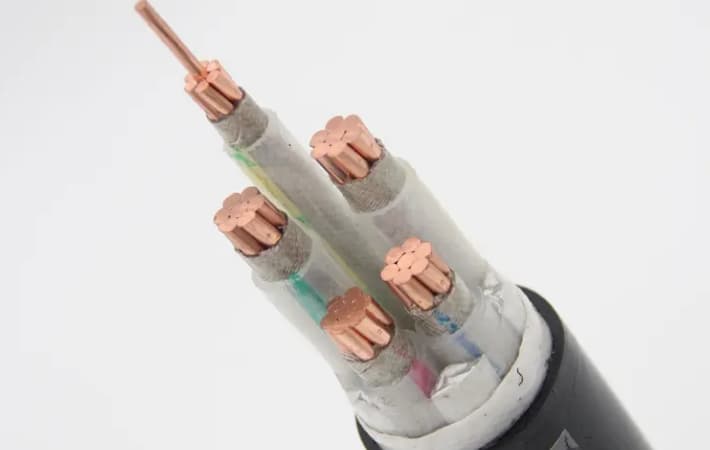
Structure of YJY Cable
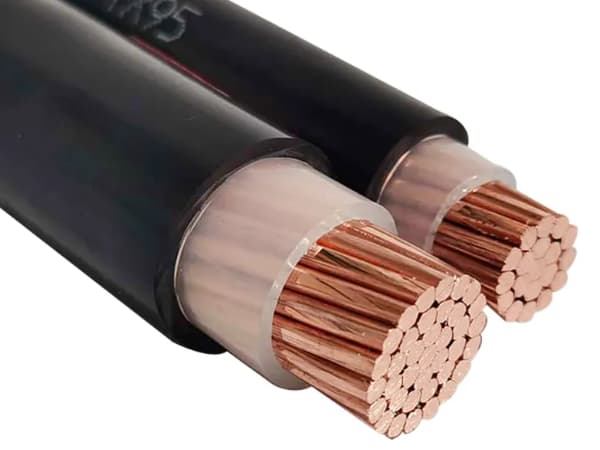
YJY cable is very similar to YJV cable. The main difference is the outer sheath material.
Instead of PVC, YJY uses PE (polyethylene).
Typical structure
| Layer | Materiale |
|---|---|
| Conduttore | Rame |
| Isolamento | XLPE |
| Guaina esterna | PE |
Advantages of PE sheath
PE sheath provides several benefits.
Primo, it offers better water resistance.
Second, it has excellent chemical resistance.
Third, it provides improved Resistenza ai raggi UV.
Because of these advantages, YJY cables perform better in outdoor environments.
Tuttavia, PE sheaths are usually harder and less flame-retardant than PVC, which limits their use in indoor installations.
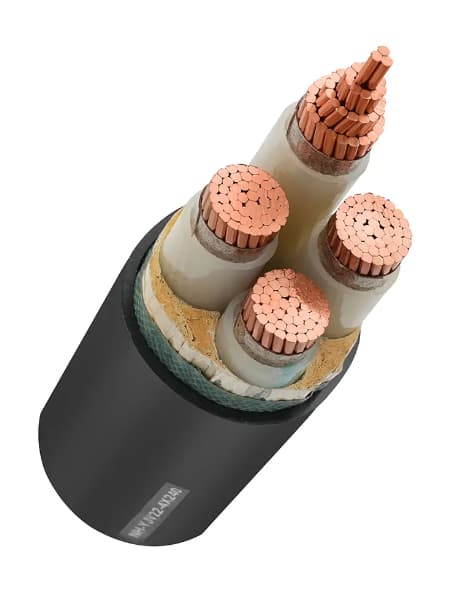
Structure of YJV22 Cable
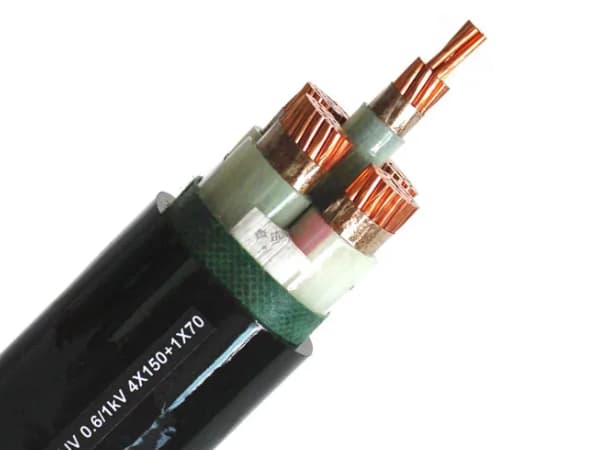
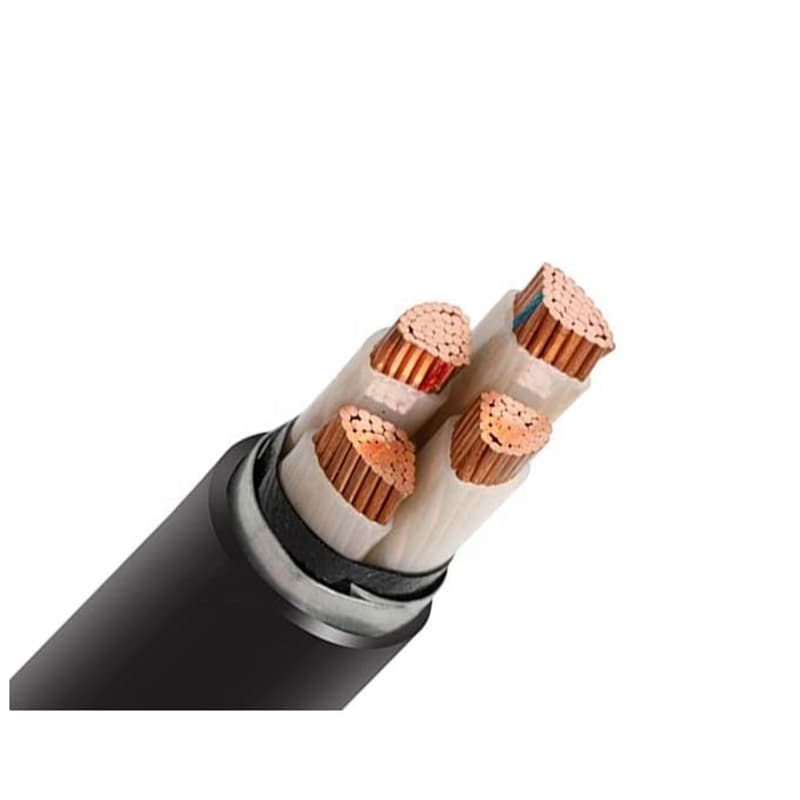
YJV22 cable belongs to the armored power cable family. It includes an additional steel tape armor layer between the inner and outer sheath.
Typical structure
| Layer | Materiale |
|---|---|
| Conduttore | Rame |
| Isolamento | XLPE |
| Guaina interna | PVC |
| Armor | Steel tape |
| Guaina esterna | PVC |
The steel tape armor significantly improves mechanical protection and load resistance.
Perciò, YJV22 cables can withstand external mechanical forces, making them suitable for underground installation.
Main Differences Between YJV, YJY, and YJV22
Although these cables share the same insulation material, their structures and applications differ significantly.
1. Outer Sheath Material
| Cavo | Guaina esterna |
|---|---|
| YJV | PVC |
| YJY | PE |
| YJV22 | PVC |
PVC sheaths provide good flexibility and flame retardancy.
PE sheaths offer better environmental resistance.
2. Mechanical Protection
Another important difference is mechanical strength.
| Cavo | Armor |
|---|---|
| YJV | No armor |
| YJY | No armor |
| YJV22 | Steel tape armor |
Because YJV22 includes steel armor, it can resist external mechanical damage and soil pressure.
3. Installation Environment
Each cable type is designed for specific installation conditions.
| Cable Type | Installation Location |
|---|---|
| YJV | Indoor, cable tray, tunnel |
| YJY | Outdoor or humid environment |
| YJV22 | Underground direct burial |
Per esempio, YJV cables are commonly installed in cable trays or conduits, while YJV22 cables can be buried directly in soil.
Conductor Size Range
YJV, YJY, and YJV22 cables are available in many conductor sizes and core configurations.
Typical conductor cross-section ranges include:
| Number of Cores | Conductor Size Range |
|---|---|
| 1 nucleo | 1.5 – 800 mm² |
| 2 nucleo | 1.5 – 300 mm² |
| 3 nucleo | 1.5 – 400 mm² |
| 3+1 nucleo | 1.5 – 400 mm² |
| 4 nucleo | 1.5 – 400 mm² |
| 4+1 nucleo | 1.5 – 400 mm² |
| 5 nucleo | 1.5 – 400 mm² |
Armored versions such as YJV22 usually start from 4 mm² or larger sizes.
Advantages of YJV Cable
YJV cables remain the most widely used type due to several advantages.
High Current Capacity
XLPE insulation allows higher operating temperatures, which increases current carrying capacity.
Good Electrical Performance
Low dielectric loss improves efficiency.
Easy Installation
Because it has no armor, the cable is lightweight and flexible.
Cost Effective
YJV cables are usually cheaper than armored cables.
Advantages of YJY Cable
YJY cables are especially useful in outdoor installations.
Better Weather Resistance
PE sheaths resist ultraviolet radiation and moisture.
Improved Chemical Resistance
The cable can operate in environments with chemicals or corrosive substances.
Longer Outdoor Service Life
Because PE resists aging better than PVC.
Advantages of YJV22 Cable
YJV22 cables are designed for harsh environments.
Strong Mechanical Protection
Steel tape armor protects the cable against external impact.
Suitable for Direct Burial
The armor allows installation without additional protective pipes.
Higher Safety
Mechanical protection reduces the risk of cable damage.
Applicazioni tipiche
Different cable types serve different engineering needs.
YJV Cable Applications
- Power distribution in buildings
- Industrial electrical systems
- Cable trays and tunnels
- Centrali elettriche
YJY Cable Applications
- Outdoor power distribution
- Humid environments
- Coastal areas
- Chemical plants
YJV22 Cable Applications
- Underground power transmission
- Direct burial installations
- Heavy industrial areas
- Underground cable trenches
Price Comparison
The price difference between these cables mainly depends on materials and structure.
| Cable Type | Relative Price |
|---|---|
| YJV | Lowest |
| YJY | Medio |
| YJV22 | Highest |
YJV22 cables cost more because steel armor adds extra materials and manufacturing steps.
How to Choose the Right Cable
Selecting the correct cable depends on several factors.
Installation Environment
Indoor installations usually use YJV cables, while underground installations require YJV22 cables.
Mechanical Protection
If the cable faces mechanical damage, armored cables are necessary.
Environmental Conditions
Outdoor environments often favor YJY cables with PE sheath.
Budget
YJV cables are usually the most economical option.
Summary
YJV, YJY, and YJV22 cables are all XLPE insulated power cables, but they differ significantly in structure, protection level, and application scenarios.
The key differences include:
- YJV: Isolamento XLPE + PVC sheath, widely used indoors.
- YJY: Isolamento XLPE + PE sheath, better environmental resistance.
- YJV22: Isolamento XLPE + steel tape armor + PVC sheath, suitable for underground installation.
In practice, engineers choose among these cables based on installation conditions, mechanical protection requirements, and project budget.
Understanding these differences ensures safe, affidabile, and cost-effective electrical power distribution systems.