
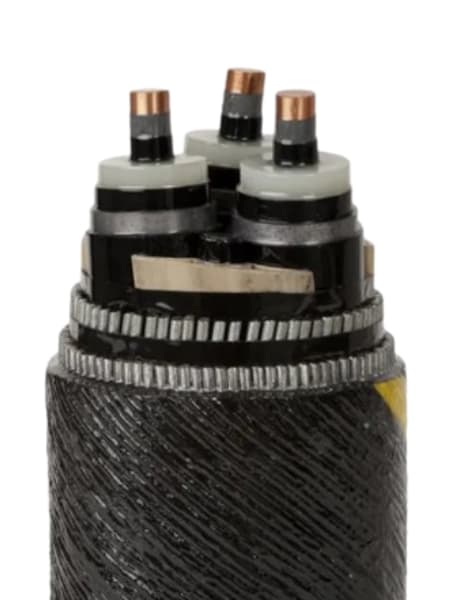
Submarine power transmission plays a critical role in modern electrical infrastructure. Electricity often needs to be delivered across rivers, lakes, coastal areas, and offshore facilities. For these situations, engineers install specially designed underwater power cables that can operate safely in harsh marine environments. One of the most widely used medium-voltage marine cables is the 11kV submarine cable.
Engineers frequently select 11kV submarine cables for island electrification, harbor infrastructure, offshore aquaculture systems, oil and gas platforms, and small offshore renewable energy projects. These cables are designed to withstand saltwater corrosion, hydrostatic pressure, seabed movement, and mechanical impacts. 結果として, a robust multi-layer structure is used to ensure reliable long-term operation.
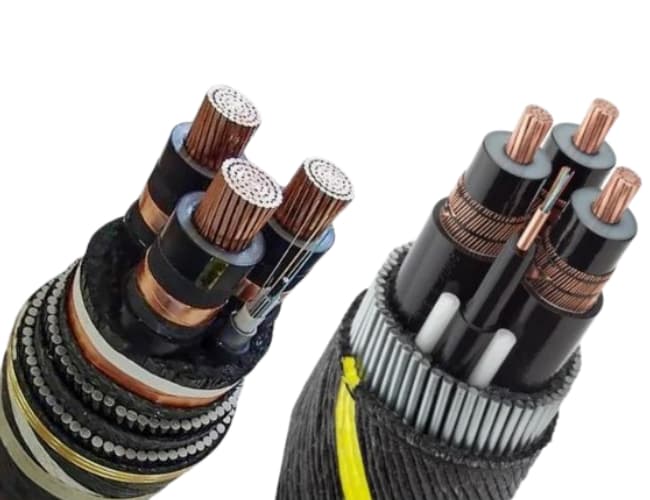
A typical 11kV submarine cable contains copper or aluminum conductors, advanced insulation systems such as XLPE or EPR, a lead sheath for moisture protection, armored layers made of steel or aluminum wires, and an outer protective sheath made from PE or PVC. 加えて, manufacturers produce these cables in single-core and three-core designs, allowing engineers to choose the configuration that best fits their power system.
Overview of 11kV Submarine Cables
アン 11kV submarine cable is a medium-voltage power cable designed specifically for underwater installation. It is used to transmit electrical energy at a rated voltage of 11 kilovolts between two locations separated by water.
These cables are commonly installed in:
- Coastal power distribution systems
- Island power supply networks
- Offshore industrial facilities
- Oil and gas platforms
- Fish farms and marine aquaculture systems
- Renewable marine energy projects
Because submarine cables operate in challenging environments, engineers design them with strong mechanical protection and excellent waterproof performance.
さらに, modern cable manufacturing technologies allow improved electrical performance, longer service life, and higher operational safety.
Cable Core Configurations
Manufacturers usually produce 11kV submarine cables in two main core configurations.
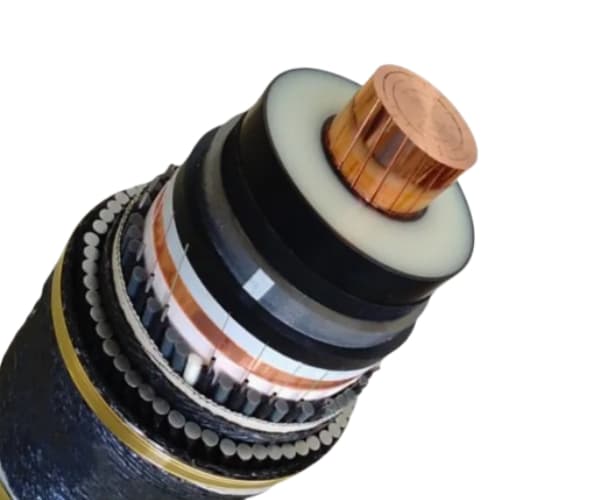
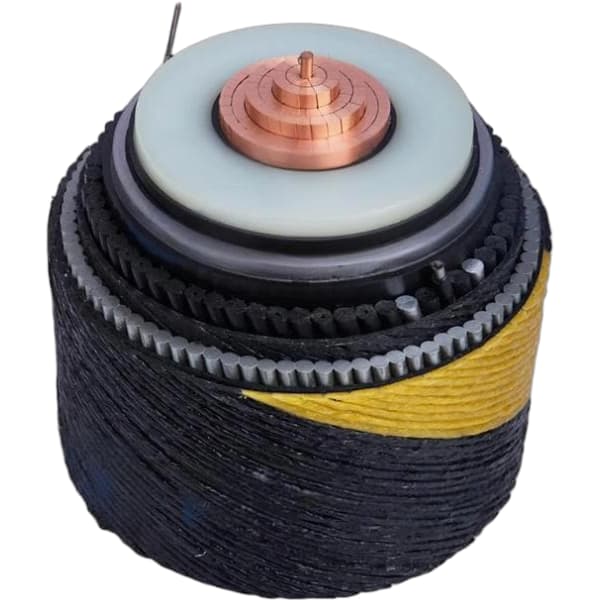
Single-Core Submarine Cable
あ single-core cable contains one insulated conductor. Three separate single-core cables are typically installed together to form a three-phase power system.
Single-core submarine cables offer several advantages:
- Better heat dissipation
- Higher current carrying capacity
- Flexible installation methods
- Reduced electromagnetic losses in some systems
したがって, many offshore wind or industrial installations prefer single-core cable systems.
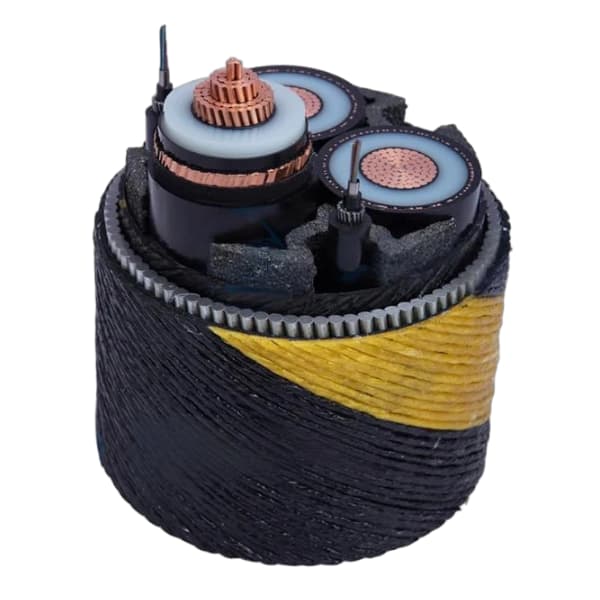
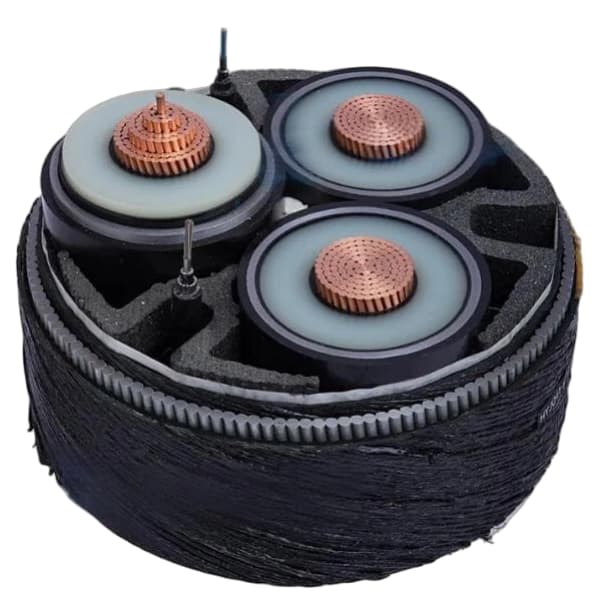
Three-Core Submarine Cable
あ three-core submarine cable integrates three insulated conductors within one cable structure. These conductors correspond to the three phases of an electrical system.
This design provides several practical benefits:
- Easier installation
- Reduced seabed space requirements
- Lower installation cost for short routes
- Simplified cable management
その結果, three-core submarine cables are commonly used for shorter submarine links such as island connections or harbor facilities.
Conductor Materials Used in 11kV Submarine Cables
The conductor forms the electrical pathway inside the cable. Manufacturers typically select either copper or aluminum for this component.
Copper Conductors
Copper is widely used because of its excellent electrical conductivity and mechanical strength.
Key advantages include:
- High current carrying capacity
- Low electrical resistance
- Excellent durability
- Reliable performance in marine environments
For demanding offshore power systems, copper conductors often provide the highest reliability.
Aluminum Conductors
Aluminum is another common conductor material for submarine cables. Although its conductivity is lower than copper, it offers other benefits.
These advantages include:
- 軽量化
- Reduced material cost
- Good corrosion resistance
- Easier handling for large cable sizes
Because of these benefits, aluminum conductors are often selected for long cable routes where weight reduction is important.
Metric Conductor Size Range (1.5 mm² – 800 mm²)
The cross-sectional area of the conductor determines the current capacity and electrical resistance of the cable. Engineers select the appropriate size based on power demand and installation conditions.
Below is the typical conductor size range used in submarine cable manufacturing.
| 導体サイズ (mm²) | 銅導体 | Aluminum Conductor |
|---|---|---|
| 1.5 | ✓ | ✓ |
| 2.5 | ✓ | ✓ |
| 4 | ✓ | ✓ |
| 6 | ✓ | ✓ |
| 10 | ✓ | ✓ |
| 16 | ✓ | ✓ |
| 25 | ✓ | ✓ |
| 35 | ✓ | ✓ |
| 50 | ✓ | ✓ |
| 70 | ✓ | ✓ |
| 95 | ✓ | ✓ |
| 120 | ✓ | ✓ |
| 150 | ✓ | ✓ |
| 185 | ✓ | ✓ |
| 240 | ✓ | ✓ |
| 300 | ✓ | ✓ |
| 400 | ✓ | ✓ |
| 500 | ✓ | ✓ |
| 630 | ✓ | ✓ |
| 800 | ✓ | ✓ |
Larger conductors enable higher power transmission and reduce electrical losses over long distances.
ASTM Conductor Size Table (20 AWG – 1000 MCM)
International engineering projects often specify conductor sizes using the ASTM AWG and MCM system. This standard is widely used in North America and many global cable specifications.
The following table shows typical conductor sizes according to ASTM standards.
| AWG / MCM Size | 約. エリア (mm²) | 銅 | アルミニウム |
|---|---|---|---|
| 20 AWG | 0.52 | ✓ | ✓ |
| 18 AWG | 0.82 | ✓ | ✓ |
| 16 AWG | 1.31 | ✓ | ✓ |
| 14 AWG | 2.08 | ✓ | ✓ |
| 12 AWG | 3.31 | ✓ | ✓ |
| 10 AWG | 5.26 | ✓ | ✓ |
| 8 AWG | 8.37 | ✓ | ✓ |
| 6 AWG | 13.3 | ✓ | ✓ |
| 4 AWG | 21.2 | ✓ | ✓ |
| 3 AWG | 26.7 | ✓ | ✓ |
| 2 AWG | 33.6 | ✓ | ✓ |
| 1 AWG | 42.4 | ✓ | ✓ |
| 1/0 AWG | 53.5 | ✓ | ✓ |
| 2/0 AWG | 67.4 | ✓ | ✓ |
| 3/0 AWG | 85.0 | ✓ | ✓ |
| 4/0 AWG | 107 | ✓ | ✓ |
| 250 MCM | 126.7 | ✓ | ✓ |
| 300 MCM | 152 | ✓ | ✓ |
| 350 MCM | 177 | ✓ | ✓ |
| 400 MCM | 203 | ✓ | ✓ |
| 500 MCM | 253 | ✓ | ✓ |
| 600 MCM | 304 | ✓ | ✓ |
| 750 MCM | 380 | ✓ | ✓ |
| 800 MCM | 405 | ✓ | ✓ |
| 900 MCM | 456 | ✓ | ✓ |
| 1000 MCM | 507 | ✓ | ✓ |
These specifications help ensure compatibility with international electrical standards.
断熱材: XLPE and EPR
The insulation layer separates the conductor from other metallic components. It prevents electrical leakage and ensures safe operation.
Two insulation materials are commonly used in submarine cables.
XLPE絶縁
架橋ポリエチレン (XLPE) is widely used in modern power cables.
利点としては次のものが挙げられます。:
- High thermal resistance
- Excellent dielectric properties
- 長寿命
- Strong mechanical stability
したがって, XLPE insulation is commonly used for medium-voltage submarine cables.
EPR Insulation
Ethylene propylene rubber (EPR) is another reliable insulation material.
Key benefits include:
- Superior flexibility
- Excellent moisture resistance
- Good thermal performance
- Strong resistance to electrical stress
EPR insulation is particularly useful in applications requiring flexible cable installation.
Lead Sheath for Moisture Protection
Water ingress is one of the biggest threats to submarine cable reliability. Even small amounts of moisture can damage insulation and reduce cable lifespan.
To prevent this problem, engineers apply a 鉛の鞘 around the insulated core.
The lead sheath performs several important functions:
- Provides a complete water barrier
- Protects insulation from moisture penetration
- Enhances corrosion resistance
- Improves cable longevity
Because lead has excellent impermeability, it remains one of the most effective moisture barriers in submarine cable design.
Armoring for Mechanical Protection
Submarine cables must withstand significant mechanical forces during installation and operation. Fishing equipment, アンカー, and seabed movement can all create potential hazards.
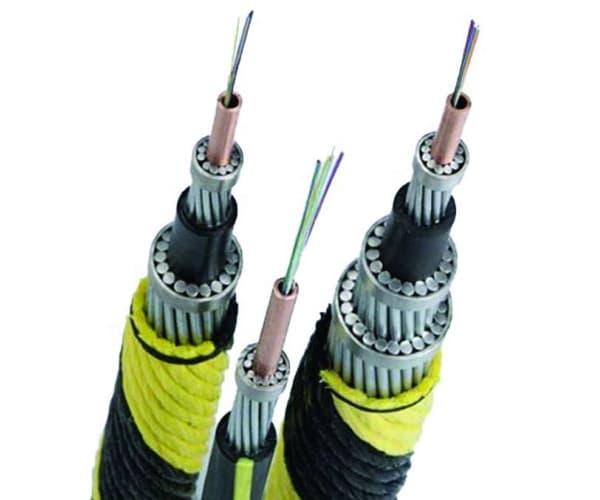
To address these risks, manufacturers add armored wire layers around the cable.
Steel Wire Armor
Steel wire armor offers strong mechanical protection and high tensile strength. It is commonly used for deep-water installations or areas with heavy mechanical stress.
Aluminum Wire Armor
Aluminum armor provides corrosion resistance and lighter weight compared with steel. It is often selected for certain marine environments where weight reduction is beneficial.
Outer Sheath Materials
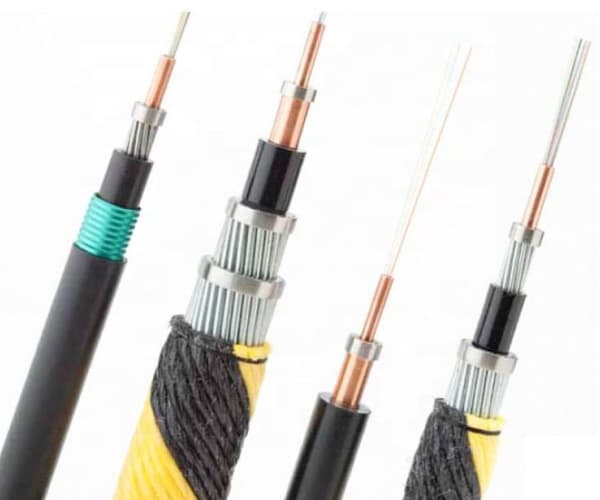
The outer sheath protects the cable against abrasion, 化学薬品, and environmental exposure.
Two materials are commonly used:
PE Sheath
Polyethylene offers excellent resistance to seawater and mechanical wear. It also provides strong environmental protection.
PVC Sheath
Polyvinyl chloride is widely used because it provides good flexibility, flame resistance, and cost efficiency.
The choice between PE and PVC depends on the specific installation environment and project requirements.
Advantages of 11kV Submarine Cables
Modern submarine cable technology offers numerous advantages for underwater power transmission.
Key benefits include:
- Reliable power transmission across water bodies
- Long service life in harsh environments
- 強力な機械的保護
- Excellent electrical insulation performance
- Flexible installation options with single-core or three-core designs
Because of these advantages, 11kV submarine cables have become essential components of marine power infrastructure.
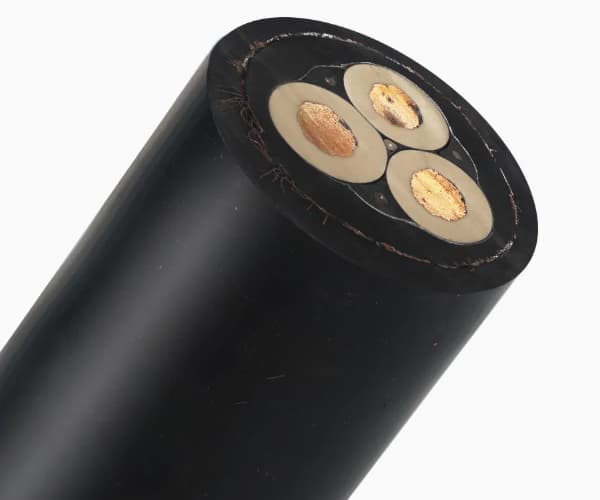
11kV submarine cable
の 11kV submarine cable plays a vital role in modern offshore and coastal power systems. It enables reliable electricity transmission between land and marine facilities, supporting industries such as offshore energy, aquaculture, and island electrification.
A well-designed submarine cable typically includes copper or aluminum conductors, XLPE or EPR insulation, a waterproof lead sheath, strong armored wires, and durable PE or PVC outer sheaths. さらに, engineers can select either single-core or three-core configurations depending on system requirements.
With conductor sizes ranging from 1.5 mm² から 800 mm² そして ASTM specifications from 20 AWG to 1000 MCM, these cables can meet a wide variety of power transmission needs.
As offshore energy development continues to expand worldwide, the importance of high-quality submarine cable technology will only grow. Reliable cable design, advanced materials, and precise manufacturing processes will ensure safe and efficient underwater power transmission for decades to come.