
最新の動力伝達システムでは, the demand for higher efficiency, increased capacity, and improved reliability continues to grow. Traditional conductors such as ACSR (アルミニウム導体鋼強化) have served the industry well for decades, but with increasing energy consumption and the expansion of renewable energy networks, more advanced solutions are required. One of the most innovative developments in this field is the ACFR導体 (アルミニウム導体繊維強化).
Detailed and practical overview of ACFR conductor technology, including its structure, 利点, アプリケーション, and technical parameters. It also incorporates real data examples to help engineers, procurement specialists, and project planners better understand its performance and benefits.
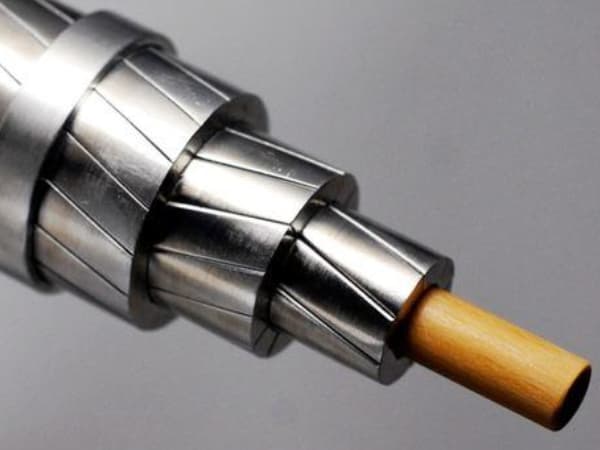
What is an ACFR Conductor?
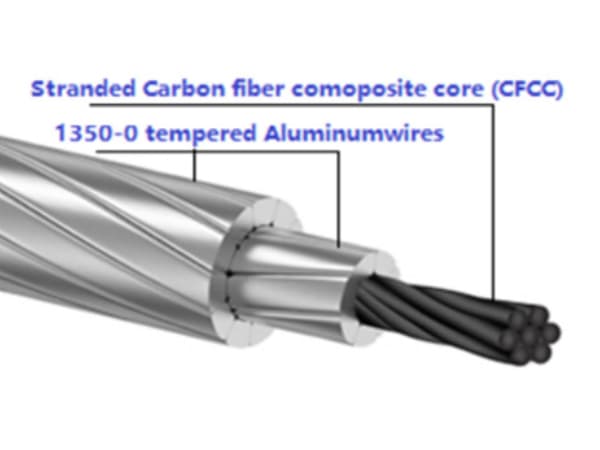
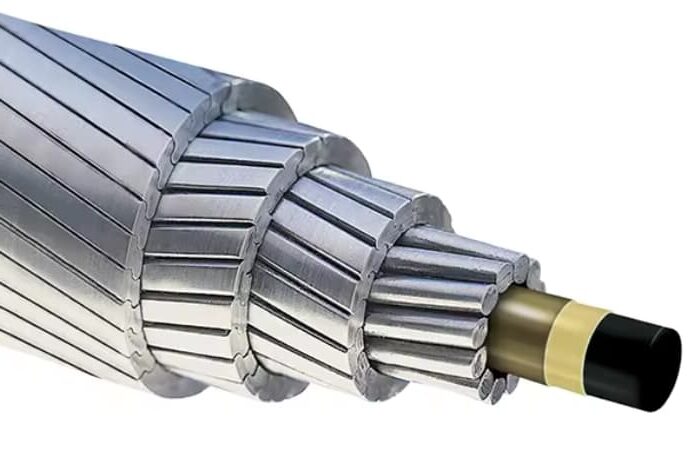
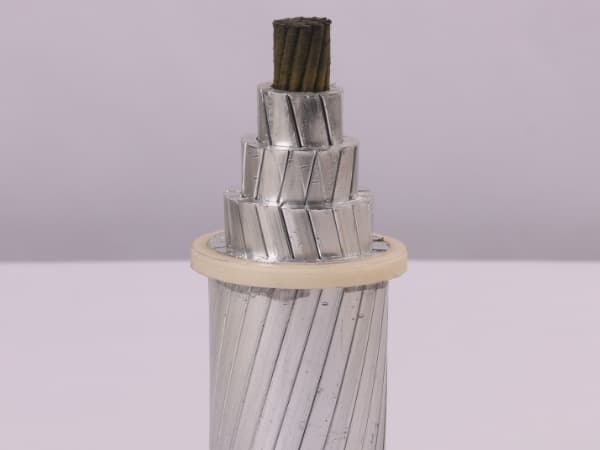
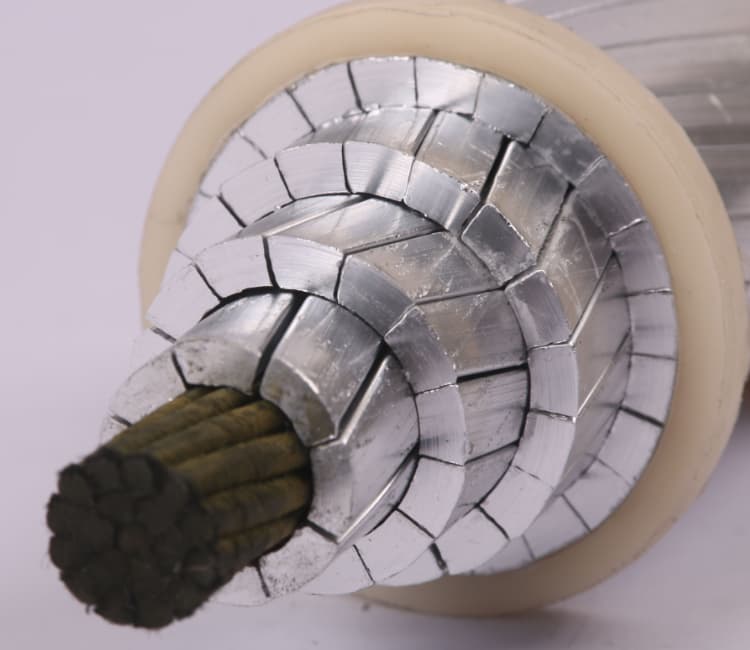
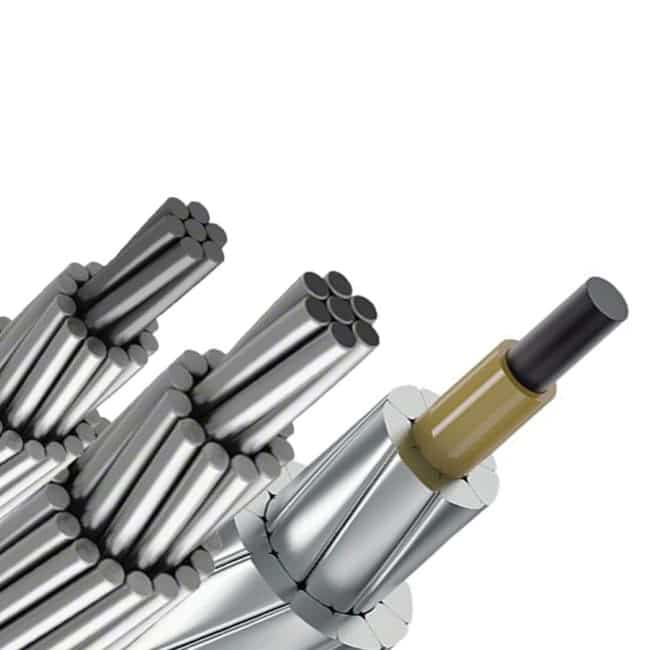
アン ACFR導体 is a high-performance overhead transmission conductor that uses a composite core made of fiber-reinforced materials instead of traditional steel. The outer layer consists of aluminum strands, while the inner core is typically composed of carbon fiber or glass fiber composites.
This innovative design offers significant improvements over conventional conductors, particularly in terms of:
- Weight reduction
- Tensile strength
- Thermal performance
- Sag resistance
結果として, ACFR conductor is increasingly used in high-capacity transmission lines, especially in projects requiring long spans or high-temperature operation.
Structure of ACFR Conductor
The ACFR conductor consists of two main components:
1. Aluminum Strands
The outer layer is made of high-conductivity aluminum, responsible for carrying electrical current. These strands are typically designed to meet 63% IACS conductivity, 効率的な動力伝達の確保.
2. Composite Core
The core replaces traditional steel with advanced composite materials. Key characteristics include:
- 高い引張強度
- Low thermal expansion
- Lightweight structure
- 耐食性
This combination enables ACFR conductor to outperform conventional ACSR conductors in demanding environments.
Key Technical Specifications of ACFR Conductors
Below is a structured technical table based on the provided data. It includes multiple ACFR conductor models commonly used in transmission systems.
Technical Parameter Table
| STT No | 説明 | Unit | ACFR 665/71 | ACFR 679/56 | ACFR 540/56 | ACFR 492/56 | ACFR 470/56 | ACFR 458/44 |
|---|---|---|---|---|---|---|---|---|
| 1 | Nominal aluminum cross section area | mm² | 665.16 | 679.29 | 540.4 | 491.84 | 469.81 | 458.32 |
| 2 | Nominal diameter of composite core | んん | 10.8 | 9.60 | 9.60 | 9.60 | 9.60 | 9.60 |
| 3 | Nominal cross section area of core | mm² | 71.3 | 56.3 | 56.3 | 56.3 | 56.4 | 56.4 |
| 4 | Overall diameter of conductor (approx.) | んん | 31.90 | 31.77 | 29.21 | 28.14 | 27.60 | 27.60 |
| 5 | Nominal cross section area of conductor | mm² | 736.46 | 735.59 | 596.7 | 548.14 | 526.11 | 526.11 |
| 6 | Rated strength of complete conductor | kN | 190.7 | 160.2 | 152.1 | 149.3 | 148.0 | 148.0 |
| 7 | Rated strength of core | kN | 152.4 | 121 | 121 | 121 | 121 | 121 |
| 8 | Nominal mass of the core per unit length | kg/km | 112 | 93 | 93 | 93 | 93 | 93 |
| 9 | Nominal mass of conductor per unit length | kg/km | 1949 | 1968 | 1588 | 1450 | 1450 | 1450 |
| 10 | Nominal mass of aluminum per unit length | kg/km | 1837 | 1875 | 1495 | 1357 | 1357 | 1357 |
| 11 | Maximum allowable operating temperature | ℃ | 180 | 180 | 180 | 180 | 180 | 180 |
| 12 | Maximum DC resistance of aluminum at 20°C, 63% IACS | Ω/km | 0.0421 | 0.0412 | 0.0518 | 0.0568 | 0.0568 | 0.0568 |
| 13 | Maximum current carrying capacity | あ | 2199 | 2217 | 1924 | 1812 | 1812 | 1812 |
| 14 | Temperature coefficient of resistance | – | 0.00403 | 0.00403 | 0.00403 | 0.00403 | 0.00403 | 0.00403 |
Advantages of ACFR Conductor
1. High Tensile Strength
The composite core significantly increases the mechanical strength of the ACFR conductor. 例えば:
- ACFR 665/71 has a rated strength of 190.7 kN, which is considerably higher than traditional conductors of similar size.
This makes it suitable for:
- Long-span transmission lines
- Mountainous terrain
- River crossings
2. 低熱膨張
One of the key advantages of ACFR conductor is its low sag under high temperature. The composite core expands much less than steel, allowing:
- Higher operating temperatures (up to 180°C)
- Reduced line sag
- Increased safety clearance
3. Higher Current Carrying Capacity
Due to improved thermal performance, ACFR conductors can carry more current. For instance:
- ACFR 679/56 supports up to 2217 あ
This allows utilities to upgrade existing transmission lines without changing towers, a major cost-saving advantage.
4. Lightweight Design
Compared to steel-core conductors, ACFR conductor is lighter:
- Reduced structural load on towers
- Easier installation
- Lower transportation costs
5. 耐食性
The composite core is resistant to corrosion, making ACFR conductor ideal for:
- 沿岸地域
- High-humidity environments
- Industrial zones
Applications of ACFR Conductor
1. 高圧送電線
ACFR conductor is widely used in:
- 110kV to 500kV overhead lines
- Long-distance power transmission
2. Grid Upgrading Projects
Utilities often replace old ACSR conductors with ACFR conductor to:
- Increase capacity
- Improve efficiency
- Reduce transmission losses
3. 再生可能エネルギーの統合
With the rapid growth of wind and solar energy, ACFR conductor plays a key role in:
- Connecting remote renewable plants
- Handling fluctuating loads
- Improving grid stability
4. Urban Power Networks
In densely populated areas, ACFR conductor allows:
- Higher power transmission without new infrastructure
- Reduced visual impact
- Improved reliability
比較: ACFR vs ACSR Conductor
| 特徴 | ACFR導体 | ACSRコンダクター |
|---|---|---|
| 芯材 | Composite fiber | 鋼鉄 |
| 重さ | Lighter | Heavier |
| Thermal Expansion | 低い | 高い |
| Max Temperature | Up to 180°C | Typically 90–100°C |
| サグ性能 | Excellent | 適度 |
| 耐食性 | 高い | 適度 |
The comparison clearly shows that ACFR conductor offers superior performance in modern transmission systems.
インストールに関する考慮事項
While ACFR conductor offers many advantages, proper installation is essential to maximize its performance.
Key Points:
- Use specialized fittings compatible with composite cores
- Avoid excessive bending during installation
- Ensure proper tension control
- Follow manufacturer guidelines
Maintenance and Lifespan
ACFR conductors are designed for long-term operation with minimal maintenance.
Benefits:
- Reduced inspection frequency
- Lower maintenance costs
- Longer service life (often exceeding 30 年)
The composite core does not suffer from corrosion or fatigue like steel, ensuring long-term reliability.
Future Trends of ACFR Conductor
As global energy demand continues to rise, ACFR conductor is expected to play an increasingly important role in:
- Smart grid development
- 超高圧 (UHV) システム
- 再生可能エネルギーの統合
- Grid modernization projects
Advancements in composite materials will further enhance the performance of ACFR conductor, making it a key component in the future of power transmission.
ACFR導体
の ACFR導体(HTLS 導体) represents a major advancement in overhead transmission technology. By combining lightweight aluminum with a high-strength composite core, it delivers superior performance in terms of:
- Strength
- Efficiency
- Thermal capability
- 信頼性
With its ability to carry higher currents, reduce sag, and operate at elevated temperatures, ACFR conductor is an ideal solution for modern power grids facing increasing demands.
For engineers and decision-makers, adopting ACFR conductor can lead to:
- Lower infrastructure costs
- Improved transmission efficiency
- システムの信頼性の向上
As the energy sector continues to evolve, the importance of advanced conductors like ACFR will only continue to grow.