
電気工学では, 正しい導体サイズを選択することが重要です. しかし, 地域ごとに異なる測定システムが使用されます. 約AWGからmm²まで, 北米では, 専門家が使用する AWG (アメリカンワイヤーゲージ). 対照的に, ほとんどの国際市場が依存しているのは、 平方ミリメートル (mm²).
結果として, エンジニア, 電気技師, そして購入者は多くの場合、これら 2 つのシステム間で変換するための信頼できる方法を必要とします。. したがって, 正確なケーブル選択には、AWG から mm² への変換を理解することが重要です.
ここ, 2本のケーブル AWG システムがどのように機能するかを示します, なぜ変換が重要なのか, 完全な参照テーブルを効果的に使用する方法.
AWGの意味?
AWGはAmerican Wire Gaugeの略です. 標準化された数値体系を使用して電気導体の直径を定義します。.
メートル法による測定とは異なります, AWG は逆スケールに従います. 言い換えると:
- 数字が小さいほどワイヤが太くなります
- 数字が大きいほどワイヤが細いことを示します
例えば, 4/0 AWG は、AWG よりもはるかに大きな直径を持っています。 1 AWG. 同様に, 12 AWGはより厚いです 20 AWG.
この独特な構造のため、, 多くのユーザーは最初は AWG がわかりにくいと感じます. しかし, パターンを理解したら, ワイヤーサイズの比較が容易になります.
AWG から mm² への変換が必要な理由
グローバルプロジェクトでは, 単一の標準に依存することはできません. その代わり, 地域に応じて AWG と mm² を切り替える必要があります. このため, 変換はいくつかの分野で重要な役割を果たします.
1. 国際プロジェクト
初め, 国が異なれば従う基準も異なります. 一方、米国. AWGを使用, 他のほとんどの地域では mm² が使用されます. したがって, 変換により、市場全体で仕様が一致することが保証されます.
2. 電流容量比較
次, 導体面積は電流容量に直接影響します. AWGをmm²に換算すると, IEC規格を使用して電流容量を簡単に比較できます.
3. 電気設計
加えて, ほとんどの工学計算にはメートル単位が必要です. 結果として, 設計者は計算を実行する前に AWG 値を mm² に変換する必要があります.
4. 調達と調達
ついに, 購入者はさまざまなサプライヤーの製品を比較することがよくあります. 換算表を使うと, 同等のケーブル サイズをすぐに特定できます.
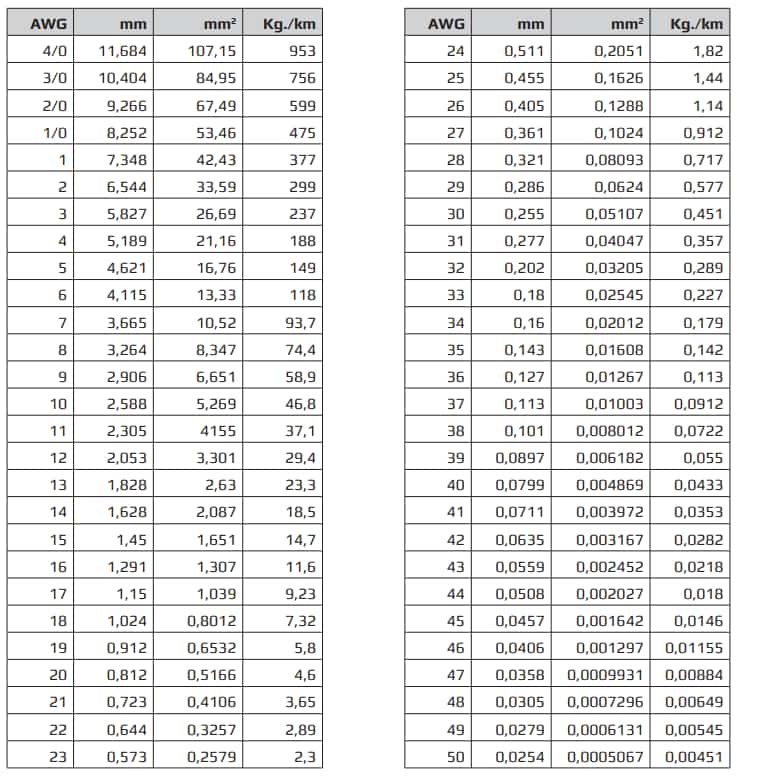
AWG から mm² への変換表
以下は導体直径を示す実用的な参考表です。, 断面積, 銅のおおよその重量:
| AWG | 直径 (んん) | エリア (mm²) | 重さ (kg/km) |
|---|---|---|---|
| 4/0 | 11.684 | 107.15 | 953 |
| 3/0 | 10.404 | 84.95 | 756 |
| 2/0 | 9.266 | 67.49 | 599 |
| 1/0 | 8.252 | 53.46 | 475 |
| 1 | 7.348 | 42.43 | 377 |
| 2 | 6.544 | 33.59 | 299 |
| 3 | 5.827 | 26.69 | 237 |
| 4 | 5.189 | 21.16 | 188 |
| 5 | 4.621 | 16.76 | 149 |
| 6 | 4.115 | 13.33 | 118 |
| 7 | 3.665 | 10.52 | 93.7 |
| 8 | 3.264 | 8.347 | 74.4 |
| 9 | 2.906 | 6.651 | 58.9 |
| 10 | 2.588 | 5.269 | 46.8 |
| 11 | 2.305 | 4.155 | 37.1 |
| 12 | 2.053 | 3.301 | 29.4 |
| 13 | 1.828 | 2.63 | 23.3 |
| 14 | 1.628 | 2.087 | 18.5 |
| 15 | 1.45 | 1.651 | 14.7 |
| 16 | 1.291 | 1.307 | 11.6 |
| 17 | 1.15 | 1.039 | 9.23 |
| 18 | 1.024 | 0.8012 | 7.32 |
| 19 | 0.912 | 0.6532 | 5.8 |
| 20 | 0.812 | 0.5166 | 4.6 |
| 21 | 0.723 | 0.4106 | 3.65 |
| 22 | 0.644 | 0.3257 | 2.89 |
| 23 | 0.573 | 0.2579 | 2.3 |
| 24 | 0.511 | 0.2051 | 1.82 |
| 25 | 0.455 | 0.1626 | 1.44 |
| 26 | 0.405 | 0.1288 | 1.14 |
| 27 | 0.361 | 0.1024 | 0.912 |
| 28 | 0.321 | 0.08093 | 0.717 |
| 29 | 0.286 | 0.0624 | 0.577 |
| 30 | 0.255 | 0.05107 | 0.451 |
| 31 | 0.227 | 0.04047 | 0.357 |
| 32 | 0.202 | 0.03205 | 0.289 |
| 33 | 0.180 | 0.02545 | 0.227 |
| 34 | 0.160 | 0.02012 | 0.179 |
| 35 | 0.143 | 0.01608 | 0.142 |
| 36 | 0.127 | 0.01267 | 0.113 |
一般的なワイヤサイズの同等品
選択を簡素化するには, いくつかの重要な変換を覚えておくことができます. 例えば:
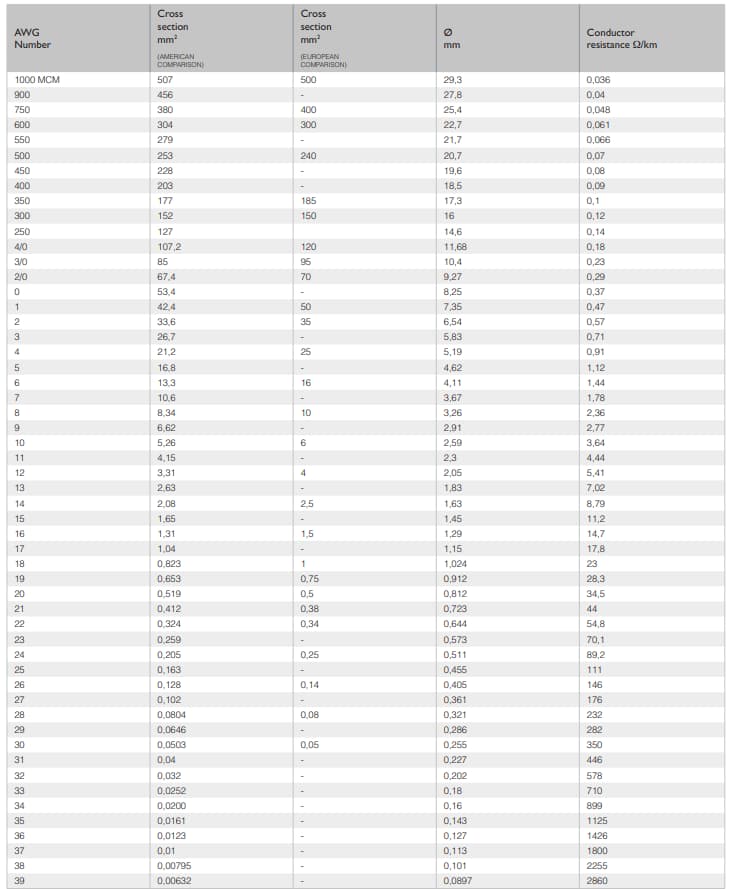
- 12 AWG はほぼ等しい 3.31 mm²
- 10 AWG は約に等しい 5.26 mm²
- 8 AWG はおおよそに相当します 8.37 mm²
- 6 AWG 変換先 13.3 mm²
これらのサイズは実際のアプリケーションで頻繁に使用されます. 例えば, 建物の配線に広く使用されています, 太陽光発電システム, および産業施設.
変換の仕組み
基本的な公式を使用して導体面積を計算できます:A=4π×d2
ここ, d 導体の直径をミリメートルで表します.
しかし, AWG は対数数列に従います. したがって, 手計算は必ずしも実用的ではない. その代わり, ほとんどの専門家は、より迅速かつ正確な結果を得るために標準テーブルに依存しています。.
AWGとmm²: 主な違い
どちらのシステムも導体サイズを測定しますが、, 彼らはさまざまな地域にサービスを提供しています. 一方では, 北米ではAWGが優勢. 一方で, mm² は引き続き世界標準です.
このため, 国際プロジェクトでは両方のシステムが必要になることがよくあります. その結果, それらの関係を理解することで仕様ミスを防ぐことができます.
結論
正確なワイヤーサイジングは安全性とパフォーマンスに直接影響します. したがって, AWG から mm² への変換をマスターすることはエンジニアにとって不可欠です, メーカー, そして購入者.
信頼性の高い換算表を使用することで, あなたはできる:
- 正しいケーブルサイズを選択してください
- 世界標準を効率的に比較する
- 適切な電流容量を確保する
- 購入意思決定を改善する
最後に, シンプルな換算チャートで時間を節約できます, エラーを減らす, プロジェクトの成果を向上させる.