
전기공학과, 올바른 도체 크기를 선택하는 것이 필수적입니다.. 하지만, 지역마다 다른 측정 시스템을 사용합니다.. AWG에 대한 mm² 정보, 북미 지역, 전문가가 사용하는 AWG (미국 와이어 게이지). 대조적으로, 대부분의 국제 시장은 제곱밀리미터 (mm²).
결과적으로, 엔지니어, 전기 기술자, 구매자는 종종 이 두 시스템 간에 전환할 수 있는 안정적인 방법이 필요합니다.. 그러므로, 정확한 케이블 선택을 위해서는 AWG에서 mm²로의 변환을 이해하는 것이 중요합니다..
여기, 두 개의 케이블 AWG 시스템의 작동 방식을 보여줍니다., 전환이 중요한 이유, 완전한 참조 테이블을 효과적으로 사용하는 방법.
AWG는 무엇을 의미합니까??
AWG는 American Wire Gauge의 약자입니다.. 표준화된 수치 시스템을 사용하여 전기 도체의 직경을 정의합니다..
미터법 측정과 달리, AWG는 역 스케일을 따릅니다.. 다시 말해서:
- 숫자가 작을수록 와이어가 두꺼운 것을 나타냅니다.
- 숫자가 클수록 와이어가 더 얇아짐을 나타냅니다.
예를 들어, 4/0 AWG는 AWG보다 직경이 훨씬 큽니다. 1 AWG. 비슷하게, 12 AWG가 더 두꺼워요 20 AWG.
이런 독특한 구조 때문에, 많은 사용자가 처음에는 AWG를 혼란스럽게 생각합니다.. 하지만, 패턴을 이해하고 나면, 와이어 크기를 비교하는 것이 더 쉬워졌습니다..
AWG를 mm²로 변환해야 하는 이유
글로벌 프로젝트에서, 단일 표준에만 의존할 수는 없습니다.. 대신에, 지역에 따라 AWG와 mm² 사이를 전환해야 합니다.. 이러한 이유로, 전환은 여러 영역에서 중요한 역할을 합니다..
1. 국제 프로젝트
첫 번째, 국가마다 다른 표준을 따릅니다.. 반면 미국. AWG를 사용, 대부분의 다른 지역에서는 mm²를 사용합니다.. 그러므로, 변환을 통해 시장 전반에 걸쳐 사양이 일치하도록 보장.
2. 현재 용량 비교
다음, 도체 면적은 전류 전달 용량에 직접적인 영향을 미칩니다. AWG를 mm²로 변환하면, IEC 표준을 사용하여 전류용량을 쉽게 비교할 수 있습니다..
3. 전기 설계
게다가, 대부분의 엔지니어링 계산에는 미터법 단위가 필요합니다.. 결과적으로, 설계자는 계산을 수행하기 전에 AWG 값을 mm²로 변환해야 합니다..
4. 조달 및 소싱
마지막으로, 구매자는 종종 다른 공급업체의 제품을 비교합니다.. 변환표를 사용하여, 동등한 케이블 크기를 신속하게 식별할 수 있습니다..
AWG에서 mm²로의 변환표
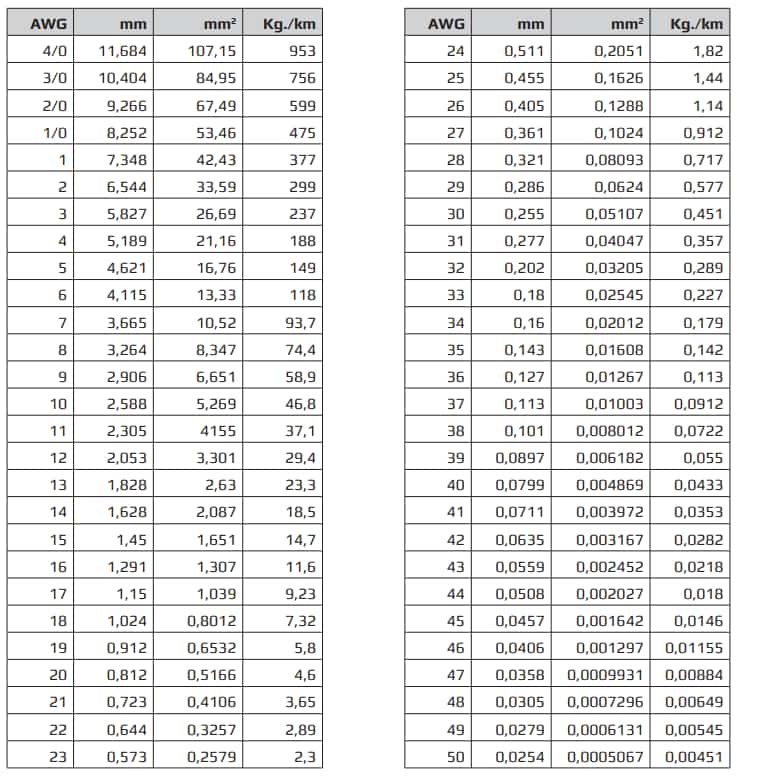
아래는 도체 직경을 보여주는 실제 참조 테이블입니다., 단면적, 그리고 대략적인 구리 무게:
| AWG | 지름 (mm) | 영역 (mm²) | 무게 (kg/km) |
|---|---|---|---|
| 4/0 | 11.684 | 107.15 | 953 |
| 3/0 | 10.404 | 84.95 | 756 |
| 2/0 | 9.266 | 67.49 | 599 |
| 1/0 | 8.252 | 53.46 | 475 |
| 1 | 7.348 | 42.43 | 377 |
| 2 | 6.544 | 33.59 | 299 |
| 3 | 5.827 | 26.69 | 237 |
| 4 | 5.189 | 21.16 | 188 |
| 5 | 4.621 | 16.76 | 149 |
| 6 | 4.115 | 13.33 | 118 |
| 7 | 3.665 | 10.52 | 93.7 |
| 8 | 3.264 | 8.347 | 74.4 |
| 9 | 2.906 | 6.651 | 58.9 |
| 10 | 2.588 | 5.269 | 46.8 |
| 11 | 2.305 | 4.155 | 37.1 |
| 12 | 2.053 | 3.301 | 29.4 |
| 13 | 1.828 | 2.63 | 23.3 |
| 14 | 1.628 | 2.087 | 18.5 |
| 15 | 1.45 | 1.651 | 14.7 |
| 16 | 1.291 | 1.307 | 11.6 |
| 17 | 1.15 | 1.039 | 9.23 |
| 18 | 1.024 | 0.8012 | 7.32 |
| 19 | 0.912 | 0.6532 | 5.8 |
| 20 | 0.812 | 0.5166 | 4.6 |
| 21 | 0.723 | 0.4106 | 3.65 |
| 22 | 0.644 | 0.3257 | 2.89 |
| 23 | 0.573 | 0.2579 | 2.3 |
| 24 | 0.511 | 0.2051 | 1.82 |
| 25 | 0.455 | 0.1626 | 1.44 |
| 26 | 0.405 | 0.1288 | 1.14 |
| 27 | 0.361 | 0.1024 | 0.912 |
| 28 | 0.321 | 0.08093 | 0.717 |
| 29 | 0.286 | 0.0624 | 0.577 |
| 30 | 0.255 | 0.05107 | 0.451 |
| 31 | 0.227 | 0.04047 | 0.357 |
| 32 | 0.202 | 0.03205 | 0.289 |
| 33 | 0.180 | 0.02545 | 0.227 |
| 34 | 0.160 | 0.02012 | 0.179 |
| 35 | 0.143 | 0.01608 | 0.142 |
| 36 | 0.127 | 0.01267 | 0.113 |
일반적인 와이어 크기 등가물
선택을 단순화하려면, 몇 가지 주요 전환을 기억할 수 있습니다.. 예를 들어:
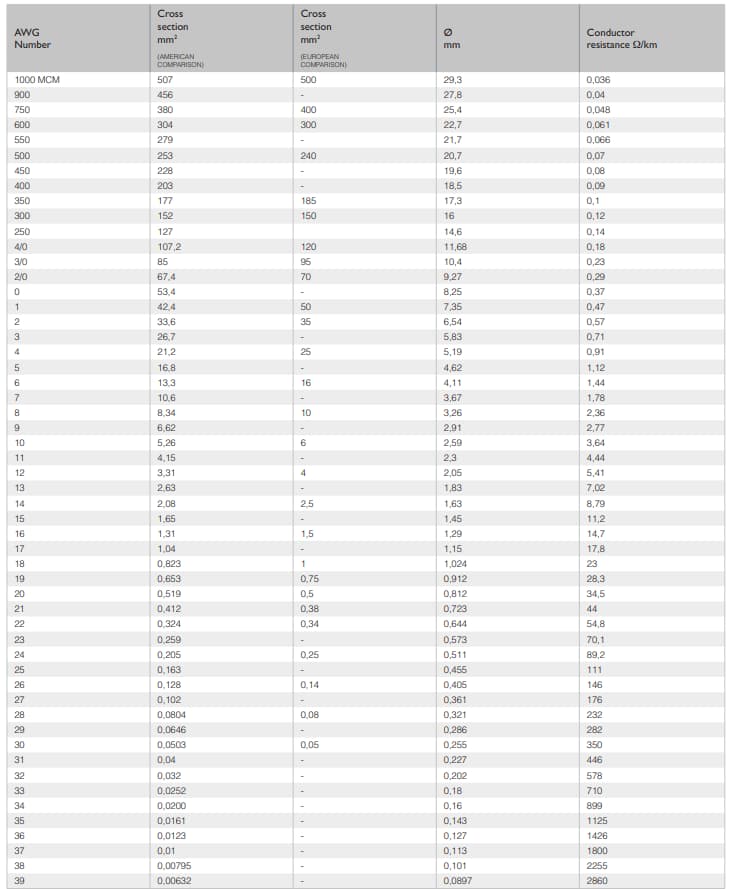
- 12 AWG는 대략 다음과 같습니다. 3.31 mm²
- 10 AWG는 약 5.26 mm²
- 8 AWG는 대략 다음과 같습니다. 8.37 mm²
- 6 AWG는 다음으로 변환됩니다. 13.3 mm²
이러한 크기는 실제 응용 프로그램에서 자주 나타납니다.. 예를 들어, 그들은 건물 배선에 널리 사용됩니다., 태양계, 및 산업 설비.
변환 작동 방식
기본 공식을 사용하여 도체 면적을 계산할 수 있습니다.:A=4π×d2
여기, 디 도체 직경을 밀리미터 단위로 나타냅니다..
하지만, AWG는 로그 수열을 따릅니다.. 그러므로, 수동 계산이 항상 실용적인 것은 아닙니다.. 대신에, 대부분의 전문가는 더 빠르고 정확한 결과를 위해 표준 테이블을 사용합니다..
AWG 및 mm²: 주요 차이점
두 시스템 모두 도체 크기를 측정하지만, 그들은 다른 지역에 서비스를 제공합니다. 한편으로는, AWG는 북미 지역을 장악하고 있습니다.. 반면에, mm²는 글로벌 표준으로 남아 있습니다..
이 때문에, 국제 프로젝트에는 두 시스템이 모두 필요한 경우가 많습니다.. 따라서, 그들의 관계를 이해하면 사양 오류를 방지하는 데 도움이 됩니다..
결론
정확한 와이어 크기는 안전과 성능에 직접적인 영향을 미칩니다.. 그러므로, 엔지니어에게는 AWG에서 mm²로의 변환을 마스터하는 것이 필수적입니다., 제조업체, 그리고 구매자.
믿을 수 있는 변환표를 사용하여, 당신은 할 수:
- 올바른 케이블 크기를 선택하세요
- 글로벌 표준을 효율적으로 비교
- 적절한 전류 용량 보장
- 구매 결정 개선
결국, 간단한 변환 차트로 시간을 절약할 수 있습니다, 오류를 줄이다, 프로젝트 결과를 개선하고.