
현대 동력 전달 시스템에서, fiber optic cables do much more than carry data. They also support grid monitoring, protection, and communication. Among all aerial fiber solutions, OPGW and ADSS stand out as the most widely used options.
Although both cables transmit optical signals, their design philosophy is completely different. 결과적으로, engineers choose them based on installation conditions, electrical requirements, and budget constraints.
We will show their differences in a clear and practical way, helping you select the right solution for your project.
What is OPGW Cable?
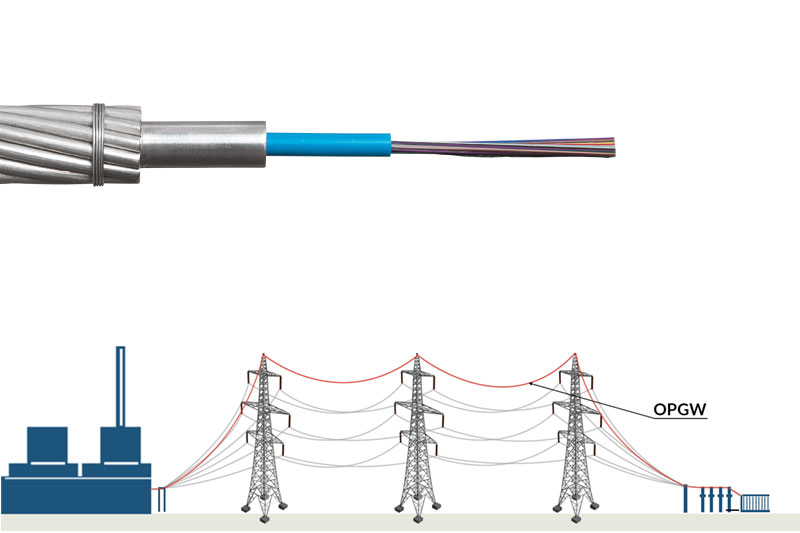
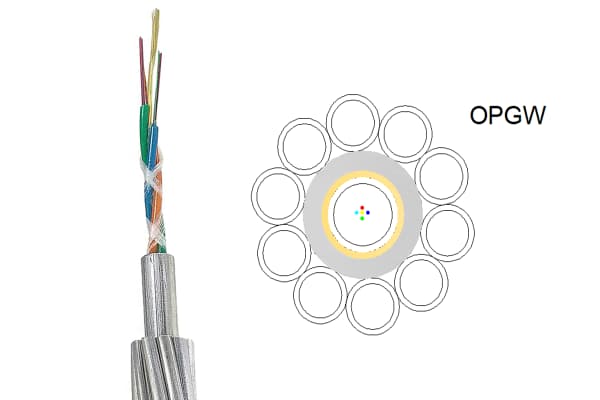
OPGW, or Optical Ground Wire, combines two functions into a single cable. It works as a grounding conductor while simultaneously carrying optical fibers.
Power utilities usually install it at the top of transmission towers. Because of this position, it directly replaces the traditional shield wire.
Key Features of OPGW
OPGW offers several important advantages:
- It provides lightning protection for transmission lines
- It carries short-circuit current during faults
- It integrates fiber communication inside the cable
- It delivers high mechanical strength for long spans
게다가, its metallic structure ensures reliable performance in harsh environments.
Structure of OPGW
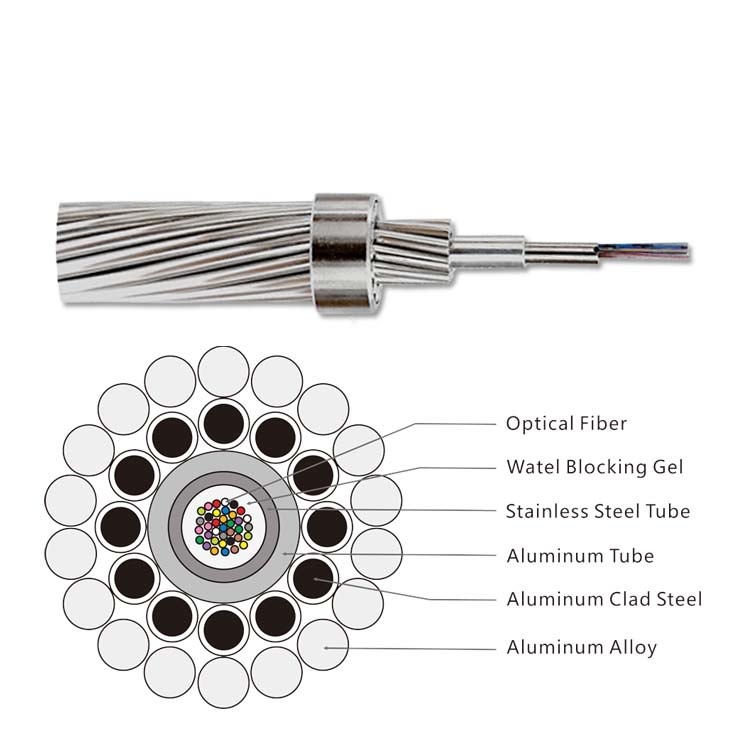
Manufacturers design OPGW with multiple layers. 일반적으로, the cable includes:
- Outer aluminum alloy wires for conductivity
- Inner steel reinforcement for strength
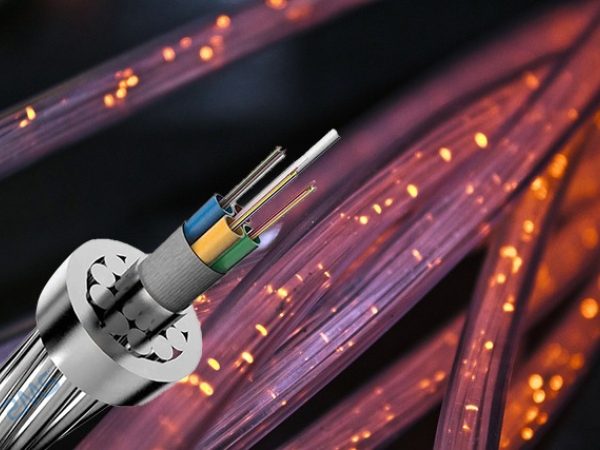
- A sealed stainless steel tube containing optical fibers
그러므로, OPGW performs both electrical and communication roles at the same time.
What is ADSS Cable?
ADSS, or All-Dielectric Self-Supporting Cable, takes a completely different approach. Instead of using metal, it relies entirely on non-metallic materials.
Utilities install ADSS along the side of poles or towers. Unlike OPGW, it does not replace any electrical component.
Key Features of ADSS
ADSS provides flexibility and safety in many situations:
- It contains no metal, so it does not conduct electricity
- It resists electromagnetic interference effectively
- It supports long spans without additional support wires
- It allows installation on live lines
예를 들어, many telecom projects prefer ADSS because it avoids power shutdown.
Structure of ADSS
ADSS cables use a layered non-metallic design:
- Optical fibers inside loose tubes
- Aramid yarn for tensile strength
- Water-blocking materials for protection
- 외피 (PE or anti-tracking AT material)
결과적으로, ADSS remains lightweight while still maintaining strong mechanical performance.
Structural Differences Between OPGW and ADSS
재료 구성
OPGW uses aluminum and steel. 대조적으로, ADSS uses aramid fibers and polymers. This difference directly affects electrical behavior.
Mechanical Design
OPGW depends on metal strength to handle tension. 그 동안에, ADSS relies on high-performance synthetic fibers.
전기적 특성
OPGW conducts electricity and participates in grounding. 하지만, ADSS remains fully insulated and does not carry current.
그러므로, the two cables serve fundamentally different roles in power systems.
Installation Differences
Installation Position
Engineers place OPGW at the highest point of the tower. 반면에, they mount ADSS along the side.
Installation Conditions
Installing OPGW often requires a power outage. 하지만, crews can install ADSS on energized lines. This creates a major advantage in live-line projects.
Installation Complexity
OPGW installation involves heavy equipment and strict procedures. In comparison, ADSS installation is faster and simpler.
결과적으로, many retrofit projects choose ADSS to reduce downtime.
Mechanical Performance Comparison
인장강도
OPGW provides very high tensile strength due to its metallic core. 대조적으로, ADSS offers sufficient strength for most medium-span applications.
무게
OPGW weighs significantly more than ADSS. 그러므로, it places higher loads on towers.
Span Capability
OPGW handles ultra-long spans effectively. 그 동안에, ADSS performs well in medium to long spans depending on design.
Electrical Performance Comparison
Fault Current Capability
OPGW can carry fault current during short circuits. 하지만, ADSS cannot carry any electrical load.
Grounding Function
OPGW contributes to system grounding. 대조적으로, ADSS plays no role in grounding.
Electromagnetic Interference
ADSS resists electromagnetic interference completely. 반면에, OPGW operates within the electrical system and may experience induced effects.
Cost and Economic Considerations
Cable Cost
OPGW generally costs more because it uses metal and complex structures. 그 동안에, ADSS offers a more economical option.
설치비용
Installing OPGW requires outages and specialized equipment. 그러므로, total installation cost increases. In comparison, ADSS reduces both time and labor costs.
유지
Technicians often find OPGW harder to maintain due to its tower-top location. 대조적으로, ADSS allows easier access.
Application Scenarios
Where OPGW is Used
Utilities typically choose OPGW for:
- 고전압 송전선로
- New infrastructure projects
- Smart grid systems
- Substation connections
In these cases, both grounding and communication are required.
Where ADSS is Used
ADSS works well in:
- Distribution networks
- Telecom expansion
- Rural electrification
- Existing line upgrades
예를 들어, when shutdown is not possible, ADSS becomes the preferred solution.
Environmental and Operational Performance
Lightning Protection
OPGW protects the line against lightning. 하지만, ADSS does not provide this function.
부식 저항
ADSS resists corrosion very well due to its non-metallic design. 대조적으로, OPGW may require additional protection in harsh environments.
Electric Field Effects
High electric fields can affect ADSS performance. 그러므로, engineers often select anti-tracking sheaths in such conditions.
Lifespan and Reliability
Service Life
OPGW typically lasts longer due to its robust structure. 하지만, ADSS still provides reliable service for decades.
Reliability Factors
OPGW depends on both mechanical and electrical performance. 그 동안에, ADSS depends more on environmental conditions and installation quality.
How to Choose Between OPGW and ADSS
Choose OPGW if
- You are building a new transmission line
- You need lightning protection
- You require grounding capability
- You are dealing with high voltage systems
Choose ADSS if
- You are upgrading an existing line
- You cannot shut down power
- You want faster installation
- You need to reduce project cost
OPGW and ADSS
OPGW and ADSS cables serve different purposes, even though both transmit optical signals. OPGW integrates electrical and communication functions into one system. 대조적으로, ADSS focuses on flexibility and ease of installation.
그러므로, the right choice depends on your project requirements rather than a simple preference. By understanding their differences clearly, you can ensure better performance, lower cost, 장기적인 신뢰성.