
In overhead transmission lines, some components are easy to notice—towers, 지휘자, insulators. Others sit quietly at the top of the structure and rarely draw attention. Among these are the ground wire and the OPGW cable. Although they may look similar from a distance, they serve very different purposes.
Understanding the difference between OPGW cable 그리고 earth wire is essential for engineers, 계약자, and utility planners. The choice between them affects not only lightning protection but also communication capability, system monitoring, and long-term network performance.
How each type works, where they are used, and how to select the right solution. It also includes a practical table of common OPGW specifications for reference.
What Is OPGW Cable?
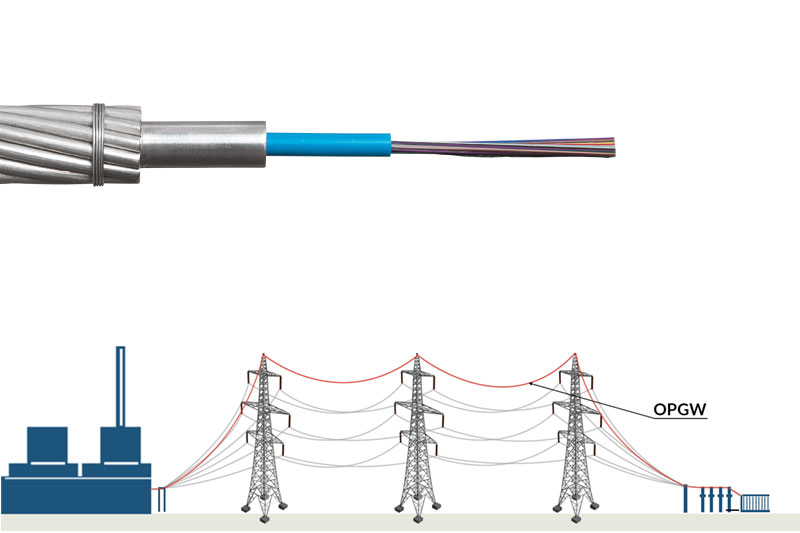
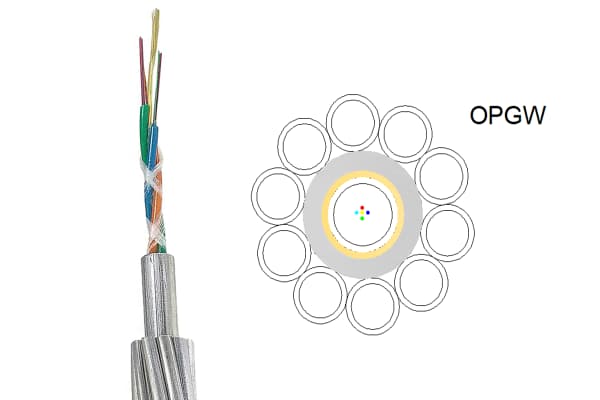
OPGW stands for Optical Ground Wire. At first glance, it looks similar to a traditional earth wire. 하지만, it combines two functions in one product.
Like a standard ground wire, OPGW provides lightning protection. At the same time, it contains optical fibers inside the cable structure. These fibers enable high-speed data transmission along the power line.
Utilities use OPGW cables for communication, monitoring, and control systems. 예를 들어, they support SCADA systems, relay protection, and real-time grid management.
Because of this dual function, OPGW has become increasingly popular in modern power networks.
What Is an Earth Wire?
An earth wire, also known as a ground wire or shield wire, is installed at the top of transmission towers. Its main function is to protect phase conductors from lightning strikes.
When lightning hits the line, the earth wire provides a low-resistance path to ground. 결과적으로, the current flows safely into the earth instead of passing through the power conductors.
In most cases, earth wires are made from galvanized steel or aluminum-clad steel. These materials offer good mechanical strength and adequate conductivity for lightning protection.
Because the earth wire does not carry load current under normal operation, its design focuses more on mechanical strength than electrical performance.
Key Differences Between OPGW Cable and Earth Wire
Although both are installed at the top of transmission lines, their roles differ significantly. The following sections highlight the main differences.
1. 기능
The most important difference lies in functionality.
An earth wire provides only lightning protection. It does not transmit data or support communication systems.
대조적으로, an OPGW cable performs two roles at once. It protects the line from lightning while also carrying optical signals. 그러므로, it supports both electrical and communication needs.
2. 구조
The internal structure of the two cables differs considerably.
An earth wire typically consists of metal strands designed for strength and conductivity.
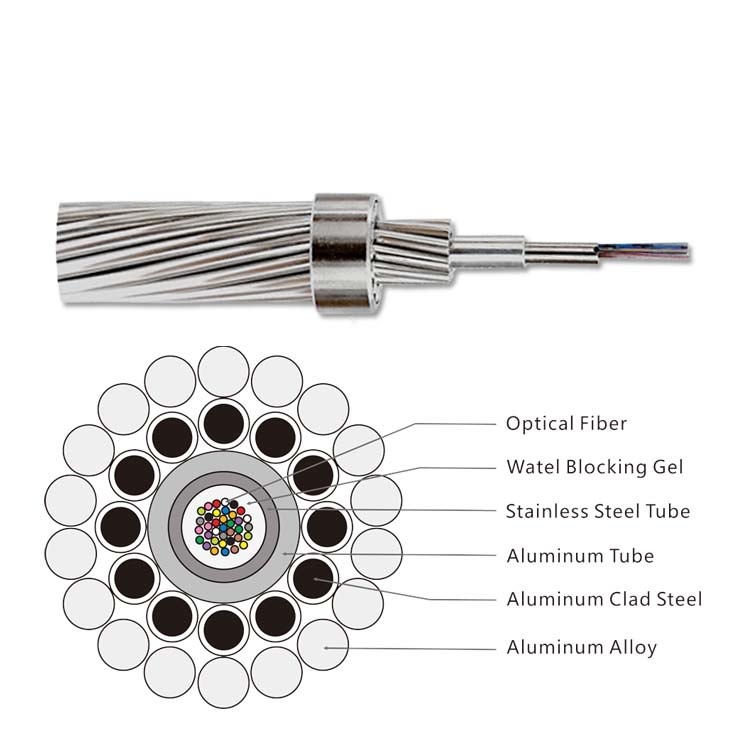
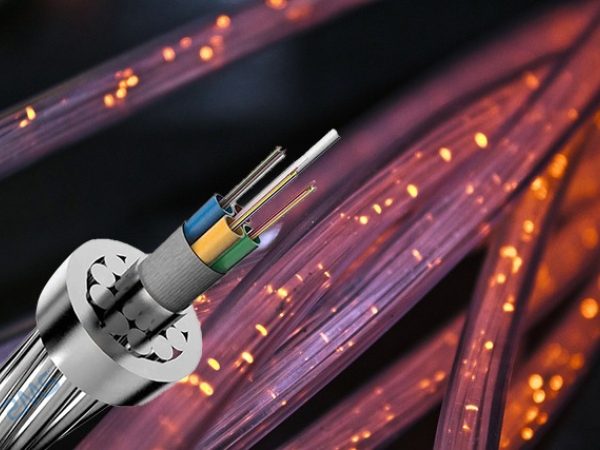
반면에, an OPGW cable includes a central optical fiber unit. This unit is protected by layers of aluminum or steel wires. The design ensures that the fibers remain safe even under mechanical stress.
3. 재료 구성
Earth wires usually use galvanized steel or aluminum-clad steel. These materials provide high tensile strength and durability.
OPGW cables use a more complex combination of materials. They include stainless steel tubes for fiber protection, along with aluminum alloy or aluminum-clad steel wires for strength and conductivity.
4. Communication Capability
An earth wire does not support communication.
대조적으로, OPGW cables serve as a communication backbone. They transmit data for grid control, monitoring, and protection systems. This capability reduces the need for separate communication infrastructure.
5. 비용
Earth wires are relatively simple and cost-effective.
OPGW cables, however, involve more advanced materials and manufacturing processes. 그러므로, their initial cost is higher. Even so, they often reduce overall project costs by combining two functions into one system.
6. 설치 고려 사항
Both types are installed at the top of transmission towers. 하지만, OPGW installation requires more attention.
Because OPGW contains optical fibers, installers must handle it carefully to avoid damage. 게다가, splicing and testing of fibers require specialized tools and skills.
Advantages of OPGW Cable
OPGW cables offer several clear advantages over traditional earth wires.
첫 번째, they provide integrated functionality. By combining grounding and communication, they simplify system design.
두번째, they improve reliability. Optical fibers are immune to electromagnetic interference, so data transmission remains stable even in high-voltage environments.
제삼, they support modern grid management. With real-time data, utilities can monitor system performance and respond quickly to faults.
마지막으로, they reduce long-term costs. Although the initial investment is higher, the elimination of separate communication lines often leads to overall savings.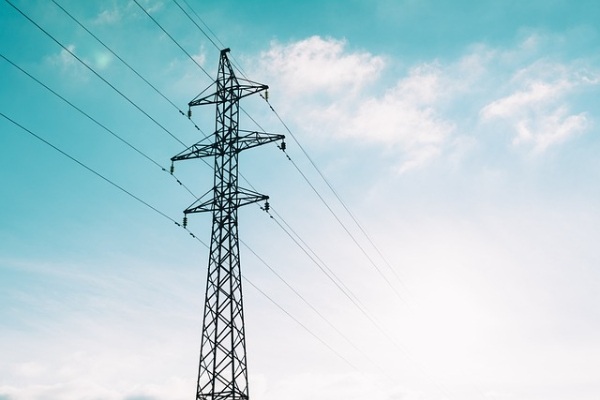
When to Use Earth Wire Instead of OPGW
Despite the advantages of OPGW, earth wires still have their place.
예를 들어, in smaller projects where communication is not required, a traditional earth wire may be sufficient.
게다가, for budget-sensitive installations, earth wires offer a lower upfront cost.
하지만, as grid systems become more advanced, the use of OPGW continues to expand.
Common OPGW Cable Specifications
OPGW cables come in a wide range of designs. Engineers select specifications based on mechanical strength, fiber count, 및 환경 조건.
Below is a practical reference table showing common OPGW configurations.
OPGW Cable Specification Table
| Model | Fiber Count | Cable Diameter (mm) | Rated Tensile Strength (kN) | Short Circuit Current (kA²s) | 무게 (kg/km) | Structure Type |
|---|---|---|---|---|---|---|
| OPGW-24B1 | 24 | 11.5 | 70 | 50 | 450 | Stainless steel tube |
| OPGW-36B1 | 36 | 12.5 | 80 | 60 | 520 | Aluminum-clad steel |
| OPGW-48B1 | 48 | 13.5 | 90 | 70 | 600 | Layer stranded |
| OPGW-24B2 | 24 | 10.8 | 65 | 45 | 420 | Central tube |
| OPGW-48B2 | 48 | 13.2 | 85 | 65 | 580 | Multi-layer |
| OPGW-72B1 | 72 | 14.8 | 100 | 80 | 700 | High strength |
| OPGW-96B1 | 96 | 16.5 | 120 | 100 | 850 | Heavy-duty |
| OPGW-144B1 | 144 | 18.0 | 140 | 120 | 1000 | Extra capacity |
How to Choose Between OPGW and Earth Wire
Selecting the right option depends on project requirements.
첫 번째, consider whether communication is needed. If the project requires data transmission, OPGW is the clear choice.
다음, evaluate budget and long-term cost. While OPGW costs more initially, it can reduce overall expenses by eliminating separate communication systems.
게다가, consider installation conditions. For complex or long-distance transmission lines, OPGW offers greater flexibility and functionality.
마지막으로, think about future expansion. Many utilities choose OPGW to prepare for smart grid development.
Practical Applications
OPGW cables are widely used in:
- 고전압 송전선로
- Smart grid systems
- 재생 가능 에너지 프로젝트
- Long-distance communication networks
그 동안에, earth wires remain common in:
- Traditional transmission lines
- Low-cost infrastructure projects
- Areas without communication requirements
OPGW Cable Manufacturer
Although OPGW cable and earth wire may appear similar, their functions and capabilities differ significantly.
An earth wire provides basic lightning protection. 대조적으로, an OPGW cable combines protection with high-speed communication, making it a key component in modern power systems.
As power networks continue to evolve, the role of OPGW becomes more important. For projects that require both reliability and communication, it offers a practical and efficient solution.
Understanding these differences helps engineers and decision-makers choose the right option for their specific needs.
에 대한 OPGW Cable manufacturer, please contact us.