
А 132kV submarine cable is a high-voltage power transmission cable designed for underwater installation. It is widely used in offshore wind farms, island power supply systems, and cross-sea electrical grid connections. These cables must operate reliably in extreme marine environments where they face challenges such as high water pressure, saltwater corrosion, seabed movement, and mechanical damage from anchors or fishing equipment.
Modern submarine cables typically use XLPE insulation technology, copper or aluminum conductors, metallic water barriers, and strong steel wire armoring. These features ensure high electrical reliability and long service life, usually exceeding 30-40 жил.
Бүтэц, conductor sizes from 25 мм² хүртэл 2500 мм², хүч чадал, техникийн үзүүлэлтүүд, installation methods, international standards, and price factors for 132kV submarine cables.
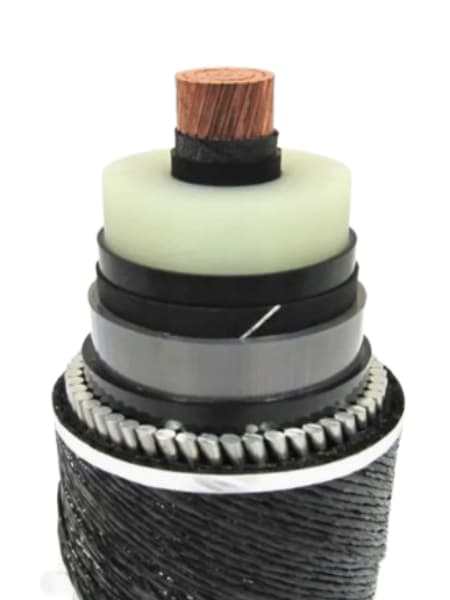
What Is a 132kV Submarine Cable?
А 132kV submarine power cable is a medium-to-high voltage transmission cable installed under water to deliver electrical power between land areas separated by water.
Typical applications include:
- Offshore wind farm export cables
- Island grid interconnection
- Cross-sea power transmission
- Offshore oil and gas platforms
- Coastal power infrastructure projects
Compared with underground cables, submarine cables require stronger mechanical protection and more sophisticated water-blocking systems.
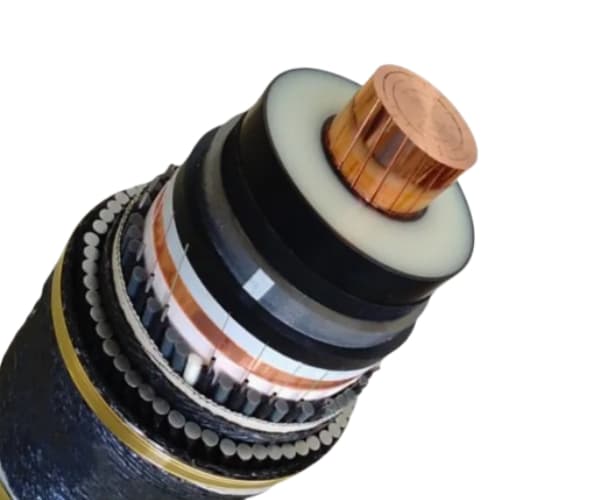
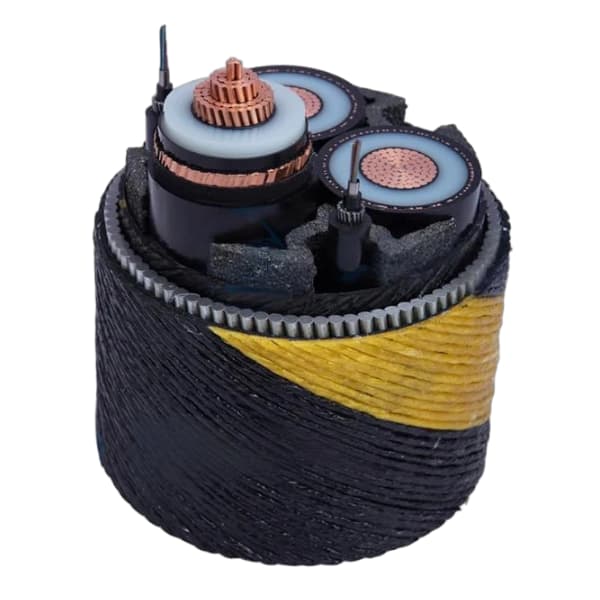
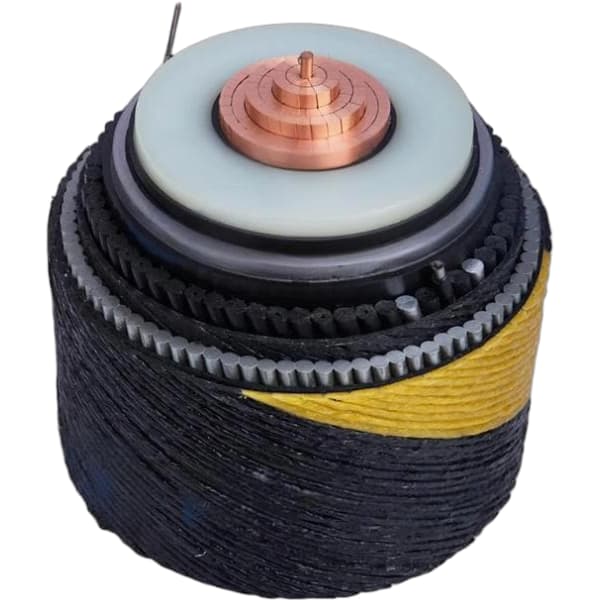
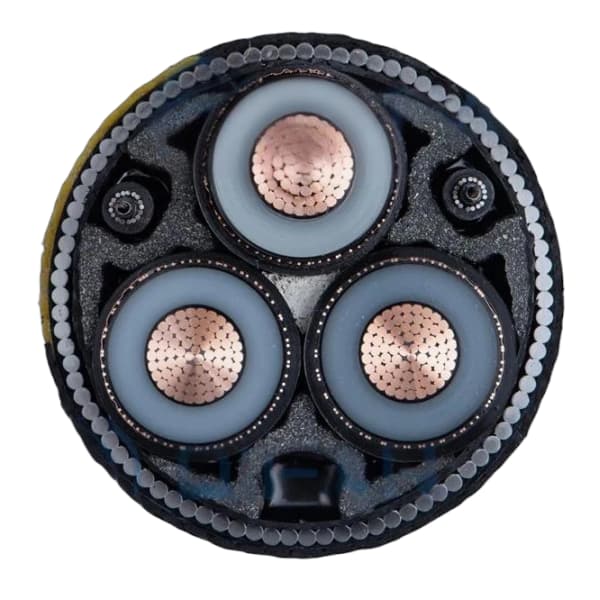
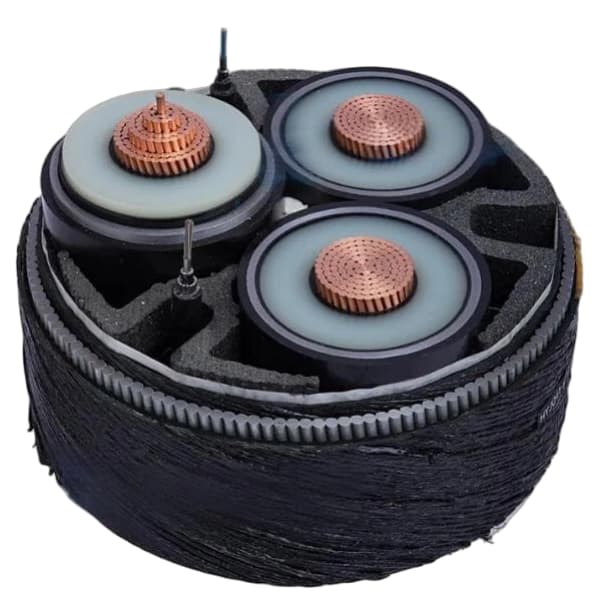
Structure of 132kV XLPE Submarine Cable
Ердийн 132kV XLPE insulated submarine cable consists of several layers designed to provide electrical insulation, механик хүч чадал, болон байгаль орчныг хамгаалах.
Standard Cable Construction
- Stranded copper or aluminum conductor
- Conductor semiconductive screen
- XLPE insulation layer
- Insulation semiconductive screen
- Metallic screen (copper wire or copper tape)
- Longitudinal water-blocking layer
- Lead sheath or aluminum sheath
- Bedding layer
- Steel wire armor
- Outer polyethylene sheath
Function of Each Layer
Дамжуулагч
The conductor carries electrical current. Copper conductors provide higher conductivity, while aluminum conductors reduce weight.
XLPE тусгаарлагч
Cross-linked polyethylene insulation provides excellent dielectric strength and thermal stability.
Металл бүрээс
The lead or aluminum sheath prevents water penetration and protects the insulation.
Steel Wire Armor
Steel armoring protects the cable from mechanical damage during installation and operation.
Conductor Cross Section Range (25 мм² - 2500 мм²)
Мэргэжлийн хүн submarine cable manufacturer can produce cables with a wide range of conductor sizes to meet different transmission requirements.
Standard Conductor Sizes
25 мм²
35 мм²
50 мм²
70 мм²
95 мм²
120 мм²
150 мм²
185 мм²
240 мм²
300 мм²
400 мм²
500 мм²
630 мм²
800 мм²
1000 мм²
1200 мм²
1400 мм²
1600 мм²
1800 мм²
2000 мм²
2200 мм²
2500 мм²
Smaller conductor sizes are used for shorter distances or lower loads, while larger sizes are used in high-capacity offshore transmission systems.
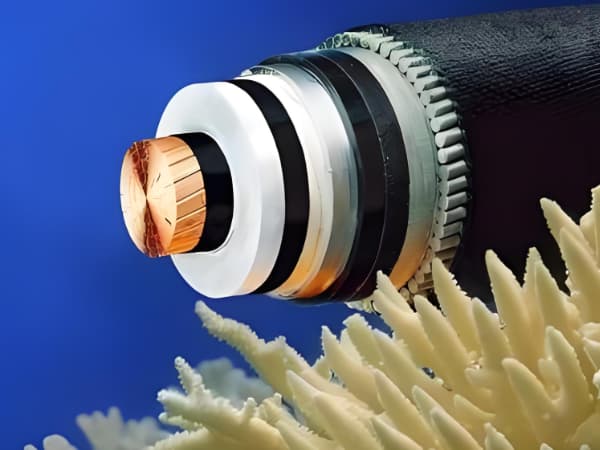
132kV Submarine Cable Technical Specifications
Below is a representative technical parameter table for a typical 132kV submarine cable.
| Parameter | Typical Value |
|---|---|
| Нэрлэсэн хүчдэл | 76/132 кВ |
| Conductor Material | Зэс / Хөнгөн цагаан |
| Тусгаарлалтын төрөл | XLPE |
| Maximum Operating Temperature | 90°C |
| Short-Circuit Temperature | 250°C |
| Metallic Screen | Copper wires or tapes |
| Water Barrier | Lead sheath or aluminum sheath |
| Armor Type | Galvanized steel wire |
| Гаднах бүрээс | HDPE |
| Installation Method | Seabed laying or burial |
Actual specifications may vary depending on project design requirements.
Гүйдлийн даац (Өрөвч байдал)
The ampacity of submarine cable depends on conductor size, seabed thermal resistivity, water temperature, болон суурилуулах нөхцөл.
Below is a typical current carrying capacity table for copper conductor submarine cables.
| Кондукторын хэмжээ (мм²) | Одоогийн хүчин чадал (А) |
|---|---|
| 25 | 120 |
| 35 | 150 |
| 50 | 190 |
| 70 | 240 |
| 95 | 300 |
| 120 | 340 |
| 150 | 380 |
| 185 | 430 |
| 240 | 500 |
| 300 | 570 |
| 400 | 650 |
| 500 | 730 |
| 630 | 820 |
| 800 | 920 |
| 1000 | 1050 |
| 1200 | 1150 |
| 1400 | 1250 |
| 1600 | 1350 |
| 1800 | 1450 |
| 2000 | 1550 |
| 2200 | 1650 |
| 2500 | 1800 |
For precise engineering design, the ampacity must be calculated based on actual installation conditions.
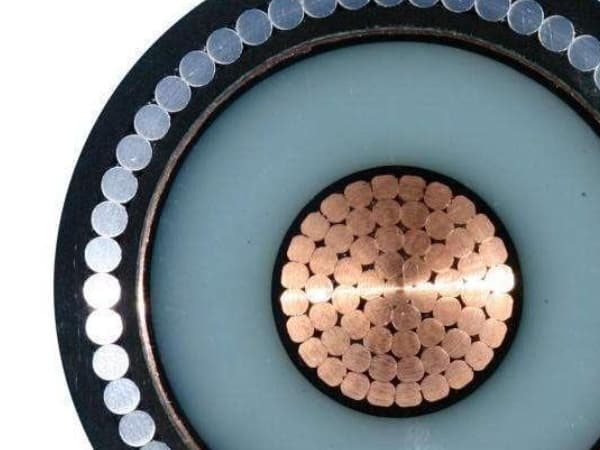
International Standards for Submarine Cables
High-voltage submarine cables must comply with strict international standards.
Common standards include:
IEC 62067 – Power cables above 150 кВ
IEC 60840 – Power cables up to 150 кВ
IEC 60228 – Тусгаарласан кабелийн дамжуулагч
CIGRE recommendations for submarine cable systems
These standards ensure safe operation, high reliability, and compatibility with power grids.
Manufacturing Process of 132kV Submarine Cable
Manufacturing a high voltage submarine cable requires advanced production technology and strict quality control.
Main Production Steps
Conductor stranding
Semiconductive layer extrusion
XLPE insulation extrusion
Insulation shielding
Degassing process
Metallic sheath forming
Ган утсан хуяг
Outer sheath extrusion
High-voltage electrical testing
Each stage must meet strict technical specifications.
Шумбагч онгоцны кабель суурилуулах үйл явц
Installing submarine cables is a complex engineering task requiring specialized vessels and equipment.
Typical Installation Steps
Marine route survey
Seabed preparation
Cable laying using cable-laying vessels
Cable burial using jetting machines
Cable jointing and termination
Final inspection and testing
Proper installation significantly increases cable lifespan and reduces failure risks.
Factors Affecting Submarine Cable Price
The price of a 132kV submarine cable depends on multiple technical and economic factors.
Key price factors include:
Conductor material (copper or aluminum)
Conductor cross-section size
Cable length
Armor design
Metallic sheath type
Installation depth
Transportation and installation costs
Large conductor sizes such as 2000 mm² or 2500 mm² submarine cables can cost significantly more due to higher material consumption.
Advantages of XLPE Submarine Cable
Modern XLPE insulated submarine cables provide several advantages compared with older oil-filled cable designs.
Advantages include:
Higher thermal capacity
Better dielectric performance
Lower maintenance requirements
Environmentally friendly design
Үйлчилгээний урт хугацаа
Lower transmission losses
These advantages make XLPE submarine cables the preferred solution for offshore power transmission projects.
Why Choose a Professional Submarine Cable Manufacturer
Choosing an experienced 132kV submarine cable manufacturer ensures the quality and reliability of the cable system.
A qualified manufacturer should provide:
Advanced high-voltage cable production lines
Large cross-section conductor manufacturing capability
Complete electrical testing laboratories
International certifications
Engineering and installation support
Experienced manufacturers also help optimize cable design according to project conditions.
Frequently Asked Questions About 132kV Submarine Cable
What is the lifespan of a submarine cable?
Most high-voltage submarine cables are designed to operate for 30 руу 40 жил under normal conditions.
What insulation is used in submarine cables?
Modern cables use XLPE тусгаарлагч, which provides excellent electrical and thermal performance.
What conductor size is used in offshore wind farms?
Common sizes for offshore wind projects include 630 мм², 800 мм², 1000 мм², болон 1200 мм².
How deep can submarine cables be installed?
Submarine cables can be installed at depths exceeding 1000 meters, depending on project requirements.
Are submarine cables buried?
Many submarine cables are buried in the seabed using jetting machines to protect them from external damage.
132kV submarine cable
The 132kV submarine cable is a critical component of offshore energy systems and cross-sea power transmission infrastructure. With conductor cross-sections ranging from 25 мм² хүртэл 2500 мм², these cables can support a wide range of electrical loads and transmission distances.
Thanks to advanced XLPE insulation technology, robust steel wire armoring, and strict manufacturing standards, modern submarine cables offer high electrical reliability, excellent mechanical protection, and long service life in challenging marine environments.
As offshore wind power and marine energy projects continue to expand worldwide, the demand for high-quality submarine cable manufacturers and reliable underwater power transmission systems will continue to grow.