
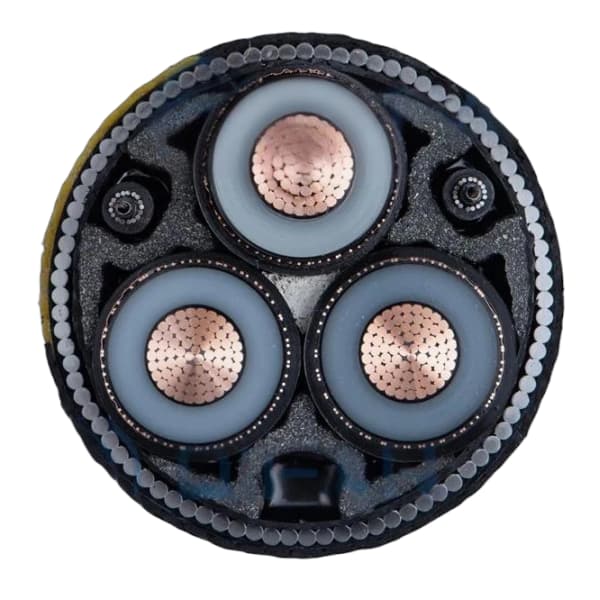
Submarine power transmission plays a critical role in modern energy infrastructure. As coastal cities expand and offshore energy projects increase, the demand for reliable underwater power cables continues to grow. Among the most widely used medium-voltage underwater cables is the 15Kabel Dasar Selam kV, which provides safe and stable power transmission across seas, sungai-sungai, tasik, and offshore installations.
A 15kabel dasar laut kV is designed specifically to operate in harsh underwater environments. These cables must withstand high hydrostatic pressure, corrosion from seawater, mechanical stress during installation, and long-term electrical loading. Kerana keperluan ini, submarine cables are engineered with multiple protective layers and carefully selected conductor sizes.
About structure, specifications, conductor size standards, and practical applications of 15kV submarine cables. We will also provide two important technical tables: one covering metric conductor cross sections from 1 mm² kepada 800 mm², and another showing ASTM standard conductor sizes from 20 AWG ke 1000 MCM.
What Is a 15kV Submarine Cable?
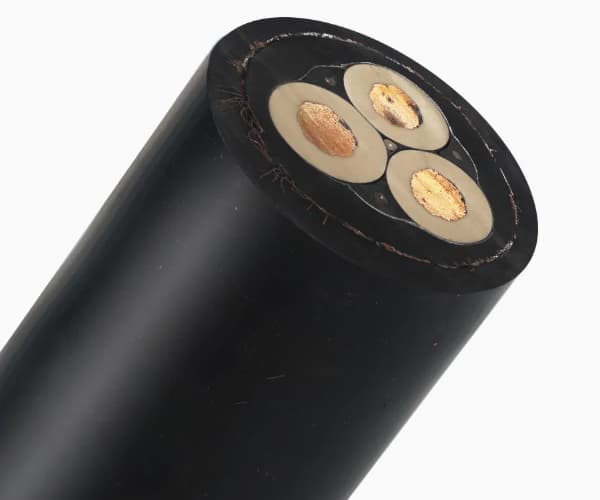
A 15kabel dasar laut kV is a medium-voltage electrical cable specifically designed for underwater installation. It is commonly used to transmit electrical power between locations separated by water such as islands, platform luar pesisir, coastal substations, and marine renewable energy systems.
The 15kV voltage class is widely used because it offers an ideal balance between insulation thickness, transmission efficiency, and installation cost. Compared with high-voltage submarine cables, a 15kV cable system is easier to manufacture, install, and maintain.
Aplikasi biasa termasuk:
- Power supply between mainland and islands
- Offshore oil and gas platform electrification
- Sistem tambahan ladang angin luar pesisir
- Pengagihan kuasa pelabuhan dan pelabuhan
- Kemudahan perindustrian pantai
- Loji pengepaman dan penyahgaraman bawah laut
Kerana keadaan laut yang teruk, kabel dasar laut memerlukan perlindungan mekanikal dan kalis air yang jauh lebih kuat daripada kabel bawah tanah.
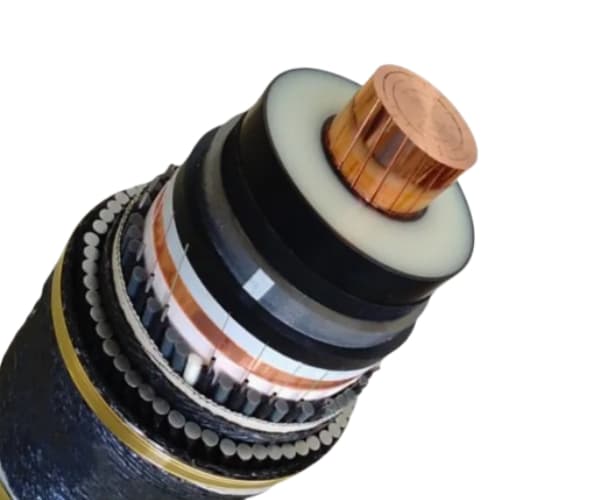
Reka Bentuk Struktur Kabel Dasar Selam 15kV
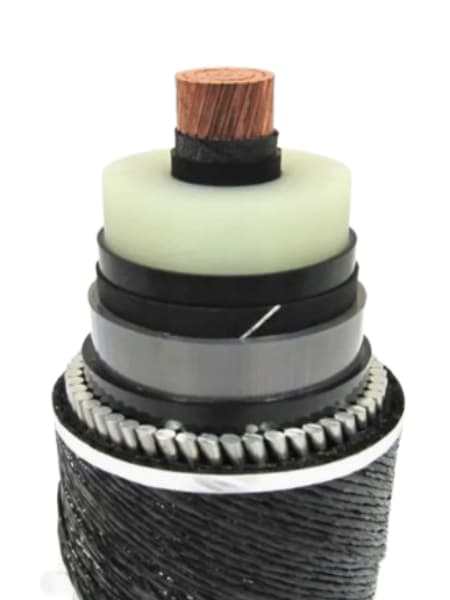
Yang moden 15kabel dasar laut kV biasanya terdiri daripada beberapa lapisan kejuruteraan. Setiap lapisan melaksanakan fungsi tertentu untuk memastikan kebolehpercayaan elektrik dan ketahanan mekanikal.
Konduktor
Konduktor adalah komponen teras yang bertanggungjawab untuk membawa arus elektrik. Kebanyakan kabel dasar selam digunakan pengalir tembaga kerana kekonduksian yang tinggi dan kekuatan mekanikal yang sangat baik. Dalam beberapa aplikasi, konduktor aluminium juga boleh digunakan untuk mengurangkan berat dan kos.
Pembinaan konduktor biasa termasuk:
- Pengalir kuprum terkandas
- Konduktor kuprum padat
- Konduktor terkandas aluminium
Keratan rentas konduktor dipilih berdasarkan kapasiti bawaan arus dan jarak penghantaran.
Skrin Konduktor
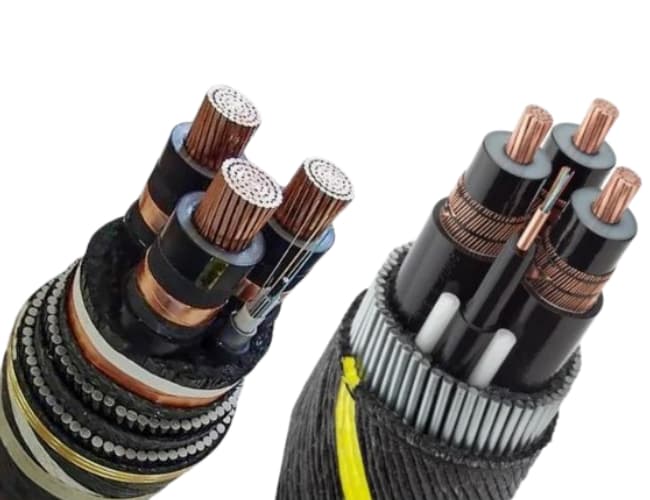
Skrin konduktor semikonduktif mengelilingi konduktor. Lapisan ini melicinkan medan elektrik dan menghilangkan jurang udara antara konduktor dan penebat.
Lapisan Penebat
Penebat adalah salah satu komponen paling kritikal bagi kabel dasar selam. Untuk 15kabel kV, bahan penebat yang paling banyak digunakan ialah:
- XLPE (Polietilena Berpaut Silang)
- EPR (Getah Etilena Propilena)
Penebat XLPE menawarkan kekuatan dielektrik yang sangat baik, rintangan haba, dan hayat perkhidmatan yang panjang, menjadikannya pilihan pilihan untuk kebanyakan sistem kabel dasar laut.
Perisai Penebat
Perisai penebat ialah satu lagi lapisan semikonduktif yang diletakkan di atas penebat. Ia mengekalkan pengagihan medan elektrik yang seragam dan melindungi penebat daripada tekanan elektrik.
Perisai Logam
A metallic shielding layer is typically applied to provide grounding and fault current return paths. Common materials include copper tape or copper wires.
Water Blocking System
Submarine cables must prevent water from penetrating into the cable core. Oleh itu, water blocking materials are added, termasuk:
- Water swelling tapes
- Water blocking powders
- Longitudinal sealing compounds
These materials stop water migration if the cable sheath becomes damaged.
Lapisan Perisai
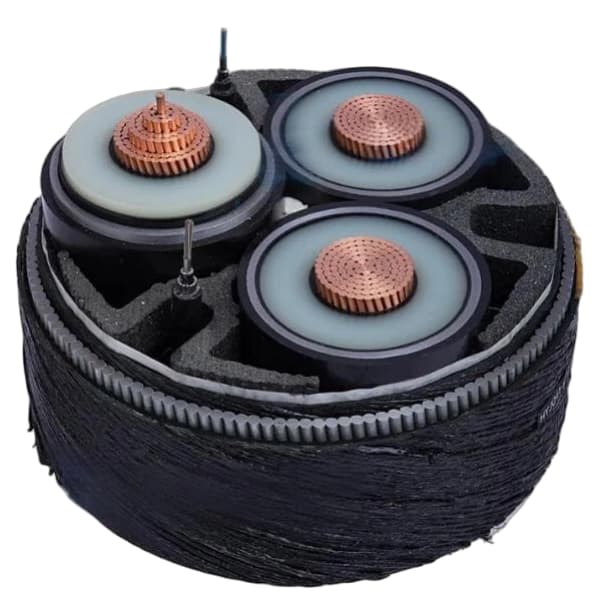
Mechanical protection is essential for submarine cables. Steel wire armoring protects the cable from:
- Alat memancing
- sauh kapal
- Seabed abrasion
- Ketegangan pemasangan
Shallow water cables may use double steel wire armor, while deep-water cables often use single armor layers.
Sarung Luar
The outer sheath protects the cable from corrosion and environmental damage. The most common materials include:
- Polyethylene (PE)
- High-density polyethylene (HDPE)
- PVC in some designs
HDPE sangat tahan terhadap air laut dan lelasan.
Jadual Keratan Rentas Pengalir (Sistem Metrik 1 mm² – 800 mm²)
Di bawah ialah jadual rujukan yang menunjukkan keratan rentas konduktor biasa yang digunakan dalam kabel dasar selam voltan sederhana.
| Saiz Konduktor (mm²) | Diameter lebih kurang (mm) | Anggaran Kapasiti Semasa (A) |
|---|---|---|
| 1 | 1.13 | 15 |
| 2.5 | 1.78 | 25 |
| 4 | 2.25 | 35 |
| 6 | 2.76 | 45 |
| 10 | 3.57 | 65 |
| 16 | 4.51 | 85 |
| 25 | 5.64 | 110 |
| 35 | 6.68 | 135 |
| 50 | 7.98 | 170 |
| 70 | 9.45 | 215 |
| 95 | 11.0 | 260 |
| 120 | 12.4 | 300 |
| 150 | 13.8 | 340 |
| 185 | 15.3 | 385 |
| 240 | 17.5 | 450 |
| 300 | 19.5 | 510 |
| 400 | 22.6 | 600 |
| 500 | 25.2 | 690 |
| 630 | 28.3 | 780 |
| 800 | 31.9 | 900 |
Kapasiti arus sebenar bergantung pada reka bentuk kabel, kedalaman pemasangan, suhu dasar laut, dan keadaan penyejukan.
Jadual Saiz Konduktor ASTM (20 AWG – 1000 MCM)
Di Amerika Utara dan banyak spesifikasi kejuruteraan antarabangsa, saiz konduktor mengikut ASTM AWG / Standard MCM.
| AWG / MCM | Keratan Rentas (mm²) | Diameter konduktor (mm) |
|---|---|---|
| 20 AWG | 0.52 | 0.81 |
| 18 AWG | 0.82 | 1.02 |
| 16 AWG | 1.31 | 1.29 |
| 14 AWG | 2.08 | 1.63 |
| 12 AWG | 3.31 | 2.05 |
| 10 AWG | 5.26 | 2.59 |
| 8 AWG | 8.37 | 3.26 |
| 6 AWG | 13.3 | 4.11 |
| 4 AWG | 21.2 | 5.19 |
| 3 AWG | 26.7 | 5.83 |
| 2 AWG | 33.6 | 6.54 |
| 1 AWG | 42.4 | 7.35 |
| 1/0 AWG | 53.5 | 8.25 |
| 2/0 AWG | 67.4 | 9.27 |
| 3/0 AWG | 85.0 | 10.4 |
| 4/0 AWG | 107 | 11.7 |
| 250 MCM | 127 | 12.7 |
| 350 MCM | 177 | 15.0 |
| 500 MCM | 253 | 18.0 |
| 750 MCM | 380 | 22.0 |
| 1000 MCM | 507 | 25.4 |
Jadual ini membantu jurutera menukar antara saiz konduktor AWG dan metrik semasa mereka bentuk sistem kabel.
Aplikasi Kabel Dasar Selam 15kV
Kabel dasar selam voltan sederhana digunakan secara meluas dalam banyak projek infrastruktur marin.
Sambungan Kuasa Pulau
Banyak pulau menerima elektrik dari grid tanah besar melalui kabel dasar selam. This approach eliminates the need for costly diesel power generation.
Platform Minyak dan Gas Luar Pesisir
Subsea cables supply power to drilling rigs, pumping stations, and offshore processing facilities.
Ladang Angin Luar Pesisir
Wind turbines generate electricity offshore and transmit power to substations using submarine cable systems.
Port and Harbor Infrastructure
Ports require stable electrical supply for cranes, ship docking systems, and logistics facilities.
Installation of Submarine Cables
The installation process is complex and requires specialized equipment.
Cable Laying Vessels
Cable laying ships transport and deploy submarine cables along planned seabed routes.
Seabed Burial
To protect cables from mechanical damage, they are often buried 1–3 meters below the seabed using jetting or ploughing techniques.
Perlindungan Mekanikal
In rocky areas where burial is impossible, engineers may install protective rock layers or concrete mattresses.
Advantages of Modern 15kV Submarine Cable Systems
Modern submarine cable technologies offer several benefits.
Kebolehpercayaan yang tinggi: Designed service life can exceed 30–40 years.
Strong environmental resistance: Advanced materials resist seawater corrosion.
Stable electrical performance: High-quality insulation ensures long-term safety.
Mechanical durability: Steel armoring protects cables from external damage.
These advantages make submarine cables essential infrastructure for marine energy systems.
15Kabel Dasar Selam kV
The 15Kabel Dasar Selam kV is an essential component of medium-voltage underwater power transmission networks. It plays a key role in connecting islands, kemudahan luar pesisir, and coastal energy systems.
This guide introduced the structural design of submarine cables, explained their main applications, and provided two important conductor reference tables:
- Saiz konduktor metrik daripada 1 mm² kepada 800 mm²
- Saiz konduktor ASTM dari 20 AWG ke 1000 MCM
Memilih saiz konduktor dan struktur kabel yang betul memastikan penghantaran kuasa yang cekap, hayat perkhidmatan yang panjang, dan operasi yang boleh dipercayai dalam persekitaran marin yang mencabar.
Memandangkan infrastruktur tenaga luar pesisir terus berkembang di seluruh dunia, 15Kabel dasar selam kV akan kekal sebagai teknologi penting yang menyokong peralihan global ke arah sistem tenaga yang boleh dipercayai dan mampan.