
33Os cabos submarinos kV desempenham um papel vital na infraestrutura elétrica moderna. Eles permitem que engenheiros e empresas de energia transmitam eletricidade através dos mares, rios, lagos, e instalações offshore. Como parques eólicos offshore, zonas industriais costeiras, e os projetos de eletrificação de ilhas continuam a expandir-se em todo o mundo, a demanda por cabos de energia submarinos confiáveis cresce rapidamente.
Entre os cabos de energia marítimos de média tensão, o 33cabo submarino kV tornou-se uma das soluções mais utilizadas. Os engenheiros instalam frequentemente estes cabos em parques eólicos offshore, sistemas de rede insulares, plataformas petrolíferas offshore, e redes de energia costeiras. Esses cabos devem operar em ambientes extremamente agressivos. Corrosão em água salgada, movimento do fundo do mar, e a alta pressão hidrostática desafiam constantemente a estrutura do cabo.
Portanto, fabricantes projetam cabos submarinos com múltiplas camadas protetoras. Essas camadas normalmente incluem Isolamento XLPE ou EPR, barreiras de umidade com bainha de chumbo, fios de armadura de aço ou alumínio, e revestimentos externos de PE ou PVC. Além disso, engenheiros projetam esses cabos com estruturas condutoras de núcleo único ou de três núcleos dependendo dos requisitos do sistema elétrico.
Mostramos a estrutura, especificações do condutor, Padrões ASTM, materiais de isolamento, e aplicações do moderno 33Cabos submarinos kV.
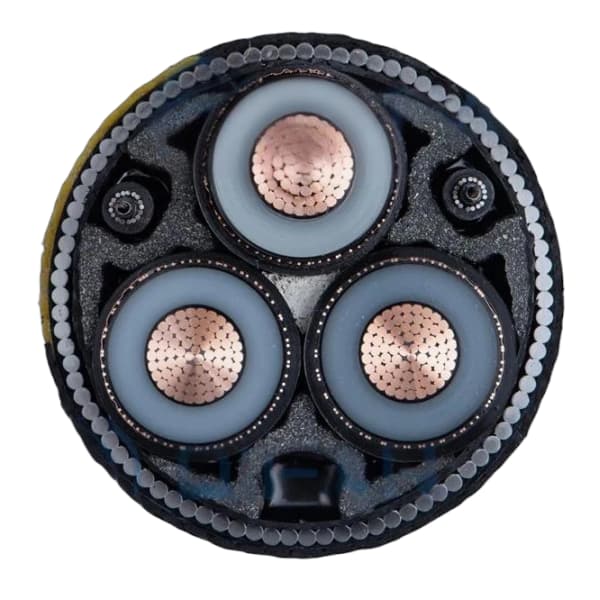
O que é um cabo submarino de 33kV?
UM 33cabo submarino kV é um cabo elétrico de média tensão projetado especificamente para instalação subaquática. As concessionárias de energia usam esses cabos para transmitir eletricidade a uma tensão nominal de 33 quilovolts entre instalações offshore e onshore.
Os engenheiros selecionam frequentemente cabos de 33kV para sistemas de energia marítima porque proporcionam uma transmissão de energia fiável através de massas de água. Além disso, estes cabos apoiam muitos projetos de energia renovável e sistemas de infraestrutura marítima.
As aplicações típicas incluem:
- Cabos intermatrizes para parques eólicos offshore
- Conexões de alimentação da ilha
- Plataformas offshore de petróleo e gás
- Sistemas de transmissão de rede costeira
- Projetos de energia renovável marinha
- Infraestrutura elétrica portuária e portuária
Porque os cabos submarinos operam debaixo d'água há décadas, os designers devem incluir fortes barreiras contra umidade, proteção contra corrosão, e reforço mecânico.
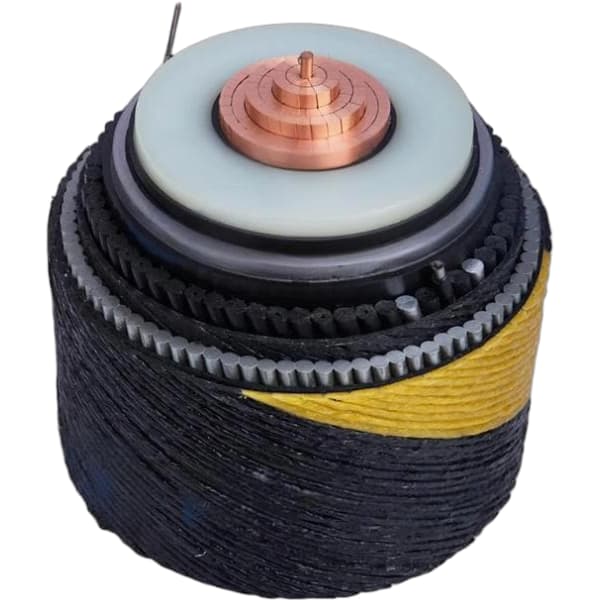
Projetos de cabos submarinos de núcleo único e três núcleos
Os engenheiros geralmente fabricam 33Cabos submarinos de kV em duas configurações. Cada projeto atende a diferentes sistemas elétricos e ambientes de instalação.
Cabo submarino de núcleo único
UM cabo submarino de núcleo único contém um condutor dentro da estrutura do cabo. Os engenheiros de energia normalmente instalam três cabos de núcleo único separados em um sistema de energia trifásico.
Projetos de núcleo único oferecem diversas vantagens. Primeiro, eles melhoram a dissipação de calor. Segundo, eles suportam maior capacidade de corrente. Além disso, os fabricantes podem produzir tamanhos de condutores muito grandes com mais facilidade.
Por causa desses benefícios, parques eólicos offshore geralmente usam cabos submarinos de núcleo único para conexões entre conjuntos de turbinas.
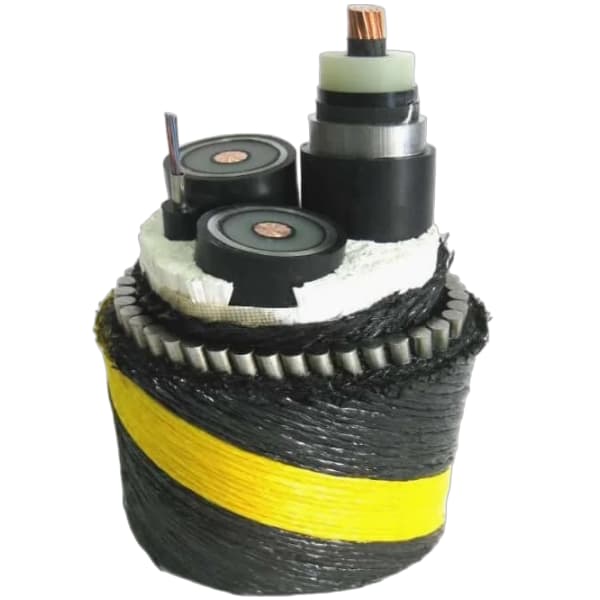
Cabo submarino de três núcleos
UM cabo submarino de três núcleos inclui três condutores dentro de um corpo de cabo. Cada condutor carrega uma fase do sistema elétrico.
Este design simplifica a instalação. Por exemplo, os instaladores podem instalar um único cabo em vez de três cabos separados. Como resultado, o processo de instalação se torna mais rápido e econômico.
Portanto, muitos projetos de fornecimento de energia em ilhas e sistemas de transmissão costeira preferem cabos submarinos de três núcleos.
Estrutura Típica de um Cabo Submarino de 33kV
Engenheiros projetam cabos submarinos com diversas camadas protetoras. Cada camada desempenha uma função importante.
Uma estrutura de cabo típica inclui:
- Condutor de cobre ou alumínio
- Tela semicondutora condutora
- Isolamento XLPE ou EPR
- Tela semicondutora de isolamento
- Barreira de umidade com bainha de chumbo
- Camada de cama
- Armadura de fio de aço ou fio de alumínio
- Bainha externa de PE ou PVC
Junto, essas camadas protegem o cabo contra falhas elétricas, dano mecânico, e penetração da água do mar.
Materiais condutores usados em cabos submarinos de 33kV
O condutor transporta corrente elétrica através do cabo. Os engenheiros normalmente escolhem cobre ou alumínio como o material condutor.
Condutores de cobre
O cobre fornece excelente condutividade elétrica e resistência mecânica. Portanto, muitos cabos submarinos de alto desempenho usam condutores de cobre.
As principais vantagens incluem:
- Resistência elétrica muito baixa
- Alta capacidade de carga de corrente
- Forte durabilidade mecânica
- Excelente confiabilidade a longo prazo
Por causa dessas propriedades, o cobre funciona bem em sistemas de energia offshore exigentes.
Condutores de Alumínio
O alumínio oferece uma alternativa mais leve e econômica ao cobre. Para grandes cabos submarinos, reduzir o peso do cabo torna-se muito importante.
Condutores de alumínio oferecem vários benefícios:
- Menor peso total do cabo
- Menor custo de material
- Boa resistência à corrosão
- Adequado para longas distâncias de transmissão
Como resultado, os engenheiros costumam escolher o alumínio para cabos submarinos de grande seção transversal.
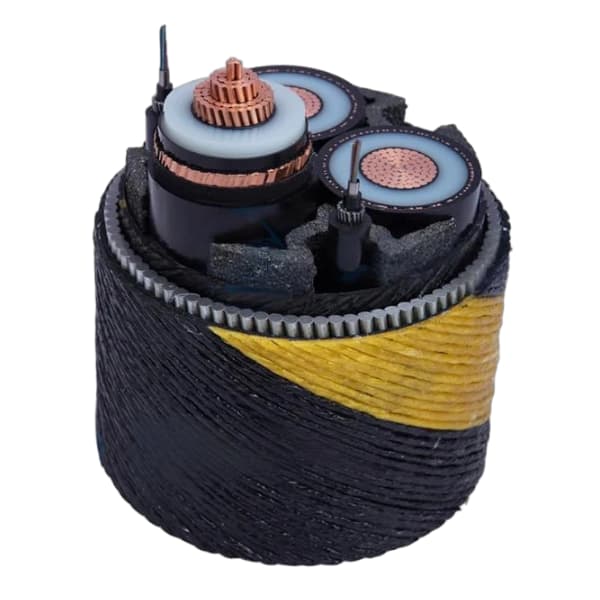
Tabela de seção transversal de condutores métricos (1.5 mm² – 800 mm²)
Os fabricantes de cabos submarinos produzem condutores em uma ampla variedade de seções transversais métricas. Condutores maiores permitem maior transmissão de corrente.
| Seção transversal do condutor (mm²) | Condutor de cobre | Condutor de Alumínio |
|---|---|---|
| 1.5 | ✓ | ✓ |
| 2.5 | ✓ | ✓ |
| 4 | ✓ | ✓ |
| 6 | ✓ | ✓ |
| 10 | ✓ | ✓ |
| 16 | ✓ | ✓ |
| 25 | ✓ | ✓ |
| 35 | ✓ | ✓ |
| 50 | ✓ | ✓ |
| 70 | ✓ | ✓ |
| 95 | ✓ | ✓ |
| 120 | ✓ | ✓ |
| 150 | ✓ | ✓ |
| 185 | ✓ | ✓ |
| 240 | ✓ | ✓ |
| 300 | ✓ | ✓ |
| 400 | ✓ | ✓ |
| 500 | ✓ | ✓ |
| 630 | ✓ | ✓ |
| 800 | ✓ | ✓ |
Os engenheiros geralmente selecionam condutores maiores para parques eólicos offshore e sistemas de transmissão marítima de alta capacidade.
Tabela de tamanho de condutor ASTM (20 AWG – 1000 MCM)
Muitos projetos internacionais seguem Padrões ASTM, que definem os tamanhos dos condutores usando Unidades AWG e MCM.
A tabela a seguir mostra tamanhos comuns de condutores ASTM.
| AWG / Tamanho do MCM | Corte transversal (mm²) | Condutor de cobre | Condutor de Alumínio |
|---|---|---|---|
| 20 AWG | 0.52 | ✓ | ✓ |
| 18 AWG | 0.82 | ✓ | ✓ |
| 16 AWG | 1.31 | ✓ | ✓ |
| 14 AWG | 2.08 | ✓ | ✓ |
| 12 AWG | 3.31 | ✓ | ✓ |
| 10 AWG | 5.26 | ✓ | ✓ |
| 8 AWG | 8.37 | ✓ | ✓ |
| 6 AWG | 13.30 | ✓ | ✓ |
| 4 AWG | 21.20 | ✓ | ✓ |
| 3 AWG | 26.70 | ✓ | ✓ |
| 2 AWG | 33.60 | ✓ | ✓ |
| 1 AWG | 42.40 | ✓ | ✓ |
| 1/0 AWG | 53.50 | ✓ | ✓ |
| 2/0 AWG | 67.40 | ✓ | ✓ |
| 3/0 AWG | 85.00 | ✓ | ✓ |
| 4/0 AWG | 107.00 | ✓ | ✓ |
| 250 MCM | 126.70 | ✓ | ✓ |
| 300 MCM | 152.00 | ✓ | ✓ |
| 350 MCM | 177.30 | ✓ | ✓ |
| 400 MCM | 202.70 | ✓ | ✓ |
| 500 MCM | 253.30 | ✓ | ✓ |
| 600 MCM | 304.00 | ✓ | ✓ |
| 750 MCM | 380.00 | ✓ | ✓ |
| 1000 MCM | 506.70 | ✓ | ✓ |
Os projetos de energia norte-americanos frequentemente especificam cabos submarinos usando esses tamanhos de condutor ASTM.
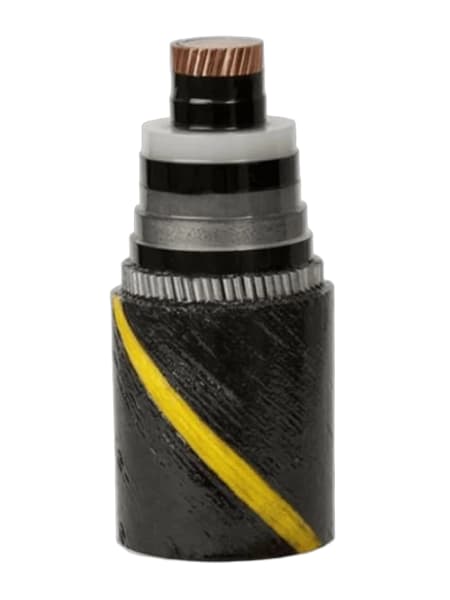
Materiais de Isolamento: XLPE e EPR
O isolamento desempenha um papel crítico na manutenção da segurança elétrica.
Isolamento XLPE
Polietileno reticulado (XLPE) tornou-se o material de isolamento mais utilizado para cabos submarinos.
XLPE oferece diversas vantagens. Primeiro, oferece excelente rigidez dielétrica. Além disso, suporta altas temperaturas operacionais e longa vida útil.
Os benefícios típicos incluem:
- Excelente desempenho de isolamento elétrico
- Alta resistência térmica
- Baixa perda dielétrica
- Longa vida operacional
A maioria dos cabos submarinos XLPE operam a uma velocidade 90Temperatura do condutor °C.
Isolamento EPR
Borracha de etileno propileno (RPE) o isolamento oferece maior flexibilidade do que o XLPE.
Portanto, os engenheiros costumam usar isolamento EPR em instalações onde os cabos devem dobrar ou se mover.
As principais vantagens incluem:
- Excelente flexibilidade
- Forte resistência à umidade
- Alta rigidez dielétrica
- Resistência à arborização aquática
Proteção de bainha de chumbo
Os fabricantes muitas vezes adicionam um camada de bainha de chumbo para cabos submarinos. Esta camada fornece uma forte barreira contra umidade.
A bainha de chumbo protege o cabo de diversas maneiras:
- Bloqueia a penetração da água do mar.
- Impede que a umidade atinja o isolamento.
- Protege o isolamento da corrosão química.
- Aumenta a durabilidade geral do cabo.
Por causa desses benefícios, muitos cabos de energia submarinos incluem bainhas de chumbo.
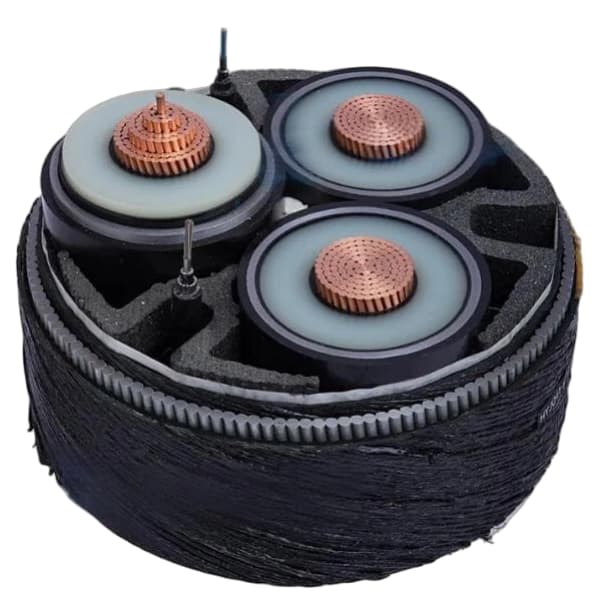
Proteção de Armadura: Fio de aço ou fio de alumínio
Os cabos submarinos devem suportar forças mecânicas durante a instalação e operação. Por exemplo, equipamento de pesca, âncoras, e o movimento do fundo do mar pode danificar cabos desprotegidos.
Portanto, engenheiros adicionam camadas de armadura ao redor do cabo.
Armadura de fio de aço
A armadura de fio de aço proporciona resistência mecânica extremamente alta.
As principais vantagens incluem:
- Alta resistência à tração
- Excelente resistência ao impacto
- Proteção forte durante a colocação de cabos
A maioria dos cabos submarinos de águas profundas usa armadura de aço.
Armadura de fio de alumínio
Em algumas aplicações, engenheiros escolhem armadura de fio de alumínio em vez de aço.
Armadura de alumínio fornece:
- Menor peso
- Melhor resistência à corrosão
- Efeitos magnéticos reduzidos
Portanto, armadura de alumínio se adapta a ambientes offshore específicos.
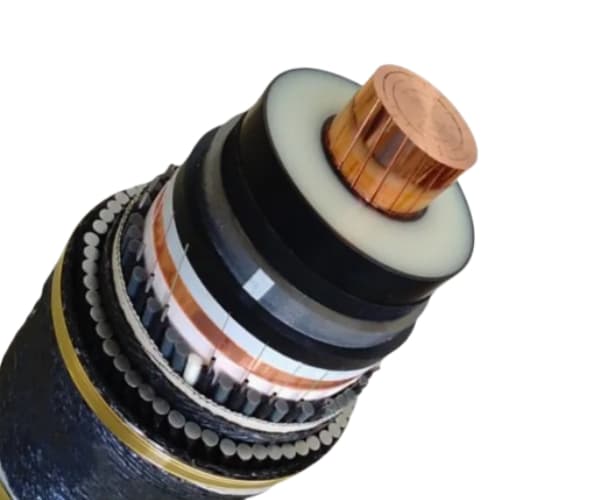
Materiais da bainha externa
A bainha externa protege toda a estrutura do cabo contra danos ambientais.
Bainha Externa PE
Bainhas de polietileno fornecem:
- Excelente resistência à água
- Alta durabilidade
- Longa vida útil em ambientes marinhos
Por causa dessas propriedades, PE se tornou o material de revestimento externo mais comum.
Bainha externa de PVC
As bainhas de PVC fornecem:
- Boa proteção mecânica
- Propriedades retardadoras de chama
- Menor custo de fabricação
Portanto, O PVC aparece frequentemente em instalações de cabos submarinos em águas rasas.
Aplicações de cabos submarinos de 33kV
Hoje, muitas indústrias dependem de cabos submarinos.
Parques Eólicos Offshore
Parques eólicos usam cabos submarinos de 33kV para conectar turbinas a subestações offshore. À medida que a energia eólica offshore se expande globalmente, esta aplicação continua a crescer.
Eletrificação da Ilha
Muitas ilhas dependem de cabos submarinos para um fornecimento estável de eletricidade. Esses cabos conectam redes insulares às redes de energia do continente.
Plataformas petrolíferas offshore
Plataformas de petróleo e gás exigem energia confiável. Cabos submarinos fornecem eletricidade para equipamentos de perfuração e sistemas de produção.
Zonas Industriais Costeiras
Portas, estaleiros, e as fábricas marítimas dependem de cabos submarinos para garantir uma transmissão de energia estável.
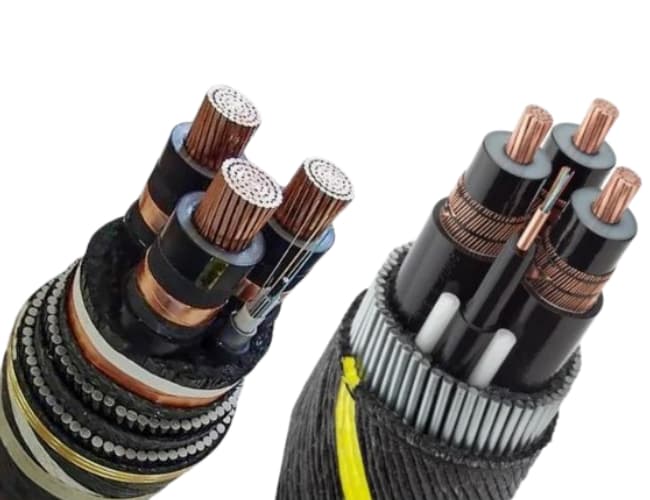
33cabo submarino kV
O 33kV cabo submarino desempenha um papel crucial na moderna infraestrutura de energia marítima. Os engenheiros projetam esses cabos com condutores de cobre ou alumínio variando de 1.5 mm² para 800 mm² ou tamanhos ASTM de 20 AWG para 1000 MCM. Além disso, fabricantes incorporam Isolamento XLPE ou EPR, proteção de bainha de chumbo, camadas de armadura de aço ou alumínio, e revestimentos externos de PE ou PVC.
Além disso, projetistas podem configurar cabos submarinos com estruturas condutoras de núcleo único ou de três núcleos dependendo da aplicação.
Como a energia eólica offshore, eletrificação da ilha, e a infra-estrutura marítima continuam a expandir-se, a demanda por cabos submarinos de 33kV de alta qualidade continuará aumentando. Esses sistemas de cabos avançados garantem confiabilidade, eficiente, e transmissão segura de energia subaquática por décadas.