
Reliable power transmission depends on strong and stable connections. In high-voltage systems, one of the most critical interfaces sits between underground cables and gas-insulated switchgear. At this point, cái GIS Termination plays a decisive role. At the 132kV level, even minor design or installation issues can lead to serious failures. Vì thế, engineers pay close attention to every detail of this component.
As cities continue to expand, substations often move underground or into compact spaces. Do đó, gas-insulated switchgear (GIS) becomes more common. Đồng thời, utilities demand higher reliability and lower maintenance. Vì lý do này, the demand for high-quality 132kV cable GIS termination solutions continues to grow.
What Is a GIS Termination?
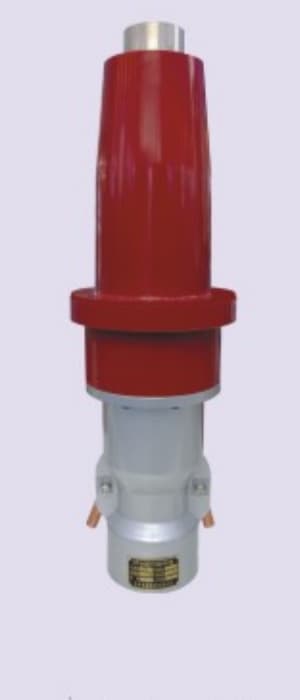
MỘT GIS Termination connects a high-voltage cable to gas-insulated switchgear. It creates a controlled transition from the cable insulation system, usually XLPE, into the SF₆ gas environment inside the GIS.
Tuy nhiên, this transition is not simple. The electric field changes significantly at the interface. Kết quả là, engineers must carefully manage electrical stress, maintain insulation performance, and prevent partial discharge.
In practical terms, a GIS termination allows electricity to flow safely and efficiently from the cable into the switchgear. Without this controlled interface, system stability would quickly degrade.
Why 132kV GIS Cable Termination Is Important
In modern power systems, reliability remains the top priority. A failure at the termination point can shut down an entire substation and disrupt supply.
Đầu tiên, GIS terminations support compact substation layouts. Because GIS equipment uses enclosed gas insulation, it requires far less space than traditional air-insulated systems. Vì thế, it suits dense urban environments.
Thứ hai, they improve operational reliability. The sealed structure protects internal components from dust, moisture, and pollution. Ngoài ra, it reduces the impact of environmental conditions.
Hơn thế nữa, a properly designed 132kV GIS termination minimizes electric stress concentration. Kết quả là, both the cable and the switchgear can operate safely over a longer service life.
Main Components of a 132kV GIS Termination
A GIS termination includes several essential components. Each one contributes to electrical stability and mechanical strength.
Hệ thống kiểm soát căng thẳng
To begin with, the stress control system manages the electric field at the cable end. Without proper control, the field becomes uneven and may cause insulation failure. Vì thế, engineers use stress cones or field grading materials to distribute the electric field evenly.
Insulating Body
Kế tiếp, the insulating body provides the primary dielectric barrier. It separates the high-voltage conductor from the grounded GIS enclosure. Tiêu biểu, manufacturers use silicone rubber or epoxy resin because these materials offer strong insulation and thermal stability.
Kết nối dây dẫn
Đồng thời, the conductor must connect securely to the GIS terminal. A reliable connection reduces resistance and prevents overheating. Trong hầu hết các trường hợp, technicians use compression or bolted connectors to achieve this.
Sealing System
Trong khi đó, the sealing system prevents SF₆ gas leakage and blocks moisture ingress. Because GIS depends on stable gas pressure, effective sealing remains essential for long-term performance.
Flange and Housing
Cuối cùng, the flange connects the termination to the GIS equipment, while the housing protects internal components from mechanical damage. Cùng nhau, these parts ensure proper alignment and durability.
Types of GIS Termination for 132kV Cables
Different applications require different designs. Vì thế, engineers select the appropriate type based on project conditions.
Dry Type GIS Termination
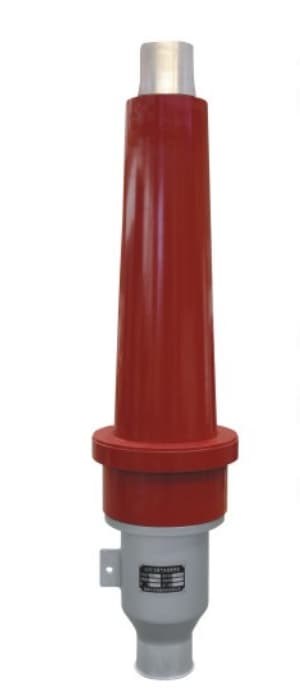
In many modern substations, dry type terminations are preferred. They use solid insulation materials instead of oil. Kết quả là, they offer easier maintenance and reduced environmental risk.
Oil-Filled GIS Termination
Mặt khác, oil-filled terminations provide excellent insulation performance. Tuy nhiên, they require careful sealing and regular maintenance. Vì thế, they are less common in newer installations.
Plug-In GIS Termination
Ngoài ra, plug-in terminations allow faster installation. Because of their modular design, they reduce downtime and improve efficiency, especially in prefabricated GIS systems.
Cable Conductor Size Table (25 mm² đến 3000 mm²)
When selecting a GIS Termination, conductor size becomes a key factor. It influences current capacity, thermal behavior, and mechanical compatibility. Vì thế, engineers must evaluate cable size carefully.
Conductor Cross-Section and Technical Parameters
| Kích thước dây dẫn (mm²) | Xấp xỉ. AWG/MCM | Conductor Diameter (mm) | Điện trở DC (Ω/km @20°C) | Typical Current Capacity (MỘT) | Application Level |
|---|---|---|---|---|---|
| 25 | 4 AWG | 5.6 | 0.727 | 150–180 | Control / small load |
| 35 | 2 AWG | 6.7 | 0.524 | 180–220 | Light distribution |
| 50 | 1/0 AWG | 8.0 | 0.387 | 220–270 | Distribution |
| 70 | 2/0 AWG | 9.6 | 0.268 | 260–320 | Medium load |
| 95 | 3/0 AWG | 11.0 | 0.193 | 300–370 | Substation feeder |
| 120 | 4/0 AWG | 12.4 | 0.153 | 340–420 | Medium HV |
| 150 | 300 MCM | 13.9 | 0.124 | 380–470 | Transmission |
| 185 | 350 MCM | 15.5 | 0.099 | 420–520 | Transmission |
| 240 | 500 MCM | 17.5 | 0.075 | 480–600 | 132kV standard |
| 300 | 600 MCM | 19.5 | 0.060 | 550–680 | Main feeder |
| 400 | 800 MCM | 22.6 | 0.047 | 650–800 | Heavy load |
| 500 | 1000 MCM | 25.2 | 0.036 | 750–920 | HV transmission |
| 630 | 1250 MCM | 28.3 | 0.028 | 850–1050 | Common 132kV |
| 800 | 1600 MCM | 31.9 | 0.022 | 1000–1200 | Bulk power |
| 1000 | 2000 MCM | 35.7 | 0.017 | 1150–1400 | Large substations |
| 1200 | 2500 MCM | 39.1 | 0.015 | 1300–1550 | Grid backbone |
| 1400 | — | 42.2 | 0.013 | 1400–1700 | Extra heavy load |
| 1600 | — | 45.2 | 0.011 | 1550–1850 | Large transmission |
| 2000 | — | 50.5 | 0.009 | 1750–2100 | Major grid |
| 2500 | — | 56.4 | 0.007 | 2000–2400 | Ultra high demand |
| 3000 | — | 61.8 | 0.006 | 2200–2600 | Extreme capacity |
How Conductor Size Affects GIS Termination Design
Conductor size directly influences the design of a GIS termination. Đầu tiên, larger conductors require stronger mechanical support. Kết quả là, the termination must handle higher weight and installation stress.
Ngoài ra, electric field distribution changes with conductor size. Vì thế, engineers must adjust stress control components to maintain uniform field grading.
Hơn nữa, higher current leads to increased heat generation. Do đó, thermal management becomes more critical for large cross-section cables.
Cuối cùng, installation becomes more complex as cable size increases. Ví dụ, larger cables require greater bending radius and specialized handling.
Typical Sizes Used in 132kV Systems
Trong thực tế, only a limited range of sizes appears frequently. Most utilities prefer standardized options for efficiency and cost control.
Common conductor sizes include:
- 240 mm²
- 300 mm²
- 400 mm²
- 630 mm²
- 800 mm²
- 1000 mm²
Among these, 630 mm² and 800 mm² provide a strong balance between capacity and economic performance. Vì thế, they are widely used in transmission projects.
Installation of 132kV GIS Termination
Proper installation determines long-term reliability. Vì lý do này, technicians must follow strict procedures at every stage.
Đầu tiên, they prepare the cable by removing the outer sheath and insulation layers carefully. At this stage, cleanliness is essential.
Kế tiếp, they install stress control components and insulation parts. Sau đó, they connect the conductor and assemble the termination body.
Sau đó, they mount the termination onto the GIS flange and complete sealing. Cuối cùng, engineers perform testing, including partial discharge and high-voltage withstand tests.
Common Challenges and Practical Solutions
Working with GIS terminations presents several challenges. Tuy nhiên, proper practices can effectively address them.
Electrical stress concentration may occur if installation lacks precision. Vì thế, technicians must follow design guidelines closely.
Moisture ingress can reduce insulation performance. To prevent this, teams must control humidity during installation.
Gas leakage also poses risks. High-quality sealing systems help avoid this issue.
Ngoài ra, mechanical misalignment can cause long-term problems. Accurate positioning ensures stable operation.
Advantages of GIS Cable Termination
GIS terminations offer several advantages in modern power systems. Đầu tiên, they support compact designs suitable for urban environments.
Hơn thế nữa, they operate reliably within sealed systems. Kết quả là, they resist environmental factors such as dust and humidity.
Ngoài ra, they require less maintenance compared to traditional systems. Vì thế, utilities can reduce operational costs over time.
Applications of 132kV GIS Termination
132kV GIS terminations are widely used across various sectors. Ví dụ, they play a key role in:
- Urban underground substations
- Industrial power distribution systems
- Renewable energy grid connections
- Infrastructure projects such as railways and airports
As infrastructure continues to grow, these applications expand further.
132kV Cable GIS Termination manufacturer
MỘT 132kV Cable GIS Termination serves as a critical link in high-voltage transmission systems. It connects cables to gas-insulated switchgear while ensuring electrical safety and reliability.
From component design to conductor size selection, every detail affects performance. Vì thế, engineers must evaluate each factor carefully.
As power networks evolve, GIS technology continues to gain importance. Do đó, selecting the right GIS termination solution—and matching it with the appropriate cable size—remains essential for long-term success from 132kV Cable GIS Termination.