33kV Submarine cable play a vital role in modern electrical infrastructure. They allow engineers and energy companies to transmit electricity across seas, sungai, lakes, and offshore facilities. Sebagai ladang angin lepas pantai, coastal industrial zones, and island electrification projects continue to expand worldwide, the demand for reliable submarine power cables grows rapidly.
Among medium-voltage marine power cables, itu 33kV submarine cable has become one of the most widely used solutions. Engineers frequently install these cables in offshore wind farms, island grid systems, offshore oil platforms, and coastal power networks. These cables must operate in extremely harsh environments. Saltwater corrosion, seabed movement, and high hydrostatic pressure constantly challenge the cable structure.
Karena itu, manufacturers design submarine cables with multiple protective layers. These layers typically include XLPE or EPR insulation, lead sheath moisture barriers, steel or aluminum armor wires, and PE or PVC outer jackets. Selain itu, engineers design these cables with single-core or three-core conductor structures depending on the electrical system requirements.
We show the structure, conductor specifications, ASTM standards, insulation materials, and applications of modern 33kabel bawah laut kV.
What Is a 33kV Submarine Cable?
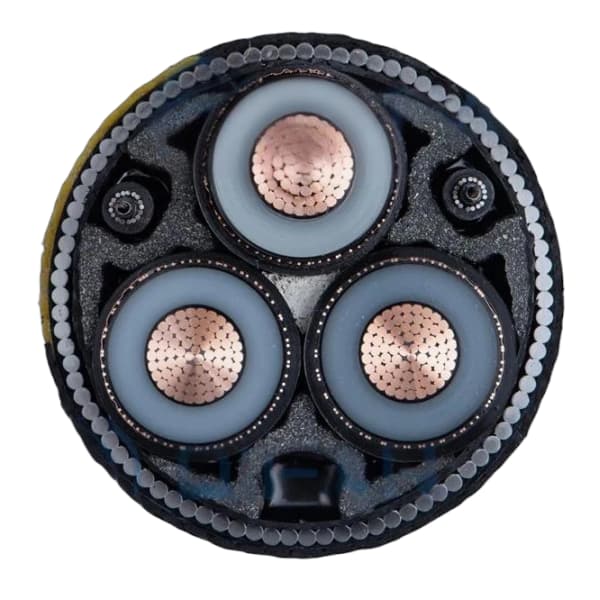
A 33kV submarine cable is a medium-voltage electrical cable designed specifically for underwater installation. Power utilities use these cables to transmit electricity at a rated voltage of 33 kilovolts between offshore and onshore facilities.
Engineers often select 33kV cables for marine energy systems because they provide reliable power transmission across water bodies. Lebih-lebih lagi, these cables support many renewable energy projects and marine infrastructure systems.
Typical applications include:
- Offshore wind farm inter-array cables
- Island power supply connections
- Offshore oil and gas platforms
- Coastal grid transmission systems
- Marine renewable energy projects
- Harbor and port electrical infrastructure
Because submarine cables operate underwater for decades, designers must include strong moisture barriers, corrosion protection, and mechanical reinforcement.
Single-Core and Three-Core Submarine Cable Designs
Engineers usually manufacture 33kV submarine cables in two configurations. Each design serves different electrical systems and installation environments.
Single-Core Submarine Cable
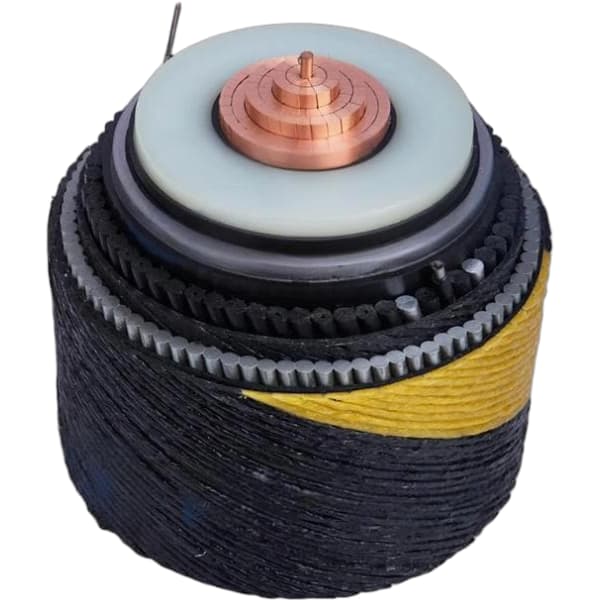
A single-core submarine cable contains one conductor inside the cable structure. Power engineers typically install three separate single-core cables in a three-phase power system.
Single-core designs offer several advantages. Pertama, they improve heat dissipation. Kedua, they support higher current capacity. Selain itu, manufacturers can produce very large conductor sizes more easily.
Because of these benefits, offshore wind farms often use single-core submarine cables for turbine inter-array connections.
Three-Core Submarine Cable
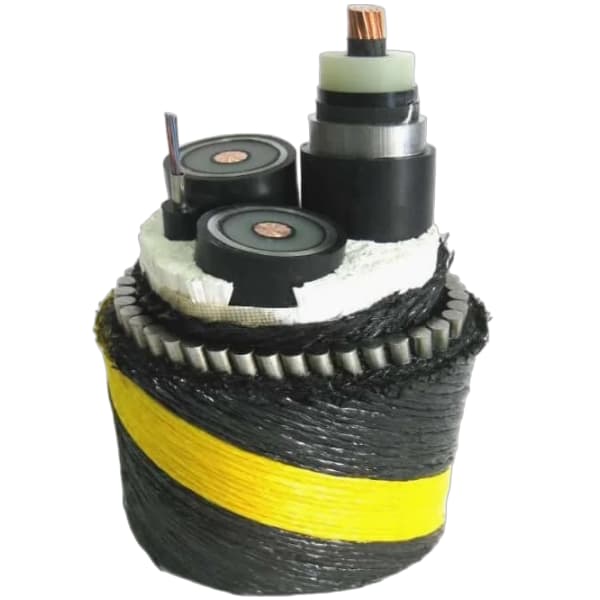
A three-core submarine cable includes three conductors inside one cable body. Each conductor carries one phase of the electrical system.
This design simplifies installation. Misalnya, installers can lay a single cable instead of three separate cables. Sebagai akibat, the installation process becomes faster and more cost-effective.
Karena itu, many island power supply projects and coastal transmission systems prefer three-core submarine cables.
Typical Structure of a 33kV Submarine Cable
Engineers design submarine cables with several protective layers. Each layer performs an important function.
A typical cable structure includes:
- Konduktor tembaga atau aluminium
- Conductor semi-conductive screen
- XLPE or EPR insulation
- Insulation semi-conductive screen
- Lead sheath moisture barrier
- Lapisan alas tidur
- Steel wire or aluminum wire armor
- PE or PVC outer sheath
Bersama, these layers protect the cable from electrical failure, mechanical damage, and seawater penetration.
Conductor Materials Used in 33kV Submarine Cables
The conductor carries electrical current through the cable. Engineers typically choose copper or aluminum as the conductor material.
Copper Conductors
Copper provides excellent electrical conductivity and mechanical strength. Karena itu, many high-performance submarine cables use copper conductors.
Key advantages include:
- Very low electrical resistance
- High current carrying capacity
- Strong mechanical durability
- Excellent long-term reliability
Karena sifat-sifat ini, copper works well in demanding offshore energy systems.
Aluminum Conductors
Aluminum offers a lighter and more economical alternative to copper. For large submarine cables, reducing cable weight becomes very important.
Aluminum conductors provide several benefits:
- Lower overall cable weight
- Lower material cost
- Good corrosion resistance
- Suitable for long transmission distances
Sebagai akibat, engineers often choose aluminum for large-cross-section submarine cables.
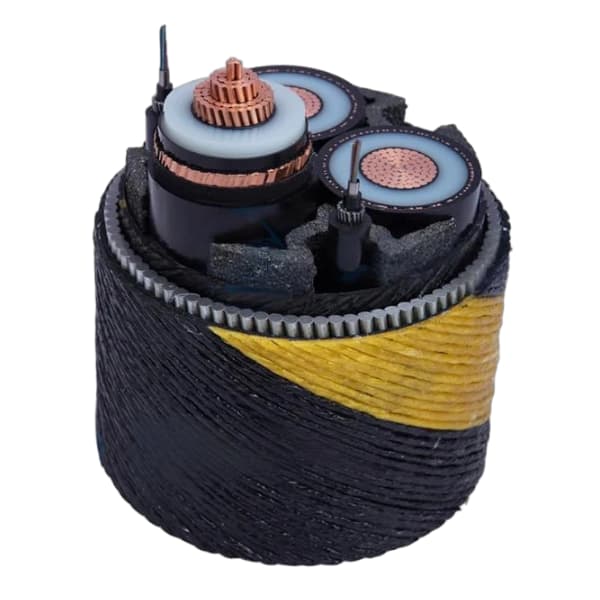
Metric Conductor Cross-Section Table (1.5 mm² – 800 mm²)
Submarine cable manufacturers produce conductors in a wide range of metric cross-sections. Larger conductors allow higher current transmission.
| Conductor Cross Section (mm²) | Konduktor Tembaga | Aluminum Conductor |
|---|---|---|
| 1.5 | ✓ | ✓ |
| 2.5 | ✓ | ✓ |
| 4 | ✓ | ✓ |
| 6 | ✓ | ✓ |
| 10 | ✓ | ✓ |
| 16 | ✓ | ✓ |
| 25 | ✓ | ✓ |
| 35 | ✓ | ✓ |
| 50 | ✓ | ✓ |
| 70 | ✓ | ✓ |
| 95 | ✓ | ✓ |
| 120 | ✓ | ✓ |
| 150 | ✓ | ✓ |
| 185 | ✓ | ✓ |
| 240 | ✓ | ✓ |
| 300 | ✓ | ✓ |
| 400 | ✓ | ✓ |
| 500 | ✓ | ✓ |
| 630 | ✓ | ✓ |
| 800 | ✓ | ✓ |
Engineers usually select larger conductors for offshore wind farms and high-capacity marine transmission systems.
ASTM Conductor Size Table (20 AWG – 1000 MCM)
Many international projects follow ASTM standards, which define conductor sizes using AWG and MCM units.
The following table shows common ASTM conductor sizes.
| AWG / MCM Size | Cross Section (mm²) | Konduktor Tembaga | Aluminum Conductor |
|---|---|---|---|
| 20 AWG | 0.52 | ✓ | ✓ |
| 18 AWG | 0.82 | ✓ | ✓ |
| 16 AWG | 1.31 | ✓ | ✓ |
| 14 AWG | 2.08 | ✓ | ✓ |
| 12 AWG | 3.31 | ✓ | ✓ |
| 10 AWG | 5.26 | ✓ | ✓ |
| 8 AWG | 8.37 | ✓ | ✓ |
| 6 AWG | 13.30 | ✓ | ✓ |
| 4 AWG | 21.20 | ✓ | ✓ |
| 3 AWG | 26.70 | ✓ | ✓ |
| 2 AWG | 33.60 | ✓ | ✓ |
| 1 AWG | 42.40 | ✓ | ✓ |
| 1/0 AWG | 53.50 | ✓ | ✓ |
| 2/0 AWG | 67.40 | ✓ | ✓ |
| 3/0 AWG | 85.00 | ✓ | ✓ |
| 4/0 AWG | 107.00 | ✓ | ✓ |
| 250 MCM | 126.70 | ✓ | ✓ |
| 300 MCM | 152.00 | ✓ | ✓ |
| 350 MCM | 177.30 | ✓ | ✓ |
| 400 MCM | 202.70 | ✓ | ✓ |
| 500 MCM | 253.30 | ✓ | ✓ |
| 600 MCM | 304.00 | ✓ | ✓ |
| 750 MCM | 380.00 | ✓ | ✓ |
| 1000 MCM | 506.70 | ✓ | ✓ |
North American power projects frequently specify submarine cables using these ASTM conductor sizes.
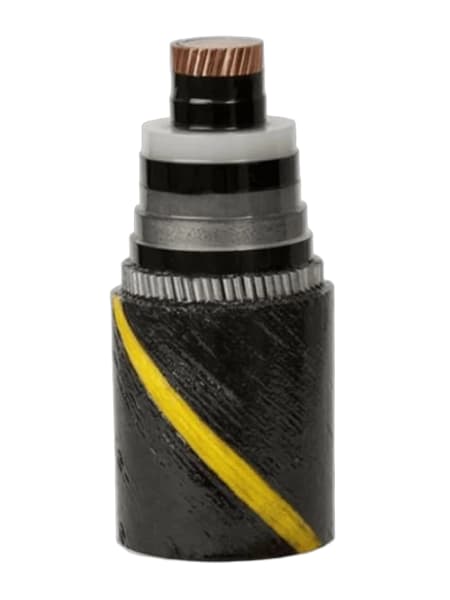
Insulation Materials: XLPE and EPR
Insulation plays a critical role in maintaining electrical safety.
Isolasi XLPE
Polietilen ikatan silang (XLPE) has become the most widely used insulation material for submarine cables.
XLPE provides several advantages. Pertama, it offers excellent dielectric strength. Lebih-lebih lagi, it supports high operating temperatures and long service life.
Typical benefits include:
- Excellent electrical insulation performance
- High thermal resistance
- Low dielectric loss
- Umur operasional yang panjang
Most XLPE submarine cables operate at a 90°C conductor temperature.
EPR Insulation
Ethylene propylene rubber (EPR) insulation offers higher flexibility than XLPE.
Karena itu, engineers often use EPR insulation in installations where cables must bend or move.
Key advantages include:
- Excellent flexibility
- Strong moisture resistance
- Kekuatan dielektrik yang tinggi
- Resistance to water treeing
Lead Sheath Protection
Manufacturers often add a lead sheath layer to submarine cables. This layer provides a strong moisture barrier.
The lead sheath protects the cable in several ways:
- It blocks seawater penetration.
- It prevents moisture from reaching the insulation.
- It protects insulation from chemical corrosion.
- It increases the overall durability of the cable.
Because of these benefits, many submarine power cables include lead sheaths.
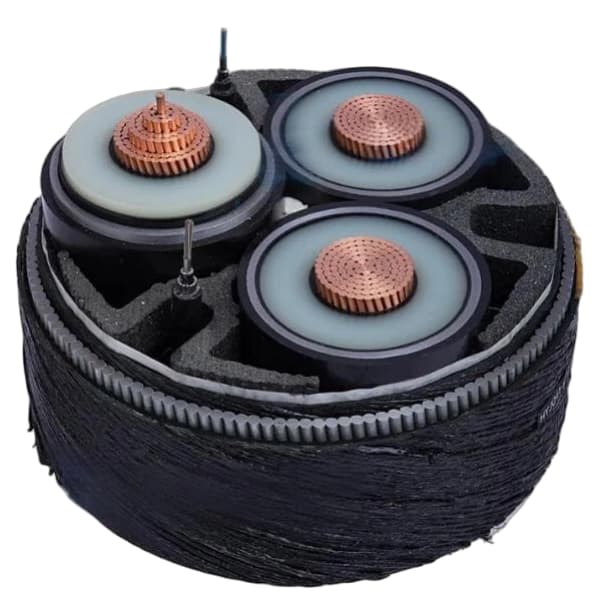
Armor Protection: Steel Wire or Aluminum Wire
Submarine cables must withstand mechanical forces during installation and operation. Misalnya, fishing equipment, jangkar, and seabed movement can damage unprotected cables.
Karena itu, engineers add armor layers around the cable.
Steel Wire Armor
Steel wire armor provides extremely high mechanical strength.
Key advantages include:
- High tensile strength
- Excellent impact resistance
- Strong protection during cable laying
Most deep-water submarine cables use steel armor.
Aluminum Wire Armor
In some applications, engineers choose aluminum wire armor instead of steel.
Aluminum armor provides:
- Berat badan lebih rendah
- Better corrosion resistance
- Reduced magnetic effects
Karena itu, aluminum armor suits specific offshore environments.
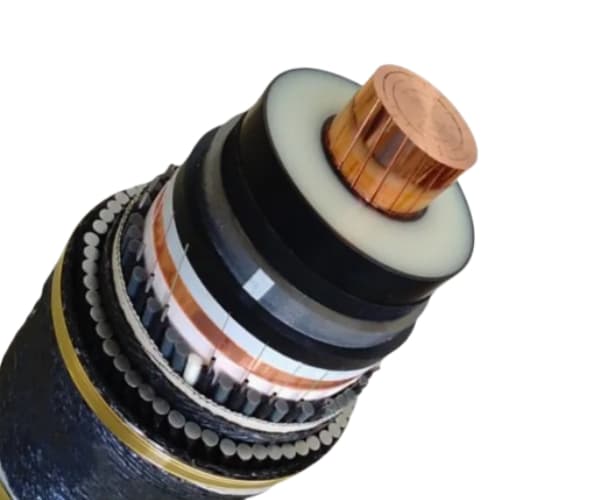
Outer Sheath Materials
The outer sheath protects the entire cable structure from environmental damage.
PE Outer Sheath
Polyethylene sheaths provide:
- Excellent water resistance
- High durability
- Long service life in marine environments
Karena sifat-sifat ini, PE has become the most common outer sheath material.
Selubung Luar PVC
PVC sheaths provide:
- Good mechanical protection
- Flame retardant properties
- Lower manufacturing cost
Karena itu, PVC often appears in shallow-water submarine cable installations.
Applications of 33kV Submarine Cables
Hari ini, many industries rely on submarine cables.
Ladang Angin Lepas Pantai
Wind farms use 33kV submarine cables to connect turbines to offshore substations. As offshore wind energy expands globally, this application continues to grow.
Island Electrification
Many islands rely on submarine cables for stable electricity supply. These cables connect island grids to mainland power networks.
Offshore Oil Platforms
Oil and gas platforms require reliable power. Submarine cables deliver electricity for drilling equipment and production systems.
Coastal Industrial Zones
Ports, shipyards, and marine factories depend on submarine cables to ensure stable power transmission.
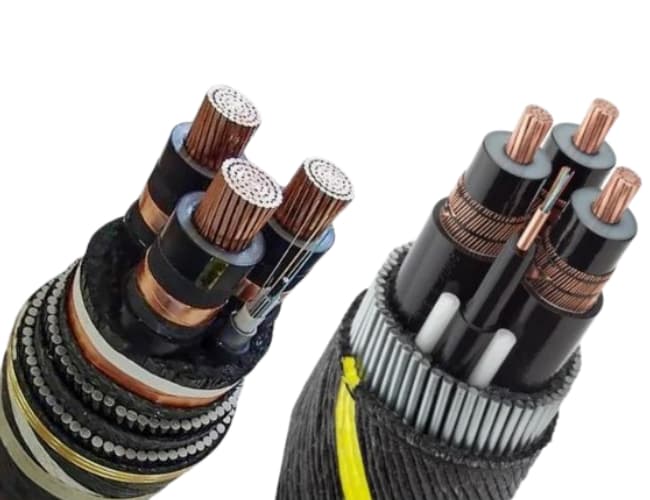
33kV submarine cable
The 33kV kabel bawah laut plays a crucial role in modern marine power infrastructure. Engineers design these cables with copper or aluminum conductors ranging from 1.5 mm² sampai 800 mm² or ASTM sizes from 20 AWG to 1000 MCM. Selain itu, manufacturers incorporate XLPE or EPR insulation, lead sheath protection, steel or aluminum armor layers, and PE or PVC outer jackets.
Lebih-lebih lagi, designers can configure submarine cables with single-core or three-core conductor structures depending on the application.
As offshore wind energy, island electrification, and marine infrastructure continue to expand, the demand for high-quality 33kV submarine cables will keep increasing. These advanced cable systems ensure reliable, efisien, and safe underwater power transmission for decades.